
Casting Simulation: Filling, Solidification and Practical Validation
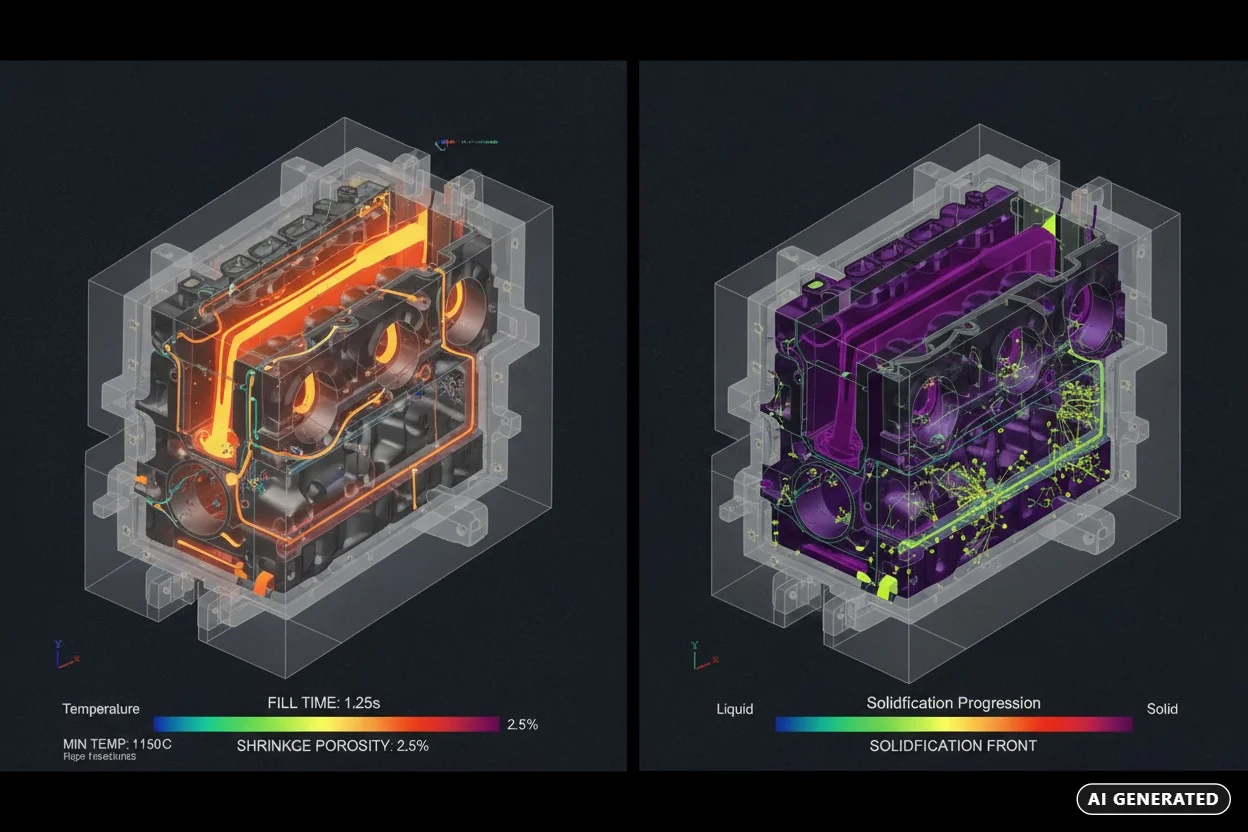
Casting simulation estimates how metal fills a mold and develops during cooling and solidification. It can help engineers compare process options and investigate potential defects before tooling or production trials. The model is a decision-support tool whose usefulness depends on its inputs and representation of the actual process.
Represent the Real Process
Geometry should include the relevant casting, gates, feeders and mold arrangement. Material and thermal information need to match the intended alloy and process. Simplifying details can be useful, but only when they do not remove behavior that governs the question being studied.
Interpret Filling Results
Filling patterns can reveal regions with difficult flow, air entrapment risks or unfavorable merging of streams. A predicted pattern is not an independent acceptance decision. Its significance must be interpreted with the process, alloy and known defect mechanisms. Visual animation alone does not establish a sound design.
Review Solidification
Cooling and feeding behavior influence the development of shrinkage-related defects and local structure. Section changes and mold conditions can create important differences across the component. Simulation helps compare alternatives, but uncertain boundary conditions can affect the result. Record assumptions and examine sensitivity where they influence the decision.
Connect Predictions with Trials
Inspect representative castings and compare findings with the model. Differences should prompt review of both simulation assumptions and production conditions. Adjusting parameters solely to match one result can hide the actual process behavior.
For a housing with thick bosses and thinner walls, use simulation to compare gating and feeding concepts while preserving manufacturability. Include later machining requirements when evaluating defect locations. The useful outcome is a better-understood and more robust casting process, supported by measured trial results. Simulation should reduce uncertainty and guide engineering work rather than create unjustified confidence from a polished image.
Additional Engineering Considerations
A sensitivity study can be more useful than a single detailed run when important inputs are uncertain. Compare plausible changes in thermal contact, material condition or process timing where those factors affect the conclusion. Identify whether a proposed tooling change remains beneficial across that range. During trials, collect information that helps constrain the uncertainty rather than only inspect the final casting. This creates a learning loop between physical production and the model. Confidence then comes from relevant comparisons and understanding, rather than from the visual detail or numerical precision of the output.
Practical Verification Priorities
The first verification priority is relevant geometry and alloy/process data. Establish the relevant condition before comparing alternatives, and retain enough setup information for another engineer to repeat the check. A result obtained under a different condition may answer a different question, even when the reported values appear comparable.
The next priority is assumptions affecting filling and feeding predictions. Decide what evidence would show that this part of the method is working and what finding would require investigation. Use representative inputs rather than only selected favorable samples. Where a change is introduced, record the technical reason and assess its effect on connected requirements.
Finally, verify measured casting defects and dimensions compared with representative trials. Define the acceptance basis and preserve the observations that support the decision. If an unexpected result appears, investigate both the physical process and the measurement method before applying a correction. This keeps development decisions traceable and helps the production team restore the accepted condition after normal adjustments or maintenance.
Report an image

 MEMBERS · ONE ENGINEERING COMMUNITY
Discussion
0 CommentsShare your thoughts and engineering insights with the community.
Comments are closed for this article.
No comments yet. Be the first to share your thoughts.