


BYD Ti7 Banned in EU: Landmark Land Rover Defender Design Ruling Raises New Questions for Automotive Engineering
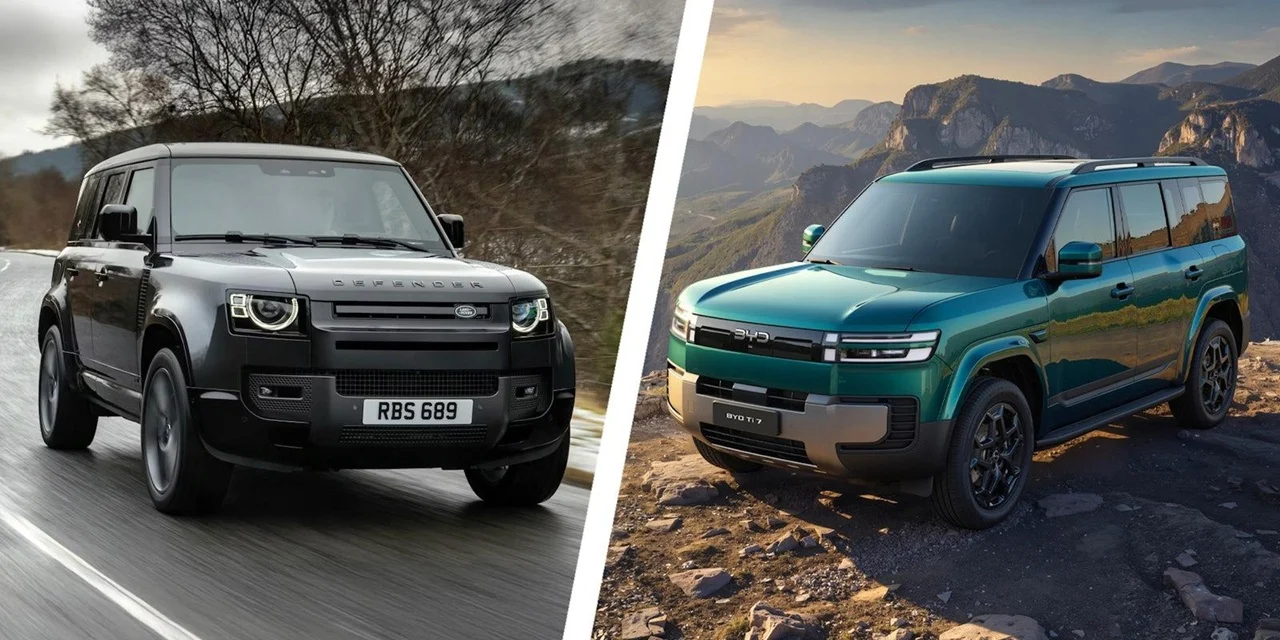
A Dutch court has issued a preliminary injunction preventing BYD from importing, manufacturing or selling its Ti7 SUV in the European Union after finding that the vehicle infringes Jaguar Land Rover’s registered Defender design. The decision reaches beyond a dispute between two automotive manufacturers, raising important questions about industrial design ownership, CAD development, product differentiation and global manufacturing strategies.
A Major Legal Setback for BYD’s European Expansion
The global automotive industry is witnessing an increasingly important confrontation between rapid product development and intellectual property protection.
On November 20, 2026, the District Court of The Hague in the Netherlands issued a preliminary ruling against Chinese automotive manufacturer BYD, restricting commercial activities involving its Ti7 sport utility vehicle throughout the European Union.
The case was brought by Jaguar Land Rover (JLR), which argued that the exterior appearance of the BYD Ti7 infringed registered design rights covering the current-generation Land Rover Defender, internally identified as the L663.
The court concluded that the Ti7 reproduced distinctive characteristics of JLR’s protected vehicle design closely enough to create essentially the same overall impression on an informed user.
As a result, affected BYD companies must refrain from importing, producing, offering for sale, selling, storing, supplying or otherwise commercially trading the vehicle within the European Union.
However, the ruling is not a final determination of every legal dispute between the companies. It was issued during preliminary proceedings, and further litigation remains possible.
For automotive manufacturers, engineering departments and industrial designers, the significance extends well beyond the commercial future of one SUV.
The case demonstrates that vehicle design similarity can become a substantial legal and manufacturing risk even before a model reaches its intended market.
Why Jaguar Land Rover Challenged the BYD Ti7
The modern Land Rover Defender was introduced in 2019 as a contemporary interpretation of one of the most recognizable off-road vehicle families in automotive history.
Unlike traditional vehicles built primarily around functional requirements, modern SUVs increasingly rely on carefully developed visual identities to establish their market positioning.
The Defender L663 combines an upright body profile, pronounced shoulders, relatively flat surfaces, rounded geometric transitions and distinctive glazing proportions.
These visual characteristics create a recognizable relationship between the vehicle’s functional architecture and its brand identity.
BYD introduced the Fangchengbao Ti7 in China in September 2025.
The vehicle follows a similarly robust SUV design philosophy, using an upright profile, muscular exterior surfaces, rectangular proportions and prominent wheel-arch treatments.
Its planned international expansion brought the design into direct competition with established European luxury SUV manufacturers.
JLR maintained that the similarities exceeded the general visual characteristics commonly associated with off-road vehicles.
Instead, the company argued that BYD had reproduced a recognizable combination of protected exterior design features.
The dispute therefore centered on a fundamental question:
When does an automotive manufacturer’s use of a familiar design language become an infringement of another manufacturer’s registered industrial design?
The Dutch court’s provisional answer focused on the combined appearance of several distinctive elements rather than any single styling feature.
The Six Design Characteristics That Influenced the Court
One of the most technically significant aspects of the case is the court’s explanation of how the two vehicles were compared.
The court identified several dominant characteristics of JLR’s registered Defender design that were also present in the BYD Ti7.
These included:
- Convex body shoulders: Prominent upper-body volumes that create a strong, muscular stance.
- Rounded body corners: The specific treatment of geometric transitions between major exterior surfaces.
- The signature panel: A distinctive visual element around the rear side-window and C-pillar region.
- Rounded wheel-arch cut-outs: The shape and treatment of the wheel openings within the surrounding body structure.
- Continuous glazing: The visual relationship between the side windows and the uninterrupted window area.
- Overall proportions and silhouette: The combined dimensions, body volumes and relationships that determine the vehicle’s recognizable exterior appearance.
The court acknowledged that box-shaped SUVs, upright windows and strong shoulder lines were not unique to the Defender.
Other vehicles, including the Jeep Wrangler, Mercedes-Benz G-Class and Ford Flex, formed part of the design background considered during the proceedings.
Nevertheless, the judge considered the particular combination of the Defender’s characteristic elements sufficiently distinctive.
BYD highlighted several differences between its vehicle and the Defender, including lighting arrangements, front-end treatments, bonnet geometry and rear-body details.
Those differences were not considered sufficiently prominent to alter the overall visual impression.
This distinction is particularly important for engineers and industrial designers.
Individual components may differ in geometry, dimensions or construction while the complete exterior design remains visually similar.
A different headlamp assembly, grille design or bumper structure does not necessarily establish adequate differentiation when the larger body proportions and dominant styling elements remain closely aligned.
Why the Decision Matters for CAD and Digital Product Development
Modern automotive styling is developed through sophisticated digital engineering processes.
Concept sketches are gradually transformed into three-dimensional surfaces, digital mock-ups, structural models and production-ready vehicle architectures.
Computer-aided design systems such as CATIA, Siemens NX and Autodesk Alias support different stages of this process, including conceptual surfacing, Class-A surface development, packaging studies and engineering integration.
Although these applications provide the technical environment for vehicle development, they do not independently guarantee that a completed design is legally distinctive.
A CAD model can be technically original, geometrically different and independently constructed while still producing an exterior appearance that raises registered-design concerns.
This is where intellectual property evaluation becomes an important part of engineering governance.
CAD Geometry and Design Rights Are Not the Same Thing
In mechanical engineering, geometric comparison often focuses on measurable differences.
Engineers may compare surface deviations, curvature continuity, dimensional tolerances, intersection geometry and packaging boundaries.
Such comparisons are useful for identifying manufacturing differences and technical changes.
However, registered industrial design protection generally concerns the visual appearance of a product rather than requiring an exact geometric duplicate.
In the European Union, an important principle is whether two designs produce a different overall impression on an informed user, taking account of the designer’s degree of freedom.
Consequently, two vehicles may contain significantly different engineering solutions while still presenting a similar protected exterior appearance.
The BYD–JLR dispute illustrates why digital design reviews should include more than conventional CAD geometry validation.
Engineering teams should also evaluate vehicle silhouettes, body proportions, glazing patterns, feature arrangements and recognizable combinations of exterior styling elements.
An Engineering Challenge: Where Does Inspiration End and Imitation Begin?
Automotive design has always developed through shared industry trends.
Manufacturers frequently adopt similar aerodynamic strategies, safety requirements, platform architectures and packaging solutions.
For example, increasing battery capacity can influence the dimensions of electric vehicles, while pedestrian protection requirements can affect bonnet geometry and front-end architecture.
SUVs designed for rugged appearance also tend to share certain characteristics.
High ground clearance, upright cabins, pronounced wheel arches and relatively vertical body surfaces are widely recognizable features of the segment.
Therefore, similarity alone cannot automatically establish unlawful copying.
The more challenging issue is whether a manufacturer reproduces the distinctive combination of elements associated with an existing protected design.
For the Defender and Ti7, the court considered the resulting visual composition more significant than individual differences.
From a product development perspective, this creates an important design management challenge.
An automotive company may successfully differentiate its powertrain, electronics, chassis architecture, manufacturing processes and performance characteristics while leaving unresolved risks in exterior styling.
A vehicle can therefore be technically innovative but legally vulnerable.
Design departments increasingly need to work alongside intellectual property specialists before expensive tooling, validation and production commitments are finalized.
The BYD Ti7: A Technically Competitive Plug-in Hybrid SUV
The legal controversy should be separated from the vehicle’s engineering capabilities.
The BYD Ti7 represents the manufacturer’s attempt to compete in the large, premium-oriented SUV segment using electrified powertrain technology.
In China, the vehicle has been marketed under BYD’s Fangchengbao sub-brand.
The British-market version is positioned as a seven-seat plug-in hybrid SUV, combining family-oriented packaging with an off-road-inspired exterior appearance.
According to specifications reported for the UK model, the Ti7 features a 1.5-litre turbocharged petrol engine working with electric motors to provide all-wheel-drive capability.
Its combined system output is approximately 300 kW, while a 35.6 kWh battery supports a claimed electric driving range of up to 119 kilometres under WLTP testing.
The British-market version measures approximately 5,146 mm in length, 1,995 mm in width and 1,865 mm in height.
These figures place the vehicle firmly within the large SUV category.
Its reported starting price of £47,995 also positions it considerably below several established premium alternatives.
The Ti7 therefore represents more than an exterior styling exercise.
It combines electrification, competitive pricing, interior packaging and SUV market positioning in an effort to challenge established manufacturers.
However, the dispute demonstrates that technical performance and commercial competitiveness do not eliminate the need for intellectual property clearance.
Why the UK Market Is Not Covered by the EU Injunction
An important detail missing from some simplified accounts of the decision is the distinction between European Union law and the legal position of the United Kingdom.
Following Brexit, registered EU design rights and UK design rights operate under separate territorial frameworks.
Although JLR sought restrictions extending to both the EU and the UK, the Dutch court determined that it did not have jurisdiction over the relevant claims against BYD’s British subsidiary.
The court also found insufficient grounds to impose the requested UK-related restrictions on the other BYD companies involved.
Consequently, the EU injunction does not itself prohibit BYD from proceeding with its planned UK launch.
Customer deliveries in the United Kingdom were scheduled to begin in January 2027.
That does not mean the Ti7 has received a final judicial clearance under UK intellectual property law.
The Dutch ruling simply did not determine whether the vehicle infringes JLR’s separate UK design rights.
For global automotive manufacturers, this distinction illustrates the complexity of regional product launches.
A vehicle approved for distribution in one jurisdiction may face additional intellectual property restrictions elsewhere.
International vehicle development strategies must therefore consider market-specific design rights alongside homologation, emissions regulations, product safety and trade requirements.
Could BYD’s Hungarian Manufacturing Plans Be Affected?
One of the most commercially significant aspects of the injunction involves BYD’s European manufacturing footprint.
The court’s order covers relevant BYD entities within the European Union, including its Hungarian operation.
BYD has been developing a vehicle production facility in Szeged, Hungary, as part of its European manufacturing strategy.
The court considered the possibility of Ti7 production at that facility relevant to the requested restrictions.
However, the ruling should not be interpreted as confirmation that BYD had committed to manufacturing the Ti7 in Hungary.
The distinction matters.
The injunction restricts commercial activities involving the specified vehicle design, but it does not constitute a general prohibition on BYD’s Hungarian factory or its other vehicle programmes.
For manufacturing planners, the case highlights how intellectual property restrictions can affect sourcing decisions, tooling investments, production allocation and launch schedules.
A vehicle programme may involve years of engineering investment before reaching series production.
Late-stage styling changes can require revisions to exterior tooling, joining interfaces, lighting integration, sealing systems and production validation.
The possible consequences therefore extend beyond design studios into manufacturing engineering and supply-chain management.
Financial Penalties: What Does the €10 Million Figure Mean?
The Dutch court imposed financial consequences for failure to comply with the injunction.
The ruling provides for a coercive penalty of €100,000 for each day, or part of a day, of non-compliance.
An alternative penalty mechanism is also included, with the overall exposure capped at €10 million.
The figure should not be confused with an immediate fine imposed simply because the Ti7 was developed or sold in China.
It represents the maximum potential coercive penalties associated with breaching the court’s restrictions.
The order becomes effective one week after formal service of the judgment.
JLR must also initiate substantive proceedings within six months of the November 20 ruling to preserve the basis of the provisional restrictions.
These procedural conditions confirm that the present decision is an interim legal measure rather than the final conclusion of all claims.
Separately, JLR is pursuing proceedings in Rotterdam involving copyright infringement and alleged unfair imitation, with a hearing scheduled for November 25, 2026.
The outcome of those proceedings could further clarify the legal dispute.
An Earlier Court Decision Favoured BYD
The November 20 ruling was not the first significant judicial development in this confrontation.
Earlier in November, a separate Dutch court decision addressed digital evidence collected from BYD offices in the Netherlands.
At JLR’s request, evidence preservation measures had been carried out in August at BYD facilities in Schiedam and Hoofddorp.
The dispute involved digital information that JLR believed could be relevant to its intellectual property allegations.
BYD challenged the scope and necessity of those measures.
In the earlier decision, the court ordered the destruction of the seized digital material, concluding that the evidence preservation was not justified in the circumstances examined.
That outcome represented an important procedural success for BYD.
However, it did not settle the underlying question of whether the Ti7 infringed the Defender’s registered design.
The subsequent November 20 judgment addressed that separate issue and reached a provisional conclusion in JLR’s favour.
This sequence demonstrates why legal developments involving engineering intellectual property must be interpreted carefully.
A decision about evidence collection is not equivalent to a judgment about design infringement.
Likewise, a preliminary injunction should not be presented as the final outcome of a wider dispute.
What Automotive Design Teams Can Learn From the Case
For engineering organizations, the most valuable lesson is the need to evaluate intellectual property risk throughout the vehicle development lifecycle.
Traditional engineering reviews are designed to answer questions about feasibility, performance, manufacturability and cost.
However, exterior design programmes should also address whether a proposed vehicle creates sufficient visual differentiation from protected competitor designs.
Several practices can help reduce exposure.
Early design landscape reviews can identify competing registered designs before a concept becomes commercially or technically difficult to modify.
Multi-view styling comparisons can examine front, side, rear and three-quarter perspectives rather than concentrating only on isolated components.
Digital design review checkpoints can evaluate vehicle proportions, glazing continuity, body-side architecture and other visually dominant elements alongside CAD maturity.
Documented independent development can preserve records of concept evolution, engineering requirements and design decisions, although independent creation alone does not necessarily defeat a registered-design infringement claim.
Cross-functional approval processes can bring together styling, CAD engineering, manufacturing, product management and intellectual property professionals.
Importantly, changing surface geometry by a specified percentage or moving a feature by a particular distance does not create an automatic legal safe harbour.
Registered-design assessment is not simply a numerical CAD deviation test.
It requires consideration of the applicable legal criteria and the overall visual impression of the design.
The BYD Ti7 case underlines the value of making this evaluation an early design responsibility rather than a final-stage legal formality.
A Wider Challenge for the Global Automotive Industry
Competition between established European manufacturers and rapidly expanding Chinese automotive companies is intensifying.
Electrification, digital manufacturing and increasingly efficient product development methods have reduced some of the barriers to entering established vehicle segments.
New competitors can bring advanced battery systems, integrated electronics and attractive pricing into markets historically dominated by long-established brands.
At the same time, exterior design remains an important source of brand recognition and commercial value.
Manufacturers invest heavily in styling programmes, surface development, prototype validation and the creation of distinctive product identities.
Protecting these investments is a legitimate commercial objective.
Equally, automotive design protection must coexist with healthy competition and the freedom to develop products using widely established technical and stylistic principles.
The central challenge is finding the boundary between shared design conventions and the reproduction of protected visual characteristics.
For companies operating across multiple continents, that boundary increasingly influences vehicle architecture, industrial design strategy and market entry planning.
What Happens Next?
As of November 22, 2026, the injunction remains a preliminary legal decision.
BYD has disputed the infringement finding, maintaining that its vehicle was independently developed, and has indicated that it intends to appeal.
Further court proceedings may address additional intellectual property claims and could influence the future commercial position of the Ti7.
The November 25 Rotterdam hearing is another important development to monitor, although it concerns separate legal grounds.
Meanwhile, the Dutch ruling creates a significant immediate obstacle to the Ti7’s commercialization within the European Union.
The planned UK launch remains outside the scope of this particular injunction.
For engineers and product developers, the longer-term importance may be even greater than the immediate sales restrictions.
The case highlights an increasingly relevant reality of modern automotive development:
Engineering innovation, manufacturing readiness and commercial competitiveness must be accompanied by a defensible and distinctive product design.
The CAD Verse — Engineering Perspective
The BYD Ti7 versus Land Rover Defender dispute should not be understood simply as an argument about whether two SUVs look alike.
It illustrates how industrial design rights can influence engineering decisions, vehicle development investment and international manufacturing strategies.
Digital tools allow manufacturers to develop increasingly sophisticated products at remarkable speed.
Yet the ability to create detailed, manufacturable CAD geometry does not automatically establish legal freedom to commercialize the resulting design.
For automotive engineering teams, the essential lesson is clear: design protection, geometric differentiation and intellectual property evaluation should form part of the product development process from the earliest concept phase.
As competition in the electric and hybrid vehicle sectors continues to accelerate, manufacturers will need to balance recognizable styling, technical innovation and legally defensible product identities.
The BYD Ti7 case may become an important reference point in that discussion.
The future of automotive design will depend not only on what engineers can develop, but also on how effectively manufacturers establish the originality and protectability of what they bring to market.
The CAD Verse | Design Experience — Engineering Perspective
Editorial note: This article reflects information available on November 22, 2026. The court’s November 20 ruling is provisional. Pending proceedings, potential appeals and future judicial decisions may alter the legal position.
Report an image
Related Articles
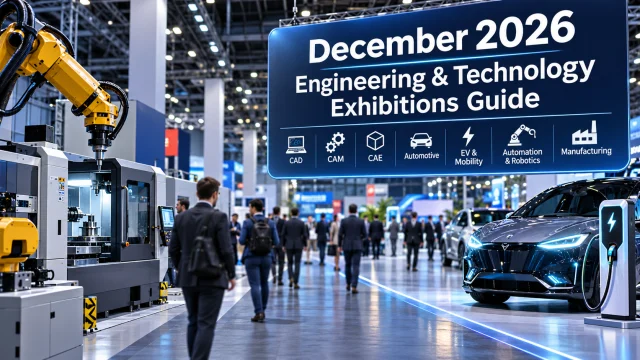
December 2026 Engineering & Technology Exhibitions Guide: CAD, CAM, CAE, Automotive, EVs and Smart Manufacturing
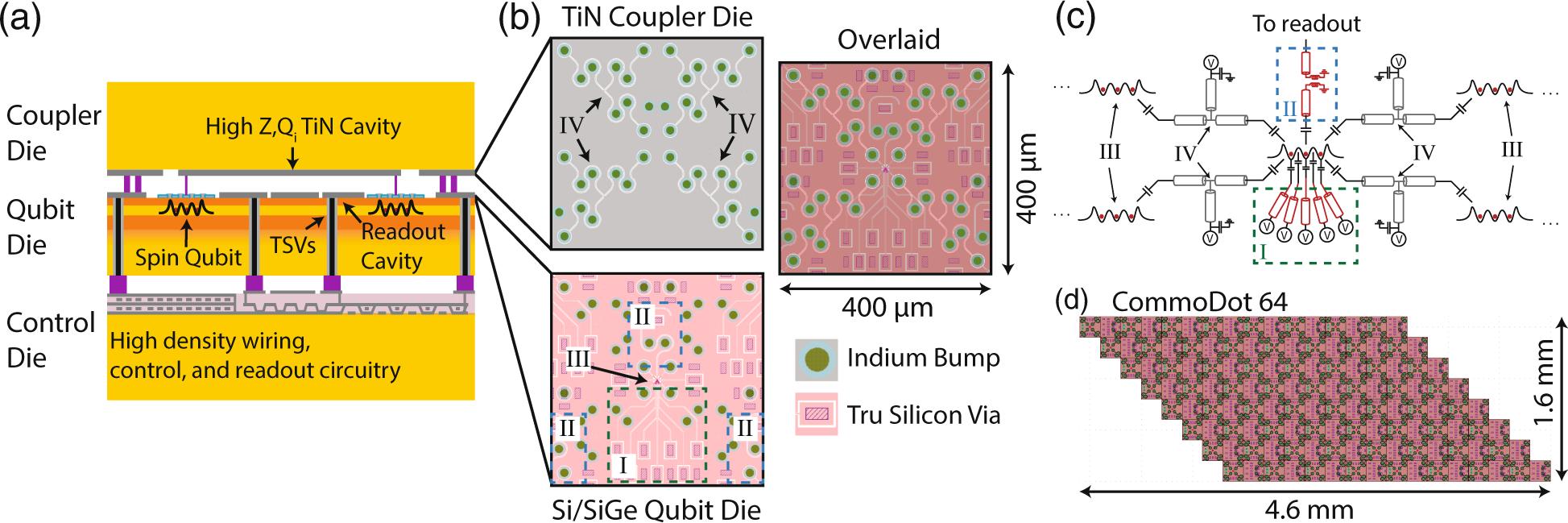
Existing CMOS Materials Could Enable Compact Quantum Sensors on Semiconductor Chips
 MEMBERS · ONE ENGINEERING COMMUNITY
 Engineering videos and tutorials
 Engineering marketplace and professional opportunities
 Courses, tutorials and learning paths
 Engineering files and CAD models
 Global engineering portfolios and professional network
Discussion
0 CommentsShare your thoughts and engineering insights with the community.
Sign in to join the discussion.
Join the discussionNo comments yet. Be the first to share your thoughts.