






CNC Punching: Tooling, Sheet Support and Reliable Feature Production
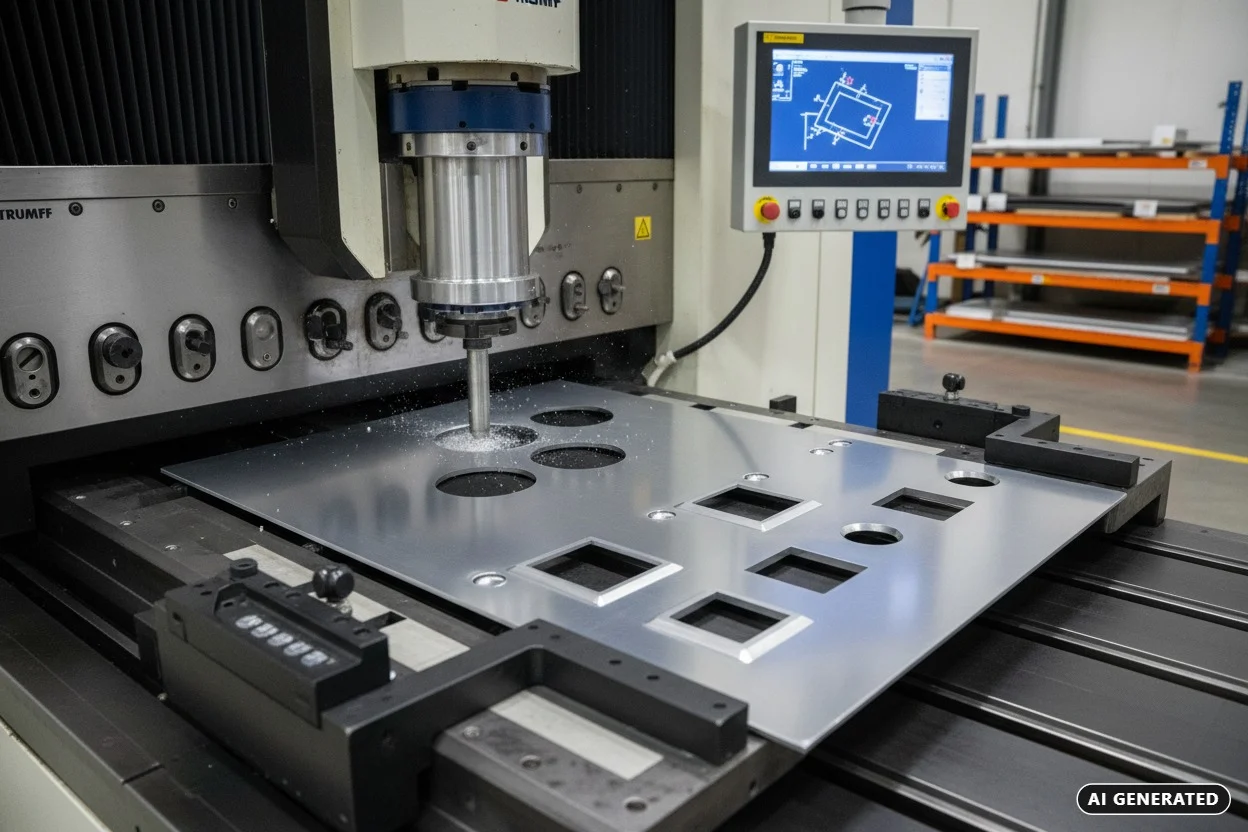
CNC punching produces holes and profiles in sheet by driving a punch into a matching die while controlling sheet or tool position. Depending on the machine, the process may also create selected formed features. Its usefulness depends on tooling, material behavior and the ability to maintain sheet control throughout the programmed sequence.
Punch and Die Relationship
Tool geometry and clearance must suit the material and operation. Too much or too little clearance can affect edge condition, force and tool life. Slug control is also important: material removed from a hole should not be pulled back into the working area or interfere with later operations.
Plan the Sequence
Features near sheet edges, narrow webs and partially separated profiles can reduce local support. The sequence should avoid leaving an unstable component that shifts before the final operations are complete. Micro-joints or other retention arrangements may be needed where appropriate, followed by controlled separation.
Sheet Handling and Forming
Clamps and supports must maintain position without damaging the material. Surface marking can matter even when feature dimensions are acceptable. Formed features require adequate clearance from tooling and supports in subsequent movements. The program should represent the real sheet condition after each operation.
Inspect Quality and Tool Wear
Burr growth, distorted holes and repeated marks can indicate changing tool condition or setup problems. Inspect relevant dimensions and sheet flatness as well as the cut edge. A simple outside-profile check can miss local deformation around a punched feature.
For a ventilated equipment panel, repeated perforations may affect stiffness and flatness as the pattern develops. Compare different sequences under representative support conditions. Include the condition after part separation in the assessment. A productive punching process balances material utilization, tool access and reliable handling, with maintenance decisions linked to actual part quality rather than an arbitrary number of strokes alone.
Additional Engineering Considerations
Repeated patterns can influence a sheet differently from isolated features. As perforations accumulate, stiffness and support change, and local heat or deformation may develop. A nesting arrangement that uses material efficiently can still make a delicate region difficult to retain. Examine the partially processed sheet in simulation or controlled trials where practical. Review how finished parts are separated and collected so edges and surfaces remain acceptable. These details help connect feature production with reliable sheet handling, which can govern the actual cycle more strongly than the speed of an individual punch stroke.
Practical Verification Priorities
The first verification priority is punch/die clearance and slug control. Establish the relevant condition before comparing alternatives, and retain enough setup information for another engineer to repeat the check. A result obtained under a different condition may answer a different question, even when the reported values appear comparable.
The next priority is sheet retention as features reduce stiffness. Decide what evidence would show that this part of the method is working and what finding would require investigation. Use representative inputs rather than only selected favorable samples. Where a change is introduced, record the technical reason and assess its effect on connected requirements.
Finally, verify burrs, marking and released-panel flatness over tool life. Define the acceptance basis and preserve the observations that support the decision. If an unexpected result appears, investigate both the physical process and the measurement method before applying a correction. This keeps development decisions traceable and helps the production team restore the accepted condition after normal adjustments or maintenance.
Report an image
 MEMBERS · ONE ENGINEERING COMMUNITY
 Engineering videos and tutorials
 Engineering marketplace and professional opportunities
 Courses, tutorials and learning paths
 Engineering files and CAD models
 Professional engineering projects
Discussion
0 CommentsShare your thoughts and engineering insights with the community.
Comments are closed for this article.
No comments yet. Be the first to share your thoughts.