





Permanent Mold Casting: Reusable Tooling and Controlled Solidification
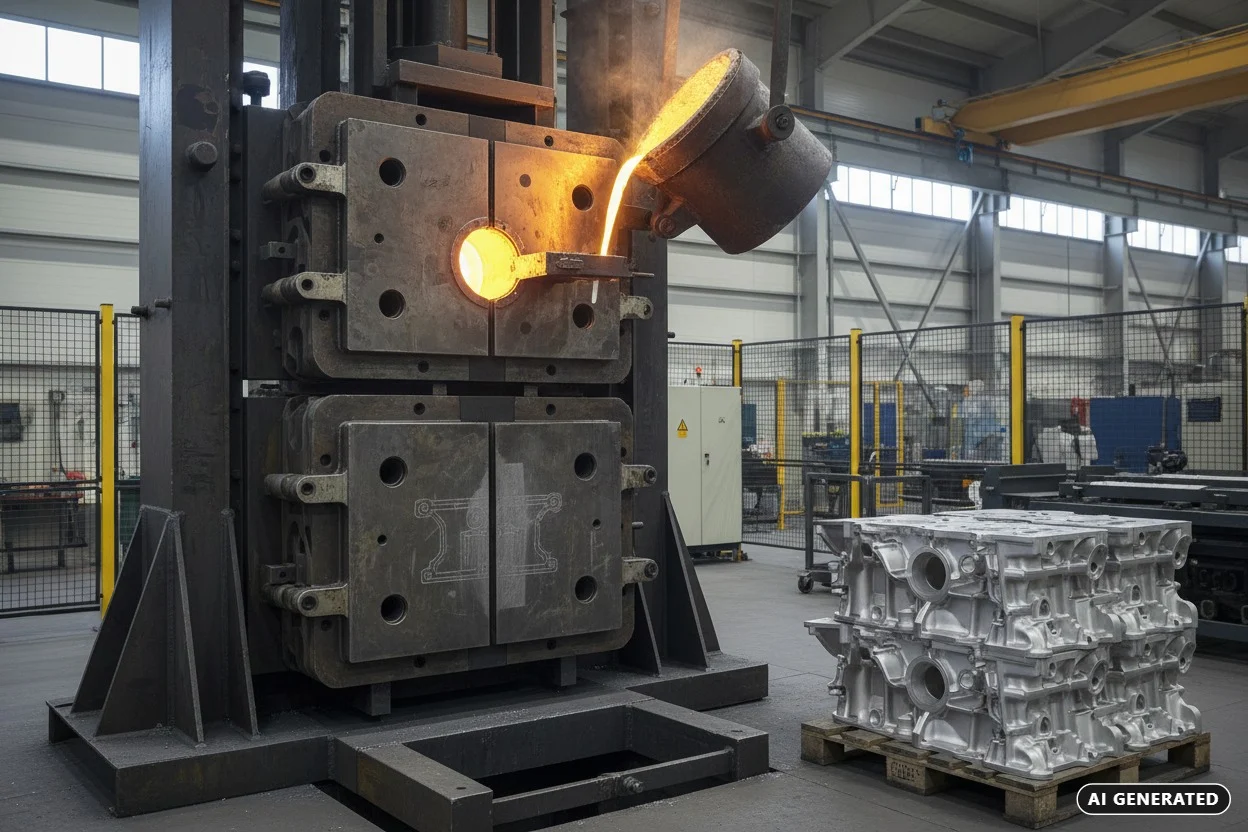
Permanent mold casting uses a reusable mold, commonly metallic, to produce cast components through repeated cycles. Gravity-fed arrangements are one important form. The process can offer useful consistency, but suitability depends on alloy, geometry and the way filling and cooling are controlled.
Mold and Metal Compatibility
The mold must withstand the thermal and mechanical conditions of the selected casting operation. Its material, coatings and preparation influence heat transfer and release. A reusable mold does not eliminate process variation; its condition and temperature can change throughout service.
Design for Filling and Removal
The cavity arrangement should support metal entry and air escape. Parting lines, draft and cores determine whether the casting can be produced and removed practically. Undercuts or enclosed features can require additional tooling arrangements. Design feasibility should be assessed with the foundry before the geometry is finalized.
Manage Solidification
Section thickness and thermal contact influence how the component develops. Local hot regions may need particular attention to feeding or cooling. Process planning should consider the complete component and tooling rather than treat each region independently. Stable timing helps maintain comparable mold conditions between cycles.
Inspect the Complete Route
Cast dimensions and surfaces should be evaluated along with internal quality where required. Heat treatment or machining can change the final acceptance condition. Reference features for later operations need to be practical and repeatable.
For a cast lever, examine thick attachment bosses and thinner connecting regions together. Evaluate filling, removal and the location of any required machining allowance. Trial production should include repeated cycles after thermal conditions stabilize. The strongest permanent mold application uses geometry and tooling that support consistent filling and cooling, with inspection tied to the component’s function rather than a general expectation that reusable tooling guarantees quality.
Additional Engineering Considerations
Tool life and maintenance should be part of the initial process concept. Mold surface condition can change heat transfer and release behavior, causing the process to drift even if pouring instructions remain the same. Define how relevant wear or damage is detected and how repairs are verified. Include repeatability after routine maintenance in trial assessment where practical. The objective is a process that can return to an established condition, not merely one that performs well with newly prepared tooling and unusually careful trial handling.
Practical Verification Priorities
The first verification priority is alloy-compatible mold preparation and condition. Establish the relevant condition before comparing alternatives, and retain enough setup information for another engineer to repeat the check. A result obtained under a different condition may answer a different question, even when the reported values appear comparable.
The next priority is filling, venting and removal access. Decide what evidence would show that this part of the method is working and what finding would require investigation. Use representative inputs rather than only selected favorable samples. Where a change is introduced, record the technical reason and assess its effect on connected requirements.
Finally, verify stable thermal cycle and final inspection after required secondary operations. Define the acceptance basis and preserve the observations that support the decision. If an unexpected result appears, investigate both the physical process and the measurement method before applying a correction. This keeps development decisions traceable and helps the production team restore the accepted condition after normal adjustments or maintenance.
Report an image
 MEMBERS · ONE ENGINEERING COMMUNITY
 Engineering videos and tutorials
 Engineering marketplace and professional opportunities
 Courses, tutorials and learning paths
 Engineering files and CAD models
 Professional engineering projects
Discussion
0 CommentsShare your thoughts and engineering insights with the community.
Comments are closed for this article.
No comments yet. Be the first to share your thoughts.