






Sensors and Transducers: From Physical Conditions to Useful Signals
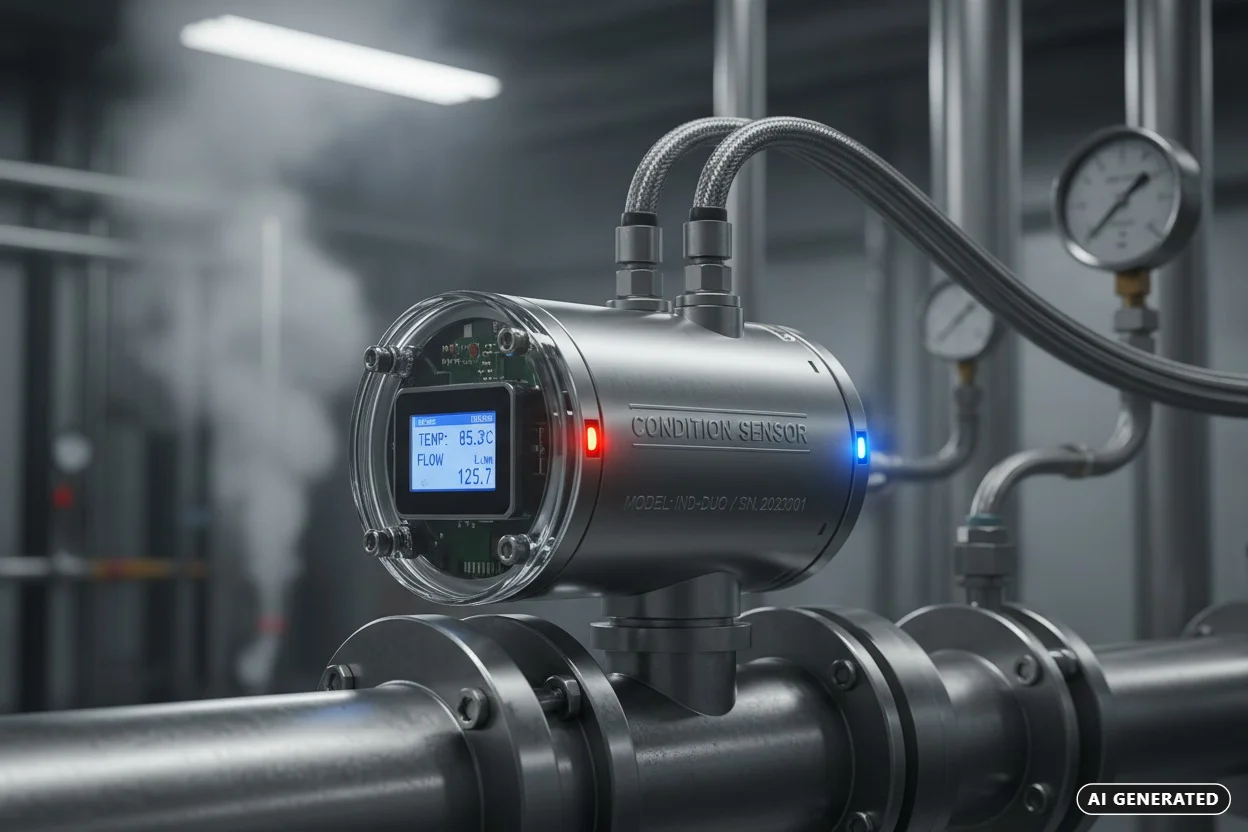
A sensor responds to a physical condition, while a transducer converts one form of information or energy into another. In industrial systems these functions often appear within the same device. The engineering task is to obtain a signal that represents the required condition accurately enough for the intended decision.
Define What Must Be Measured
Specify the physical quantity, relevant range and how quickly it changes. Measuring temperature differs from detecting whether a part is present. The required uncertainty and response should follow the function. More displayed digits or a faster output is not automatically more useful.
Understand the Measuring Chain
The sensing element, signal conditioning, wiring and controller all contribute. Scaling or configuration errors can make a correctly operating device produce misleading displayed information. Calibration and setup should consider the chain as installed rather than evaluating the sensor in isolation.
Installation Effects
Mounting, contact and environmental conditions can influence results. A temperature sensor may respond to its own installation condition rather than the intended process region. A position device may detect a fixture feature without establishing correct part seating. The physical meaning of the signal must be verified.
Diagnose and Maintain
Expected drift, contamination or damage should be considered in the maintenance plan. Fault behavior and loss of signal need defined responses. A plausible value is not necessarily a valid measurement, especially when wiring or configuration has changed.
For an automated assembly station, define exactly what a part-presence sensor proves and what it does not. Test representative components, mounting variation and failure conditions. Record device identity and configuration so replacements preserve the intended function. Useful sensing is a validated connection between the physical process and the decision being made, supported by appropriate installation and interpretation.
Additional Engineering Considerations
A measurement should be evaluated in relation to the action it triggers. A sensor suitable for trend monitoring may not provide the response or uncertainty required for a close control decision. Determine what error or delay would matter to the process, then select the measuring chain accordingly. During commissioning, compare displayed values with appropriate physical evidence. This practical check can reveal incorrect scaling or an unintended measurement location before those assumptions are built into automated decisions, reports or acceptance records.
Practical Verification Priorities
The first verification priority is clearly defined physical quantity and required response. Establish the relevant condition before comparing alternatives, and retain enough setup information for another engineer to repeat the check. A result obtained under a different condition may answer a different question, even when the reported values appear comparable.
The next priority is complete signal scaling and configuration. Decide what evidence would show that this part of the method is working and what finding would require investigation. Use representative inputs rather than only selected favorable samples. Where a change is introduced, record the technical reason and assess its effect on connected requirements.
Finally, verify verified installation meaning and controlled behavior when a signal becomes invalid. Define the acceptance basis and preserve the observations that support the decision. If an unexpected result appears, investigate both the physical process and the measurement method before applying a correction. This keeps development decisions traceable and helps the production team restore the accepted condition after normal adjustments or maintenance.
Report an image
 MEMBERS · ONE ENGINEERING COMMUNITY
 Engineering videos and tutorials
 Engineering marketplace and professional opportunities
 Courses, tutorials and learning paths
 Engineering files and CAD models
 Professional engineering projects
Discussion
0 CommentsShare your thoughts and engineering insights with the community.
Comments are closed for this article.
No comments yet. Be the first to share your thoughts.