






In-Die Tapping: Thread Formation Within Progressive Tooling
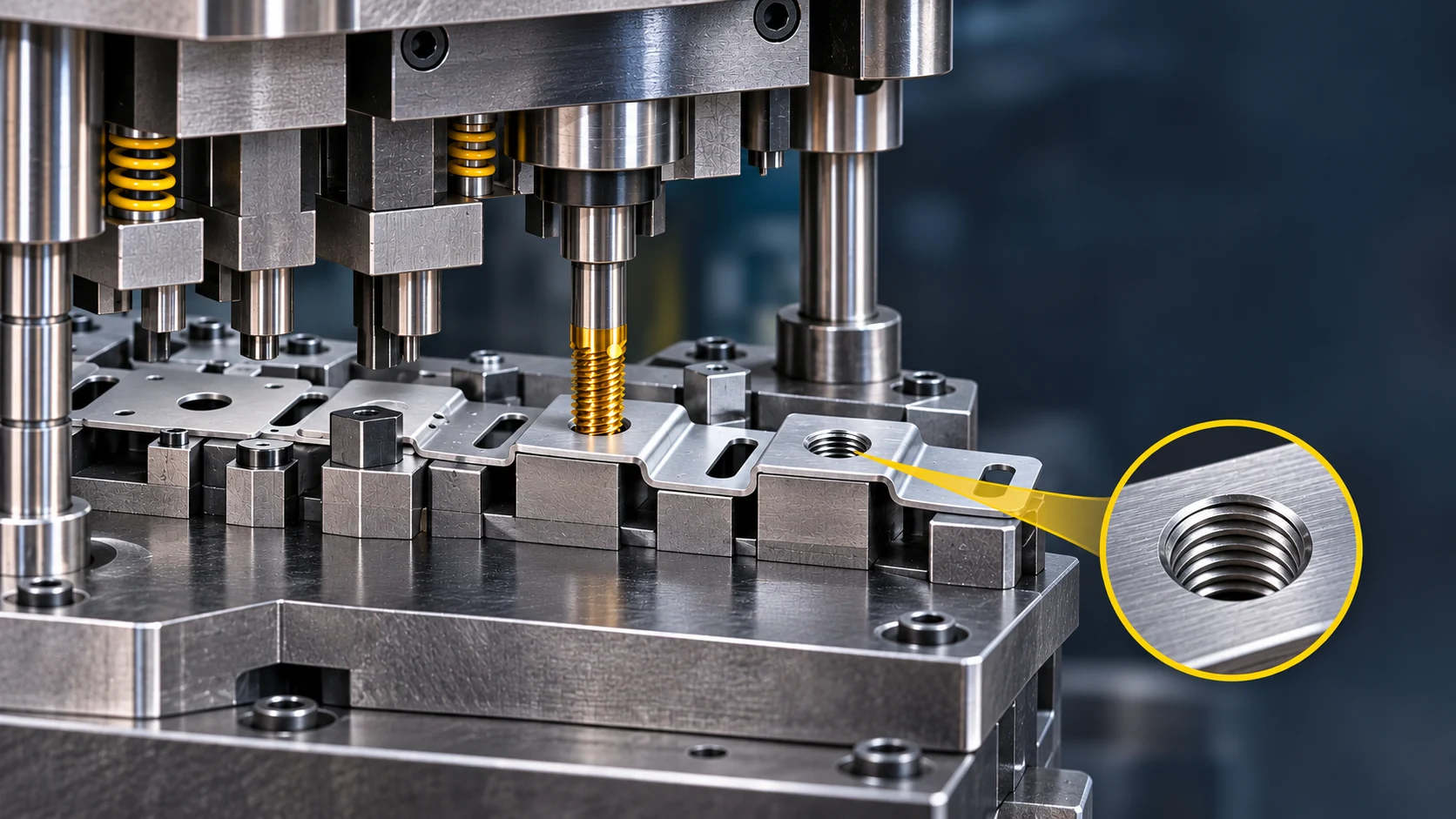
In-die tapping integrates thread production into a tooling sequence rather than transferring every part to a separate operation. Suitable applications can reduce handling, but they also connect thread quality to strip progression, tool timing and maintenance. The complete production method must be evaluated, not just the apparent saving of one operation.
Prepare the Hole and Material
The starting hole condition and material behavior influence thread formation. Form tapping and cutting taps have different requirements and should not be treated as interchangeable. The selected tool supplier’s guidance should define the preparation and process conditions. Variation in an earlier station can create failures at the tapping stage.
Synchronize the Motion
The tapping mechanism must engage and withdraw in coordination with the press cycle and strip movement. Access and clearance need to remain adequate throughout. A successful slow trial may not demonstrate reliable performance at production conditions. Timing should be evaluated through normal variation and controlled interruption recovery.
Manage Lubrication and Debris
The operation needs suitable lubrication and a plan for any chips or contamination created. Poor delivery can affect tool wear and thread quality. Cleaning and maintenance access should be included in the design. Replacing a broken tap without addressing the cause can repeat the interruption.
Inspect the Result
Thread acceptance should follow the functional requirement and appropriate inspection method. Appearance at the entrance is insufficient. Consider effective thread engagement and the condition of the surrounding formed feature. The inspection plan should detect gradual deterioration as well as sudden failure.
For a progressively formed bracket with a threaded collar, evaluate hole preparation, collar consistency and the tapping mechanism together. Record tool condition and relevant production counts with quality findings. An effective in-die process produces acceptable threads predictably while preserving the stability of the complete strip and press sequence.
Additional Engineering Considerations
The tapping station should not become the first place where variation from earlier operations is discovered. Inspect the features that prepare the hole or collar and relate their condition to later thread results. If tap failures increase, review alignment and lubrication alongside the tool itself. Normal press interruptions can also affect the state in which the mechanism resumes. Including those conditions in development helps establish a production method that remains synchronized and inspectable, with maintenance based on evidence rather than repeated reaction to broken tooling.
Practical Verification Priorities
The first verification priority is hole and material suitability for the chosen tapping method. Establish the relevant condition before comparing alternatives, and retain enough setup information for another engineer to repeat the check. A result obtained under a different condition may answer a different question, even when the reported values appear comparable.
The next priority is synchronized engagement and withdrawal. Decide what evidence would show that this part of the method is working and what finding would require investigation. Use representative inputs rather than only selected favorable samples. Where a change is introduced, record the technical reason and assess its effect on connected requirements.
Finally, verify lubrication, thread acceptance and evidence-based tool replacement. Define the acceptance basis and preserve the observations that support the decision. If an unexpected result appears, investigate both the physical process and the measurement method before applying a correction. This keeps development decisions traceable and helps the production team restore the accepted condition after normal adjustments or maintenance.
Report an image
 MEMBERS · ONE ENGINEERING COMMUNITY
 Engineering videos and tutorials
 Engineering marketplace and professional opportunities
 Courses, tutorials and learning paths
 Engineering files and CAD models
 Professional engineering projects
Discussion
0 CommentsShare your thoughts and engineering insights with the community.
Comments are closed for this article.
No comments yet. Be the first to share your thoughts.