



Electric, Hydraulic and Pneumatic Actuation: Comparing Complete Systems
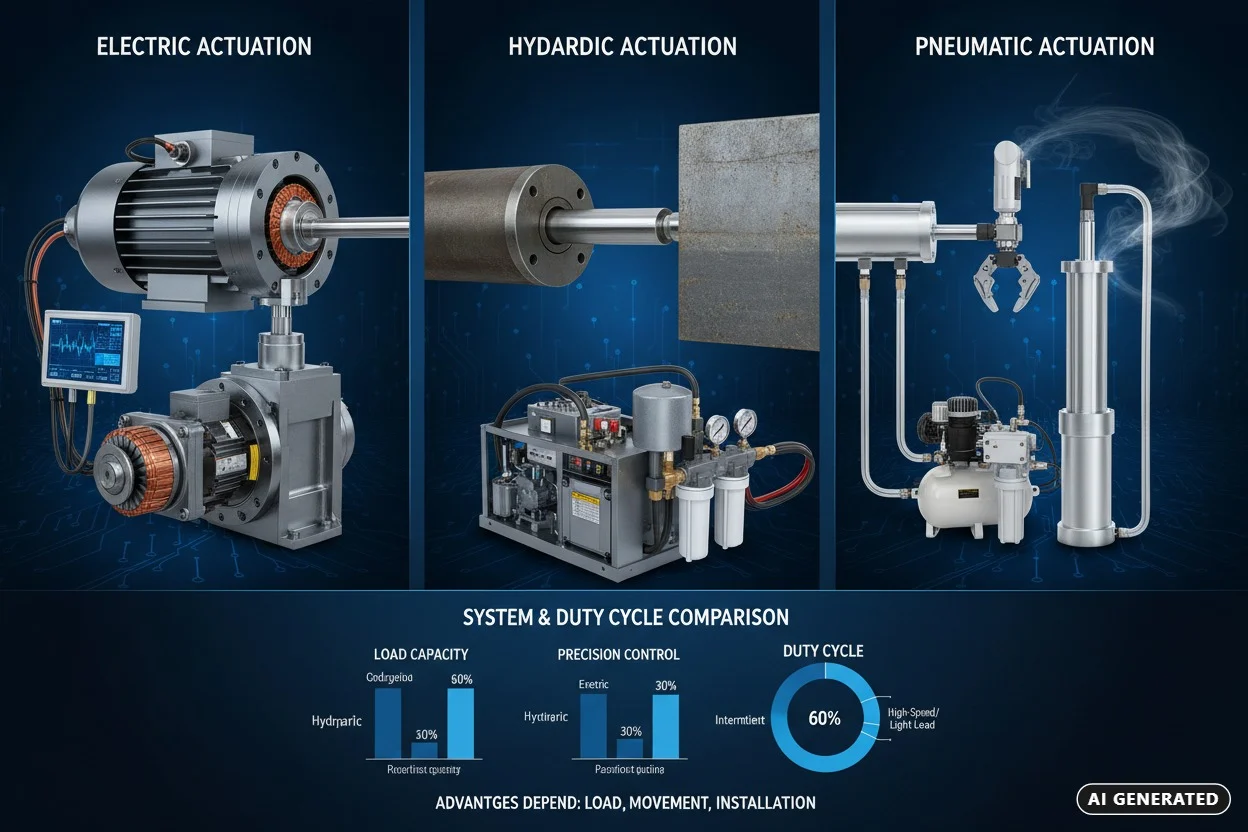
Electric, hydraulic and pneumatic actuation provide different ways to create controlled motion. Their advantages depend on the load, movement and installation. A useful comparison includes the complete system and duty cycle rather than treating one technology as universally stronger, cleaner or more efficient.
Describe the Required Motion
Define travel, force, speed and positioning needs. Include startup, stopping and holding behavior as well as the main working movement. A short high-force stroke can favor different arrangements from continuous precise positioning. Normal variation and interruption response should be part of the requirement.
System Components
Electric actuation may require motors, drives and mechanical transmissions. Hydraulic systems need fluid supply and suitable valves and actuators. Pneumatic systems depend on prepared compressed air and associated control components. Comparing only the final actuator hides the infrastructure that supports it.
Control and Compliance
Stiffness, compressibility, friction and feedback influence response. The relationship between a command and actual motion depends on the arrangement. Accurate performance can require suitable sensing and control, regardless of technology. Holding a load during loss of power or pressure needs explicit design consideration.
Service and Integration
Environment, leakage, noise and maintenance can influence suitability. Available utilities and local support also matter. Energy evaluation should consider the full duty and supply system, not simply a nominal component efficiency or one favorable operating point.
For a clamping and positioning station, separate the requirements that genuinely need precise motion from those that mainly need repeatable force or end-position travel. Compare representative cycles with the supporting equipment included. The best solution may combine technologies. Selection should be based on verified behavior, practical maintenance and the complete installation rather than a general preference for one actuation family.
Additional Engineering Considerations
A comparison should include the behavior required when the process stops unexpectedly. A load may need mechanical retention, controlled release or a defined stopping response. These functions should not be assumed from the actuator technology alone. Evaluate the complete arrangement, including valves, drives, brakes or other elements where relevant. Maintenance and recovery procedures must preserve that behavior. This makes technology selection a review of the whole motion system under normal and abnormal conditions, rather than a simplified contest between actuator labels.
Practical Verification Priorities
The first verification priority is full motion and holding requirements. Establish the relevant condition before comparing alternatives, and retain enough setup information for another engineer to repeat the check. A result obtained under a different condition may answer a different question, even when the reported values appear comparable.
The next priority is infrastructure and control needed for actual performance. Decide what evidence would show that this part of the method is working and what finding would require investigation. Use representative inputs rather than only selected favorable samples. Where a change is introduced, record the technical reason and assess its effect on connected requirements.
Finally, verify complete-duty energy, maintenance and interruption behavior. Define the acceptance basis and preserve the observations that support the decision. If an unexpected result appears, investigate both the physical process and the measurement method before applying a correction. This keeps development decisions traceable and helps the production team restore the accepted condition after normal adjustments or maintenance.


Discussion
0 CommentsShare your thoughts and engineering insights with the community.
Comments are closed for this article.
No comments yet. Be the first to share your thoughts.