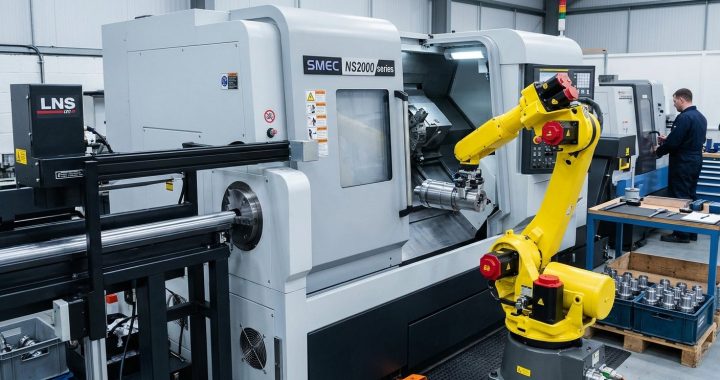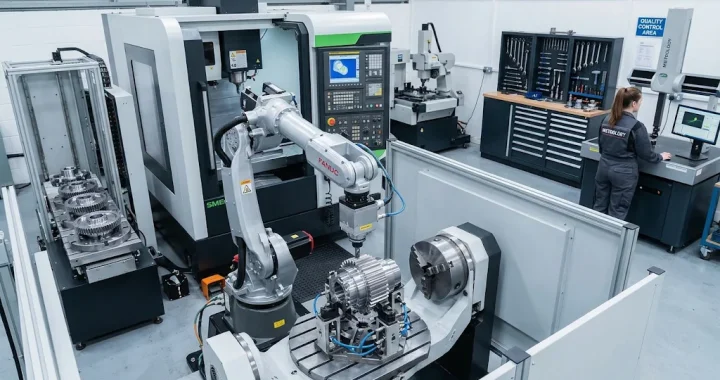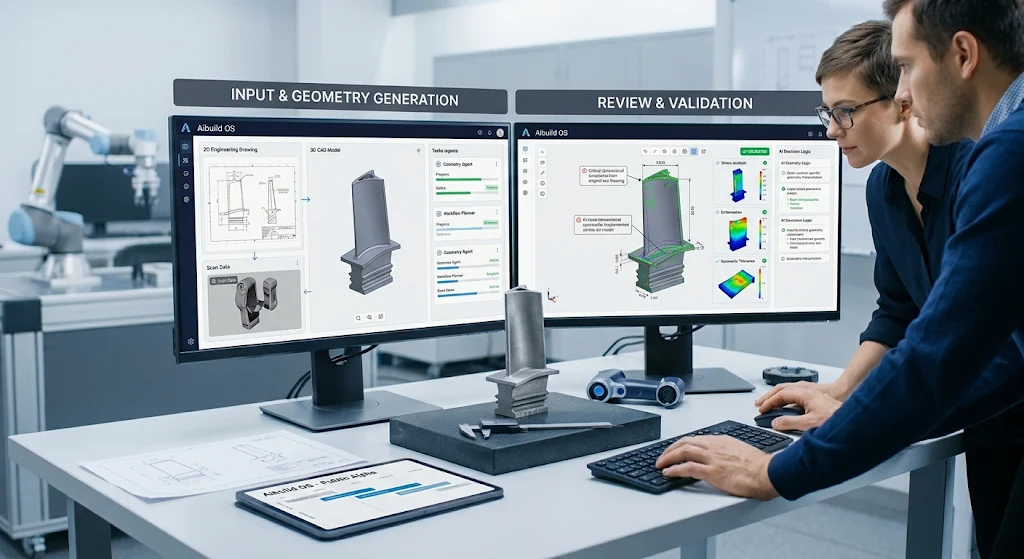
Aibuild has introduced Aibuild OS as a platform intended to coordinate AI-driven tasks across CAD, CAE and CAM. The announcement describes digital agents that can plan and execute workflows involving geometry creation, scan preparation and manufacturing output. It also identifies the release as a public alpha. For engineering teams, this is an exploratory software proposition with a broad scope: the important assessment is whether a bounded workflow remains technically correct and traceable as it moves between different tools.
Design intent must survive representation changes
Converting a drawing, image or scan into a three-dimensional model involves interpretation. The resulting geometry may look plausible while omitting a constraint that matters to the component’s function. A workflow that moves automatically between representations therefore needs checks at the points where information can be lost or inferred. Faster translation is valuable only when the necessary engineering meaning is retained.
The team should identify what each input actually establishes. A scan records a physical shape under particular measurement conditions; it does not automatically reveal the nominal design intent. A drawing may specify relationships that are not obvious from an image of the part. The acceptance method should reflect those differences rather than treating every representation as an interchangeable route to the same definitive model.
An executable workflow needs intermediate evidence
Aibuild describes agents that can undertake multi-step operations across software environments. That can reduce manual transfer work, but it also creates a need to inspect intermediate states. If a downstream toolpath is unsuitable, the engineer should be able to determine whether the problem originated in geometry interpretation, a process choice or a later software operation.
A useful pilot should preserve the inputs, significant transformations and resulting files. The objective is not to require a person to repeat every automated action, but to make the reasoning and output reviewable. Without such a record, a workflow may be difficult to correct or reproduce even when its final result appears acceptable. Engineering automation needs an interpretable route as well as a completed task.
Manufacturing output carries application assumptions
The announcement includes automatic generation of moulds, fixtures and manufacturing paths among its intended capabilities. Each of those tasks requires information beyond a visually complete solid model. Loads, materials, access, tolerances and process constraints can influence the result. An organisation should establish which of those requirements the software receives explicitly and which it is being asked to infer.
The released output should then be checked through the appropriate engineering process. A fixture needs assessment of its locating and clamping functions; a toolpath needs verification against the actual machine and setup. A convincing generated geometry does not replace those checks. Keeping the review tied to the intended function prevents the convenience of an end-to-end workflow from concealing missing requirements.
Evaluate the alpha within a bounded use case
Public-alpha status is an important part of the announcement. Teams considering evaluation should define the permitted scope, keep copies of their source material and establish a recovery method. An initial trial can focus on a nonreleased project or a task whose result can be checked independently. That creates useful evidence without assuming production maturity from the breadth of the marketing description.
Aibuild OS is significant because it attempts to connect activities that often consume engineering time through repeated translation and manual orchestration. The practical path to adoption is to demonstrate one representative workflow, document where human judgement remains necessary and verify the final output against an established baseline. The value lies in reducing avoidable execution work while preserving the technical decisions and approval responsibilities that make the manufacturing definition dependable.
Source — develop3d.com. Source publication date 2026-03-12. Engineering analysis: The CAD Verse.