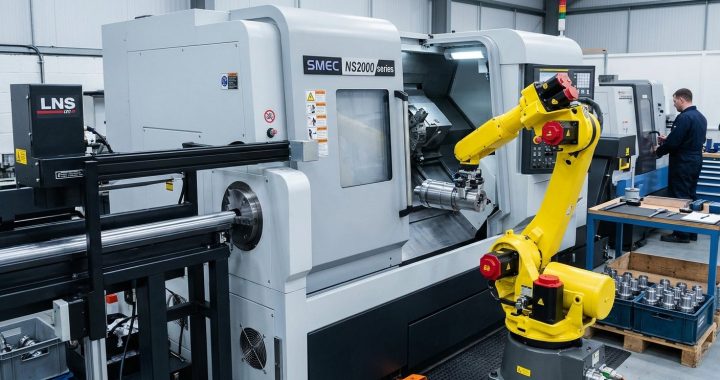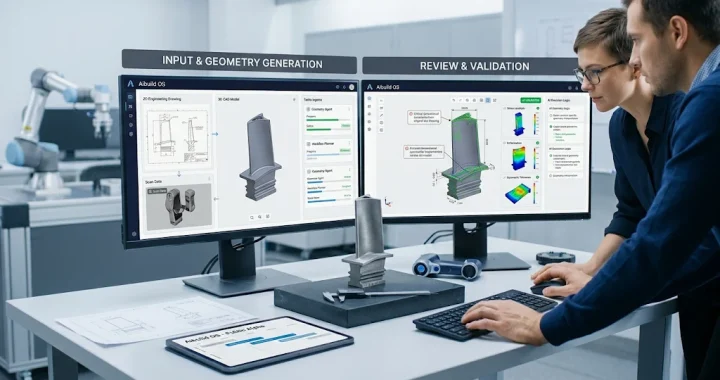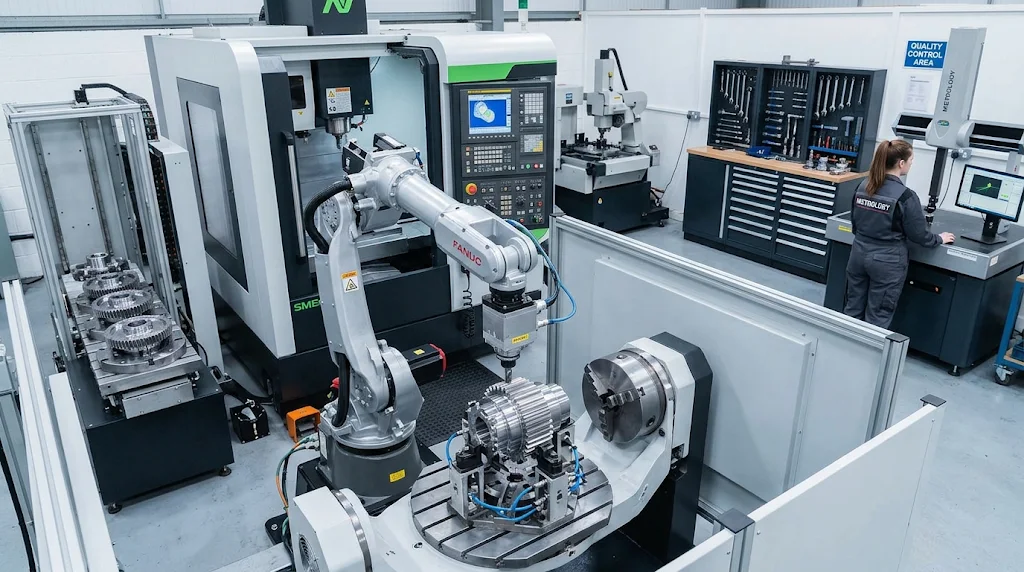
ABB is integrating NVIDIA Omniverse libraries into RobotStudio to support the development of AI-enabled robotics through simulation. The reported RobotStudio HyperReality approach combines digital environments, synthetic training data and feedback from physical operation. The announcement presents this as a way to improve the transfer of robotic behaviours from simulation into industrial use. For engineering teams, the important opportunity is a more connected development loop, while the central verification question remains how well the virtual representation predicts the conditions encountered by the actual robot.
A digital twin needs a defined purpose
A virtual cell can support different decisions, from checking reach to developing perception or evaluating a task sequence. Those uses do not require the same level of detail in every part of the model. The team should define the question before deciding which physical properties and environmental variations to represent. A highly detailed scene can still be unsuitable if the behaviour governing the decision is simplified incorrectly.
The phrase digital twin should therefore be accompanied by an explanation of what is represented and how the representation is maintained. Geometry, tooling, object states and process assumptions can change during development. If the virtual environment no longer matches the intended cell, a successful simulation may describe a condition that the factory will never reproduce. Revision control belongs in the simulation workflow as well as the mechanical design workflow.
Synthetic data expands examples, not certainty
Simulated environments can generate a range of training examples without arranging every physical case in the factory. That may be useful where collecting varied observations is slow or disruptive. However, the examples reflect the assumptions used to create them. A model trained on a broad-looking set of scenes can still miss a physical variation that was absent from the generator.
Engineers should identify which changes in parts, lighting, position or presentation are relevant to the task. The training and evaluation plan should make those variations explicit. It is useful to keep some physical cases separate from the development process so that they provide a meaningful check of transfer. Success on the same conditions used for optimisation does not establish the same confidence as success on independently selected conditions.
Real feedback needs an interpretable route
The announcement describes using physical data to improve the virtual models. Such feedback can make the development loop more useful, but only if the team can connect an observed difference to the relevant configuration. Robot software, tooling, sensors and the environment should remain identifiable. Otherwise, the system may be adjusted repeatedly without a clear explanation of why its performance changed.
A controlled update process should record what changed and which tests were repeated. The objective is to improve the representation while preserving the ability to explain earlier results. This becomes particularly important when several cells or robots use a common model. An improvement for one condition should not silently reduce performance in another condition that remains part of the production requirement.
Industrial release remains an engineering decision
The source includes strong supplier language about overcoming barriers between simulation and real operation. That should be read as the partnership’s positioning rather than a universal guarantee that transfer problems have disappeared. Physical commissioning and application-specific acceptance remain necessary. Simulation provides evidence that supports those decisions; it does not replace responsibility for the installed system.
For manufacturers, the practical approach is to begin with a bounded robotic task and a defined success criterion. Demonstrate how the virtual model, training data and physical test relate to that criterion, then expand the scope deliberately. The ABB and NVIDIA integration is significant because it connects tools used at different stages of robotics development. Its value will be established by repeatable transfer and controlled updates in real manufacturing conditions.
Source — mtimagazine.com. Source publication date 2026-03-20. Engineering analysis: The CAD Verse.