



G and M Codes: Understanding CNC Commands Without Copying Blindly
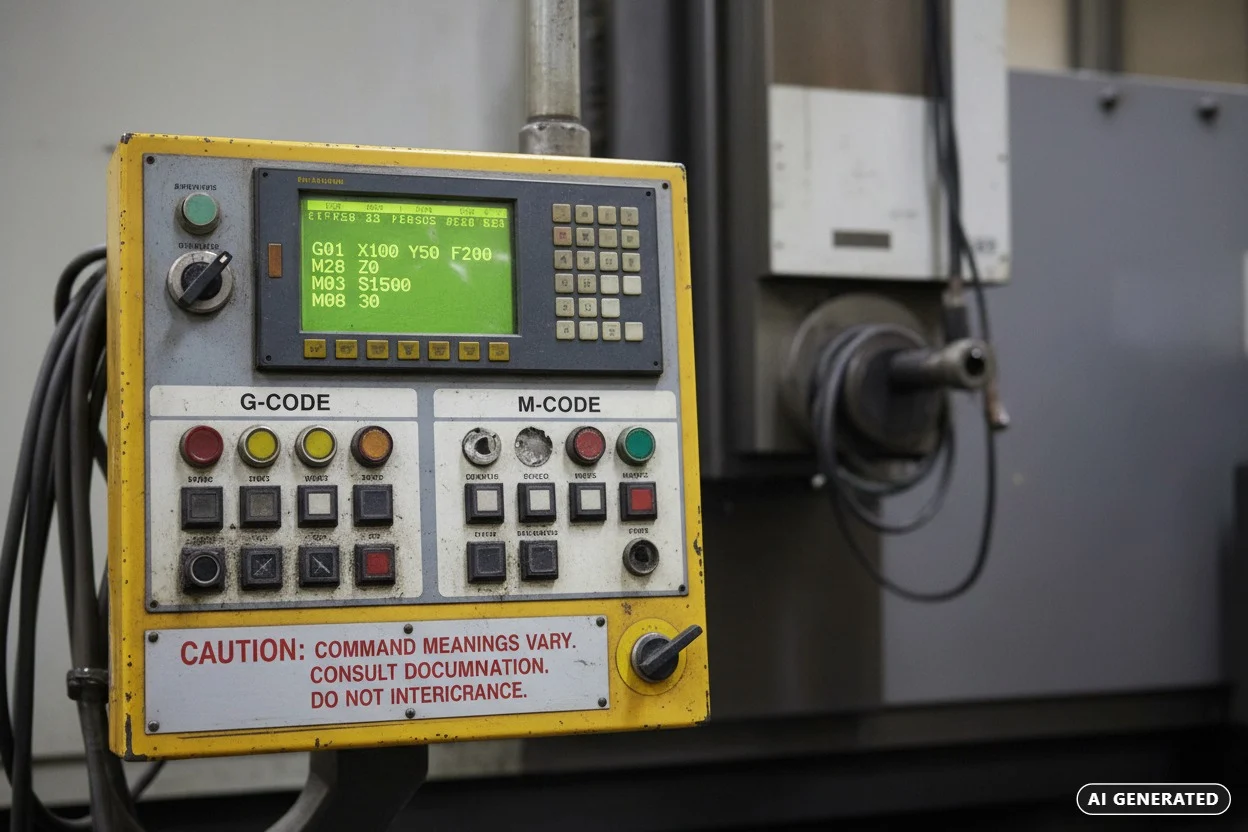
G and M codes are used by many CNC systems to describe motion and machine functions. Their meaning depends on the control, machine configuration and selected programming conventions. Familiar-looking commands should not be treated as universally interchangeable between machines. The relevant machine and control documentation must govern their use.
Motion and Machine Functions
G functions commonly establish movement modes or machining behavior. M functions commonly control auxiliary actions such as spindle or coolant operation. Exact support and behavior vary. A program also depends on coordinates, tool data and the machine’s current state. Reading individual commands without that context can be misleading.
Modal Behavior
Some functions remain active until changed or cancelled. This persistence can affect later movements even when the original command is no longer visible in the current block. Program review should therefore consider the sequence and starting conditions, not just the line immediately preceding a feature.
Coordinate and Compensation Conventions
Absolute and incremental positioning, work coordinate selection and tool compensation influence how movement is interpreted. Incorrect assumptions can shift the toolpath or change its relationship to the workpiece. The program must agree with the setup and the control’s documented behavior.
Machine-Specific Verification
A postprocessor should output commands appropriate to the intended machine. Generic code lists are educational references, not ready production procedures. Machine options, rotary axis conventions and builder-defined functions can create important differences. Simulation and approved machine-side verification should use the correct configuration.
For a repeat job, retain the validated program together with its setup sheet and tooling information. Changes made during tryout should be recorded and incorporated into the controlled version. Avoid copying isolated command sequences from another job without understanding what they establish and what state they leave behind. Understanding codes is valuable because it supports review and diagnosis, rather than because it removes the need for process knowledge.
Additional Engineering Considerations
Educational command examples should be clearly separated from executable instructions. A short fragment may omit the starting state that makes it valid in its original context. Even a familiar movement can have a different practical effect when offsets, modes or tool compensation are active. Review program logic using the complete sequence and the correct documentation. When diagnosing unexpected motion, preserve the relevant program and setup information before making uncontrolled changes. This supports understanding of the event and reduces the risk that a temporary workaround becomes an undocumented production standard.
Practical Verification Priorities
The first verification priority is control and machine-builder documentation for each function. Establish the relevant condition before comparing alternatives, and retain enough setup information for another engineer to repeat the check. A result obtained under a different condition may answer a different question, even when the reported values appear comparable.
The next priority is modal starting conditions and compensation conventions. Decide what evidence would show that this part of the method is working and what finding would require investigation. Use representative inputs rather than only selected favorable samples. Where a change is introduced, record the technical reason and assess its effect on connected requirements.
Finally, verify validated program revision linked to the actual setup and postprocessor. Define the acceptance basis and preserve the observations that support the decision. If an unexpected result appears, investigate both the physical process and the measurement method before applying a correction. This keeps development decisions traceable and helps the production team restore the accepted condition after normal adjustments or maintenance.



Discussion
0 CommentsShare your thoughts and engineering insights with the community.
Comments are closed for this article.
No comments yet. Be the first to share your thoughts.