



Polymer Composite Manufacturing: Processes, Reinforcement and Design
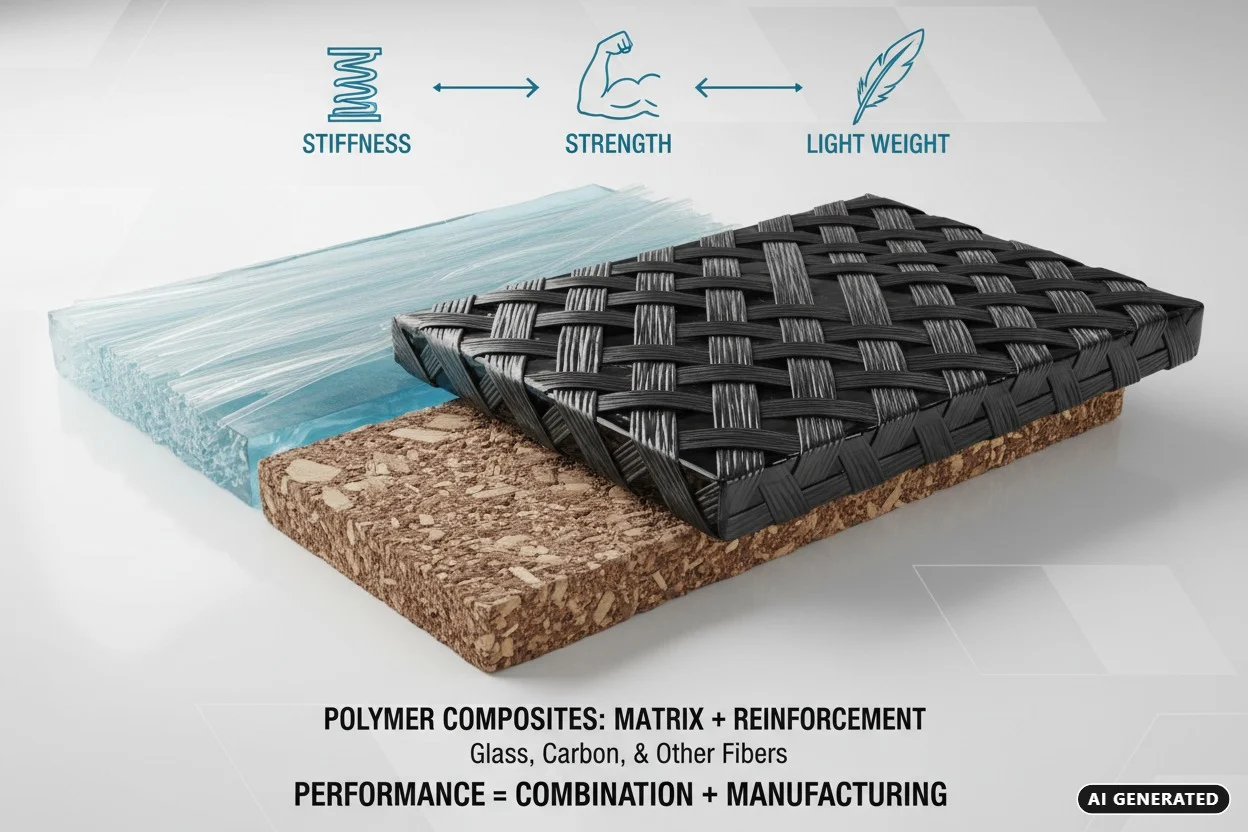
Polymer composites combine a polymer matrix with reinforcement selected to improve particular properties. Glass fibers, carbon fibers and other reinforcements can provide different combinations of stiffness, strength and weight. The matrix holds the reinforcement in place, transfers load and helps protect it from its environment. Performance depends on the combination and manufacturing history, rather than on the reinforcement name alone.
Manufacturing Routes
In hand layup, reinforcement and resin are placed into or onto a mold. Vacuum-assisted processes use a pressure difference to support consolidation and resin movement. Resin transfer molding introduces resin into a closed mold containing a prepared reinforcement arrangement. These routes differ in tooling, achievable consistency and production requirements. A process suitable for a large, low-volume panel may be inappropriate for a small component made in high quantities.
Designing the Reinforcement
Fiber direction matters because many composites do not behave equally in every direction. Orientations should follow relevant loads while also accommodating joints, openings and handling. Adding thickness without considering the layup can increase weight without addressing the governing failure mode. Sharp transitions and local interruptions can disturb reinforcement placement and introduce difficult manufacturing regions.
Controlling Production
Resin mixing, material storage and the approved curing cycle influence the finished structure. Excess resin does not automatically improve quality, and insufficient wetting can leave poorly consolidated regions. Trapped air, contamination and unintended fiber movement are important process concerns. Mold release practice must permit removal without compromising later bonding or coating operations.
Inspection and Application
A composite enclosure illustrates the need to develop geometry and manufacturing together. Mounting bosses, cutouts and bonded inserts create local demands that a simple material substitution may overlook. Dimensional inspection should be combined with appropriate assessment of internal quality where required. Repairability, moisture exposure and service temperature belong in the original design review. A successful component is demonstrated by representative manufactured parts and relevant testing, not by idealized material data alone.
Additional Engineering Considerations
Joining deserves its own development work. Drilled holes, bonded joints and inserts can interrupt the reinforcement and concentrate loading. The process used to create the joint may also damage the laminate locally. Select attachment details that suit the manufacturing route and inspect representative assembled parts. Where a composite replaces metal, retain the original functional requirements rather than copying the original shape automatically. Consider how loads enter the new structure and how damage would be detected in service. These questions can change the reinforcement layout before any production tooling is purchased.
Practical Verification Priorities
The first verification priority is reinforcement orientation and continuity around openings. Establish the relevant condition before comparing alternatives, and retain enough setup information for another engineer to repeat the check. A result obtained under a different condition may answer a different question, even when the reported values appear comparable.
The next priority is resin preparation and the documented curing cycle. Decide what evidence would show that this part of the method is working and what finding would require investigation. Use representative inputs rather than only selected favorable samples. Where a change is introduced, record the technical reason and assess its effect on connected requirements.
Finally, verify internal defects and attachment performance under representative loading. Define the acceptance basis and preserve the observations that support the decision. If an unexpected result appears, investigate both the physical process and the measurement method before applying a correction. This keeps development decisions traceable and helps the production team restore the accepted condition after normal adjustments or maintenance.


Discussion
0 CommentsShare your thoughts and engineering insights with the community.
Sign in to join the discussion.
Join the discussionNo comments yet. Be the first to share your thoughts.