17D Grows Turning Capacity with DN Solutions Lynx 2600M
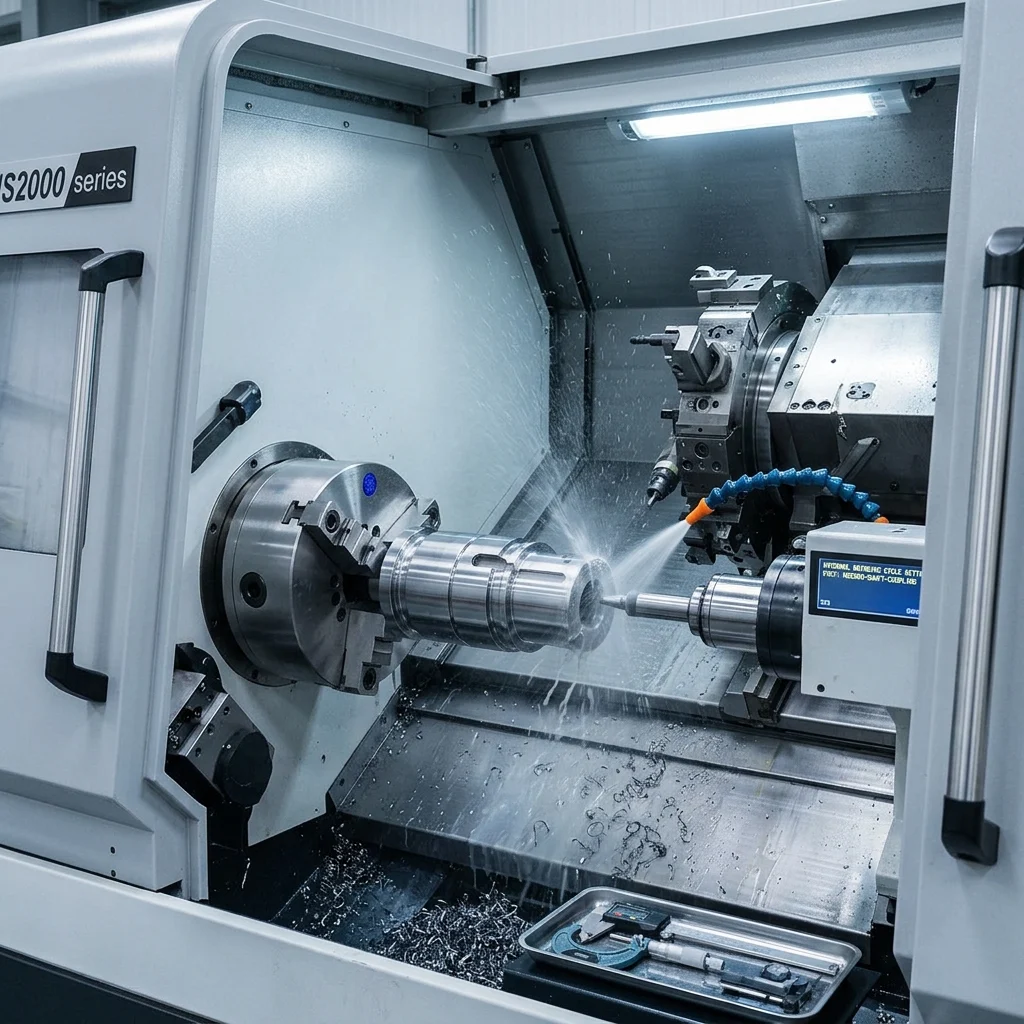
Rail-sector subcontractor 17D has installed a DN Solutions Lynx 2600M turning centre to increase its capacity for small precision components. Supplied by Mills CNC, the machine includes a C axis and driven tooling, with an announced 18.5-kilowatt spindle. The company reports growing demand and production bottlenecks on its previous equipment. Its work ranges from individual replacement parts to batches of 200, making flexibility and dependable turnaround important alongside the cutting performance of the new machine.
Replacement work creates a varied production mix
Supplying rail replacement components can involve different quantities, geometries and delivery priorities. The most efficient process for a repeated batch may not suit an urgent one-off. Equipment selection should therefore examine the range of jobs the business actually accepts rather than focusing on one ideal demonstration part. Setup time and the ability to prepare the next job can materially influence available capacity.
The source identifies shafts, housings, cylinders and couplings among the parts already machined. Those component families can use similar turning resources while requiring different workholding and inspection arrangements. Standardising the process where appropriate can help, but each job still needs its own defined datum and acceptance requirements.
Driven tooling changes the transfer decision
Adding milling and drilling capability to a turning centre can reduce the need to move a component to a separate machine. That may preserve relationships between turned and non-turned features and reduce handling. The gain depends on whether the relevant surfaces are accessible and whether the combined cycle suits the component’s geometry and quantity.
A process planner should compare the complete alternatives rather than assuming that one setup is always preferable. A secondary machine may still be appropriate for a feature that requires different access or a substantially different process. The engineering objective is a reliable route with controlled feature relationships, not simply the smallest possible count of workpiece transfers.
Available stock influenced the investment
The article describes an initial interest in a smaller machine before 17D selected a larger Lynx 2600M available for immediate delivery. Availability can be a legitimate factor when existing equipment is constraining customer schedules. However, the application study still needs to confirm that the offered configuration meets the core requirements and fits the workshop’s physical and operational environment.
The announced maximum turning dimensions describe capacity limits, not a guarantee that every component within them can be completed under every setup. Chucking length, tool reach and the shape of the workpiece can reduce the usable envelope. Reviewing representative fixtures and tooling helps turn those nominal dimensions into a realistic production assessment.
Measure improvement at the delivery level
17D reports improved efficiency and its ability to meet lead times following the installation. Those are customer-specific outcomes. A similar business should track accepted output, setup effort and the number of jobs waiting for the constrained operation to understand whether a machine investment has addressed the original problem.
For The CAD Verse readers, the case illustrates a practical response to a changing order mix rather than a technology demonstration in isolation. The combination of turning and driven-tool operations can be valuable when it reduces transfers and provides capacity where demand has grown. Its success depends on matching workholding, programming and inspection to that demand, so that the additional machine resource becomes dependable customer delivery rather than merely another available spindle.
Source — mtimagazine.com. Source publication date 2026-09-25. Engineering analysis: The CAD Verse.
Rate This Article
Share This Article
Share engineering knowledge with your network.
 MEMBERS · ONE ENGINEERING COMMUNITY