
Lenovo targets local AI with next-gen workstations
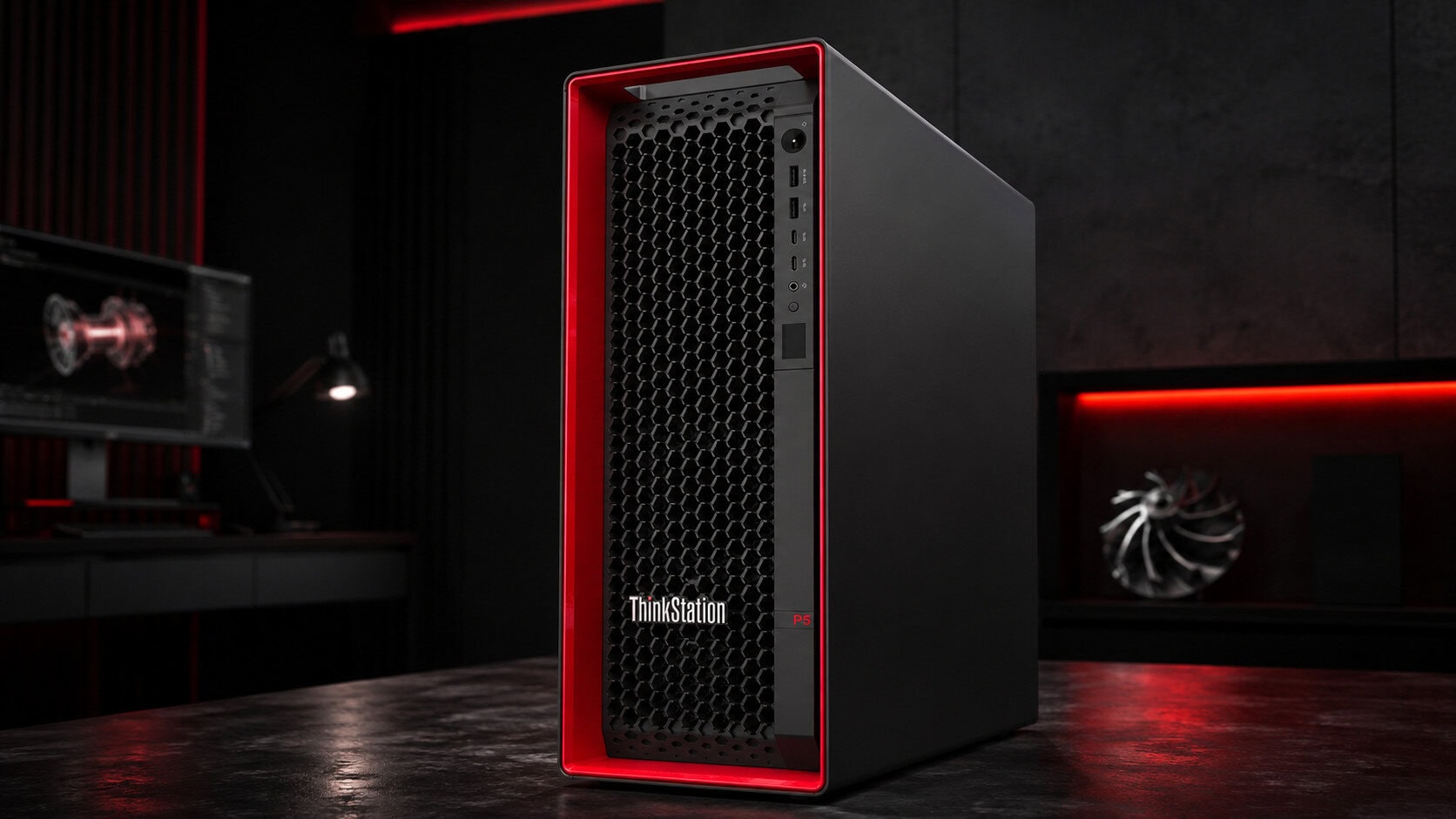
Lenovo has announced a new group of ThinkPad P Series laptops and the ThinkStation P5 Gen 2 desktop, placing local AI alongside traditional workstation work. The range combines different CPU, GPU and NPU arrangements rather than one uniform architecture. Reported options span highly portable machines with integrated graphics and larger systems with professional discrete GPUs. For an engineering team, this variety makes it important to distinguish the resource required by each application from the general promise of on-device AI.
Compute resources are not interchangeable
A processor, graphics device and neural processing unit can support different types of work, depending on the software implementation. Adding their quoted AI capability into one total does not establish the speed of a CAD operation or an analysis job. The application must have a supported route to the relevant hardware. Buyers should therefore begin with the intended software and working data rather than a combined performance label.
The announcement’s AMD P14s configuration uses shared system memory across several resources, while other configurations introduce discrete graphics memory. That distinction can affect the size of a workload that fits and the way it is executed. Neither arrangement is universally preferable. A representative test should establish the practical result for the model or design task that the user actually needs to complete.
Portability depends on the selected configuration
Lenovo describes differences in size and mass between laptop variants, including an integrated-graphics AMD model and an Intel model accommodating a discrete GPU. Those differences demonstrate how internal architecture influences the external product. Engineers who travel frequently may value a smaller machine, while another user may accept greater mass for a workload-specific capability.
The comparison should include sustained use, display requirements and the normal set of applications open together. A brief demonstration may not reflect the behaviour of a thin workstation during a longer task. Teams should also confirm which memory and display options are available in the specific regional configuration they intend to buy. A family-level announcement is not a complete procurement specification.
Desktop capacity serves a different operating pattern
The ThinkStation P5 Gen 2 is described with substantially larger memory and GPU options than the mobile systems. That makes it a candidate for workloads that are less constrained by portability, but it does not establish universal scaling. Simulation and rendering tools use additional cores and devices differently, and licence conditions can influence what is practical.
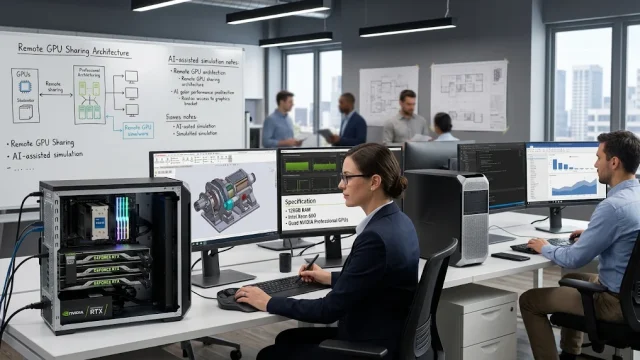
An engineering department should consider whether that capacity belongs at an individual desk or within a shared computing workflow. The answer depends on job frequency, concurrency and the time sensitivity of interactive work. A powerful system can remain underused if its operating model is not aligned with demand. Hardware selection and workload scheduling should therefore be considered together.
Local deployment still needs governance
Lenovo’s announcement also discusses software for local assistants and agent development. Keeping computation on the workstation can change where data is processed, but it does not remove the need to control access and approve consequential actions. Engineering teams should define which project information a tool may use and how its outputs are reviewed. Those controls are operational requirements, not properties established by a processor specification.
The battery technology mentioned alongside the launch is explicitly described as a proof of concept. It should remain separate from the released workstation specifications. For buyers, the useful next step is a controlled evaluation of available configurations with real CAD, visualisation or AI tasks. The portfolio’s significance lies in offering different resource balances; its value to a particular engineer depends on selecting and verifying the balance that fits the work.
Source — develop3d.com. Source publication date 2026-03-24. Engineering analysis: The CAD Verse.
Report an image
 MEMBERS · ONE ENGINEERING COMMUNITY
Discussion
0 CommentsShare your thoughts and engineering insights with the community.
Comments are closed for this article.
No comments yet. Be the first to share your thoughts.