HP updates Z workstations with Xeon 600 desktops and laptops
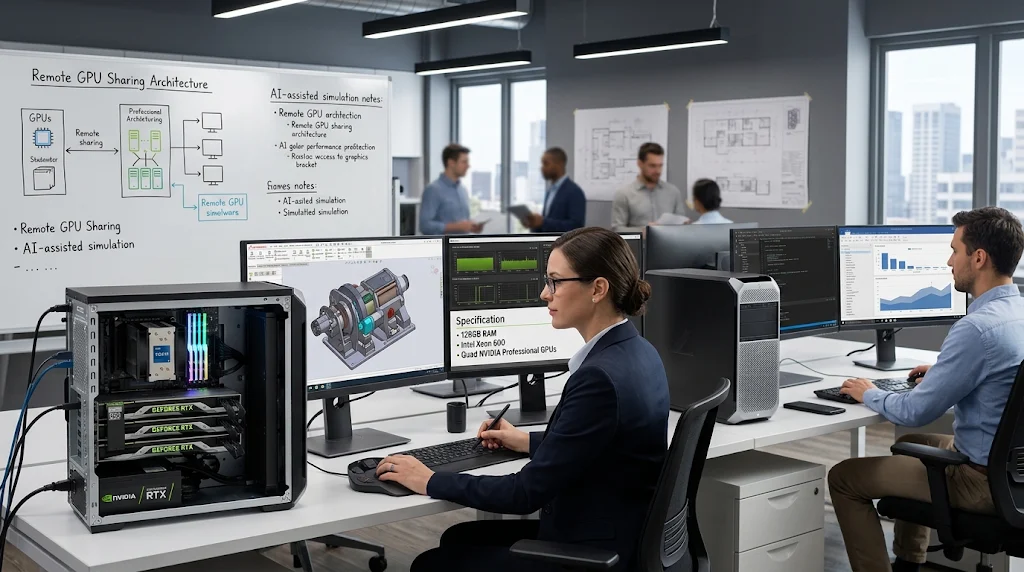
HP is refreshing its Z workstation portfolio with new desktop and mobile systems while extending remote GPU sharing into rendering. The announcement introduces the Z4 G6i and Z8 Fury G6i desktops, several ZBook variants and additional local-AI software. For engineering departments, these developments connect two investment questions: how much computing capability belongs at each desk, and how effectively existing equipment can be shared when individual users are not consuming its full capacity.
Desktop expansion needs a balanced configuration
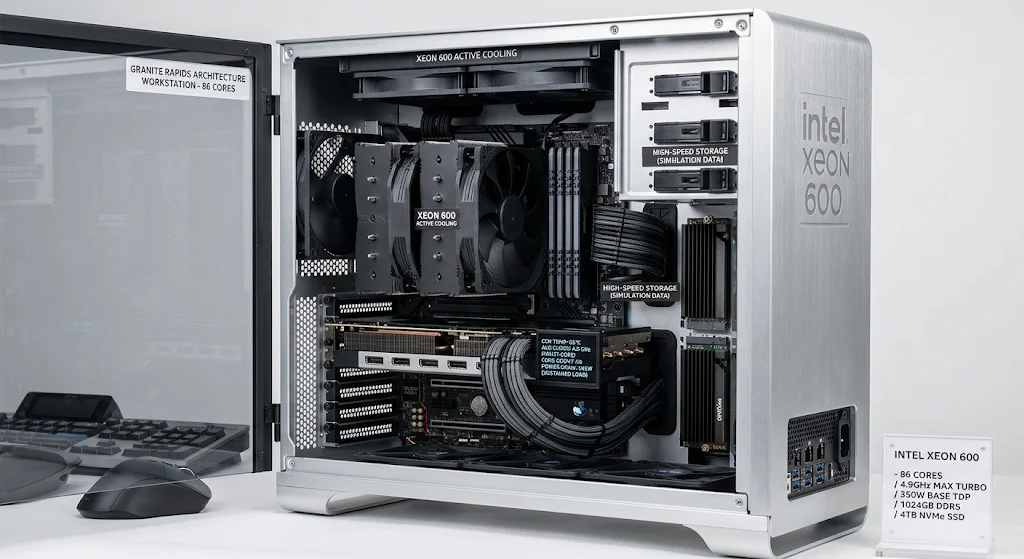
The new desktops use Intel Xeon 600 processors and professional NVIDIA graphics, with different limits for processor, memory and GPU capacity. The Z8 Fury is positioned above the Z4 in supported resources. Those upper limits describe configuration possibilities rather than the performance of every system carrying the product name. Buyers should specify the exact combination required by their software and verify its behaviour on representative projects.
A CAD workflow can remain limited by a particular serial operation even when many processor cores are available. Rendering and some analysis workloads may use additional resources differently. The investment case should therefore separate those activities instead of relying on one broad definition of workstation performance. Measuring common operations in each important application makes the proposed resource balance easier to justify.
Chassis design becomes part of upgrade planning
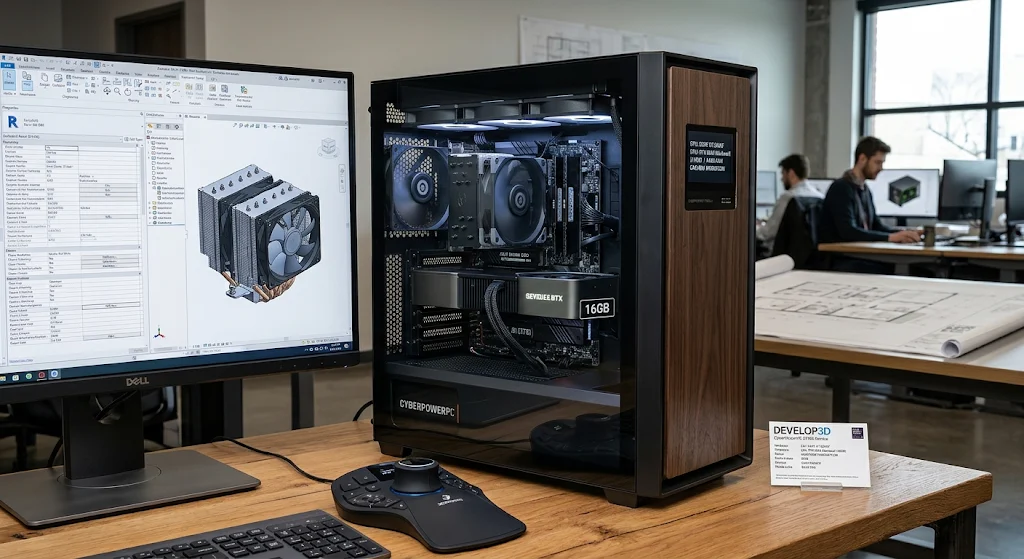
HP describes an optional wider side panel with additional fans to accommodate certain larger graphics cards. This is a useful reminder that future expansion depends on physical integration, not only an available slot. Graphics devices can differ in dimensions, airflow arrangement and power requirements. An upgrade plan should identify which configurations are supported within the complete workstation.
The electrical arrangement also requires attention. The announcement describes power-supply options on the higher-end desktop that can serve different operating objectives. A redundant configuration and an aggregate-power configuration are not equivalent choices. The buyer should confirm the arrangement included in the quotation and establish how it relates to the intended GPU configuration. Capacity planning should be based on that delivered system rather than a family-level maximum.
Remote GPU use changes the workflow boundary
HP Z Boost is being extended beyond AI workloads to selected rendering applications, with the announcement naming CATIA, Siemens NX and Twinmotion. Access to idle GPUs could help a team use existing resources more effectively, but application support should be checked for the particular task and software version. Sharing a graphics resource is not automatically equivalent to running every desktop application remotely.
Network conditions, scheduling and user priorities need an operating policy. A workstation owner should know when background use is allowed and how interactive work regains priority. The organisation should also define where project data is processed and retained. Without those decisions, a potentially valuable shared resource can create unpredictable interruptions or unclear responsibility for work in progress.
Local AI introduces another resource consumer
The announced HP IQ functions include working with local files and assisting with information tasks. Such tools can be useful, but engineers should assess output quality and access controls alongside response time. A locally generated summary still requires review when it influences an engineering decision. Keeping computation within the organisation does not establish the accuracy of the generated content.
The mobile systems add further choices for users who need portability, but their configurations should be evaluated separately from the desktops. HP’s wider announcement is significant because it treats the workstation estate as a set of connected resources. Its practical value will depend on matching each application to appropriate hardware, documenting the supported configurations and demonstrating that sharing or local AI improves the team’s actual work without obscuring control of data and compute.
Source — develop3d.com. Source publication date 2026-03-24. Engineering analysis: The CAD Verse.
Rate This Article
Share This Article
Share engineering knowledge with your network.
 MEMBERS · ONE ENGINEERING COMMUNITY
Discussion
0 CommentsShare your thoughts and engineering insights with the community.
No comments yet. Be the first to share your thoughts.