



Stainless Steel Welding: Grade, Heat Control and Corrosion Performance
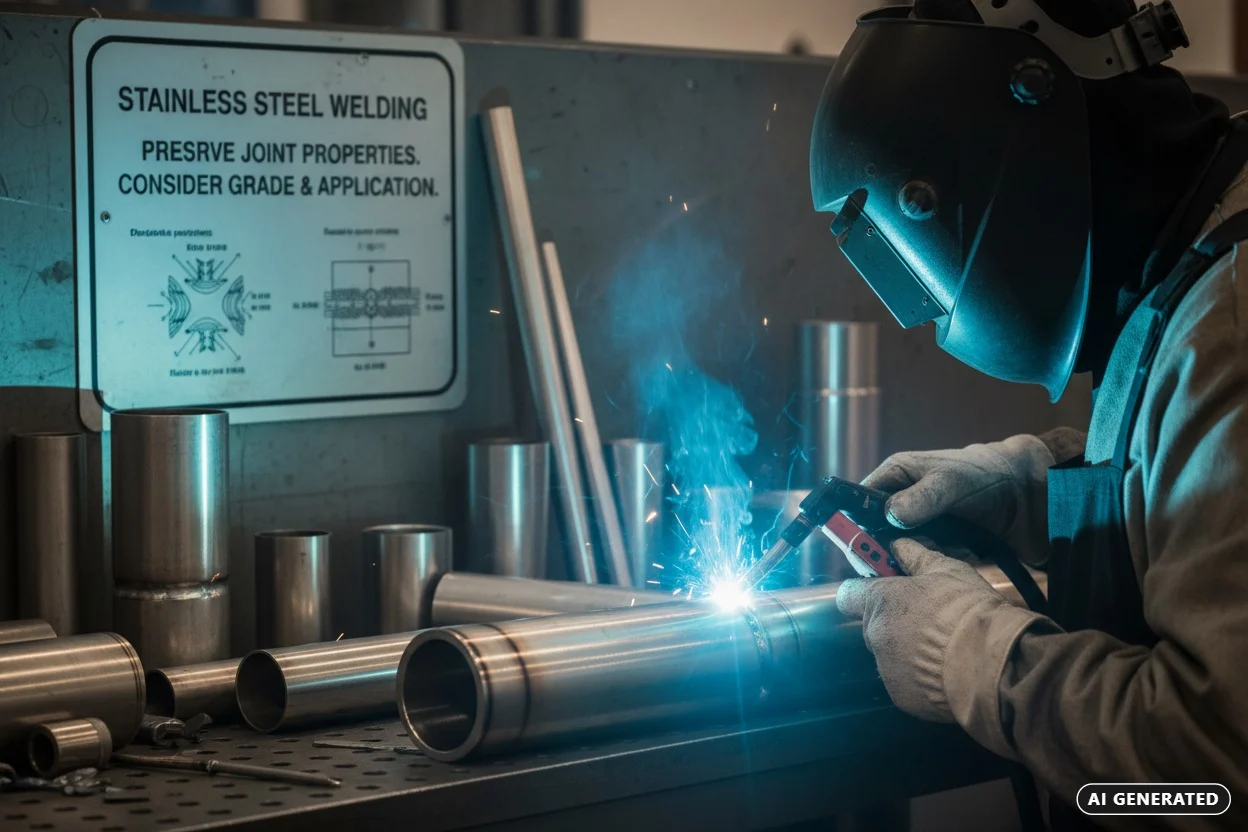
Stainless steel welding must preserve the properties required from the finished joint and surrounding material. Stainless steels include several families with different responses to welding. Corrosion resistance, mechanical performance and fabrication behavior cannot be inferred from appearance alone. The actual grades and application should guide procedure development.
Begin with the Material
Identify the stainless family and grade of each component. Joint combinations, filler selection and thermal requirements can vary. A general procedure for one austenitic application should not be assumed suitable for every stainless steel. Supplier and procedure information should address the specific materials and service conditions.
Preparation and Contamination
Joint surfaces need appropriate cleaning and preparation. Contamination from unsuitable tools or handling can compromise the surface condition. Fabrication arrangements should control how materials are stored, prepared and cleaned. The need for later finishing should be included in the original process plan.
Manage Heat and Access
Heat input and the welding sequence influence distortion and local material condition. Thin sections and constrained assemblies may require particular care. Torch access and joint fit-up should support consistent deposition without unnecessary rework. Repeated local repairs can change the thermal history beyond the intended procedure.
Surface Restoration and Inspection
Heat tint or other post-weld surface conditions may require treatment depending on the application. The chosen cleaning or finishing method must be suitable and controlled. Acceptance should address relevant weld integrity, dimensions and surface requirements. A bright appearance is not a universal demonstration of corrosion performance.
For a stainless process enclosure, evaluate seams, corners and access for cleaning after assembly. Include service environment and crevice details in the design review. Trial and inspection records should connect material identity with the approved procedure and final surface condition. Reliable stainless fabrication protects the intended service performance through coordinated control of material, joining and finishing.
Additional Engineering Considerations
The accessibility of finished joints can influence both inspection and cleaning. A seam located in a difficult corner may be weldable yet impractical to restore to the surface condition needed in service. Consider those later tasks before fixing the assembly layout. If dissimilar materials are joined, evaluate the combination using the actual procedure and service requirement. Documentation should identify the final surface treatment where it matters. This connects the corrosion-related intent of the material choice with a fabrication route that can preserve it in the completed product.
Practical Verification Priorities
The first verification priority is stainless family, grade and service environment. Establish the relevant condition before comparing alternatives, and retain enough setup information for another engineer to repeat the check. A result obtained under a different condition may answer a different question, even when the reported values appear comparable.
The next priority is contamination control and procedure-specific heat management. Decide what evidence would show that this part of the method is working and what finding would require investigation. Use representative inputs rather than only selected favorable samples. Where a change is introduced, record the technical reason and assess its effect on connected requirements.
Finally, verify required weld integrity and final surface treatment. Define the acceptance basis and preserve the observations that support the decision. If an unexpected result appears, investigate both the physical process and the measurement method before applying a correction. This keeps development decisions traceable and helps the production team restore the accepted condition after normal adjustments or maintenance.
Report an image


 MEMBERS · ONE ENGINEERING COMMUNITY
 Engineering videos and tutorials
 Engineering marketplace and professional opportunities
 Courses, tutorials and learning paths
 Engineering files and CAD models
 Professional engineering projects
Discussion
0 CommentsShare your thoughts and engineering insights with the community.
Comments are closed for this article.
No comments yet. Be the first to share your thoughts.