


Ergonomics in Product Design: Turning User Tasks into Engineering Requirements
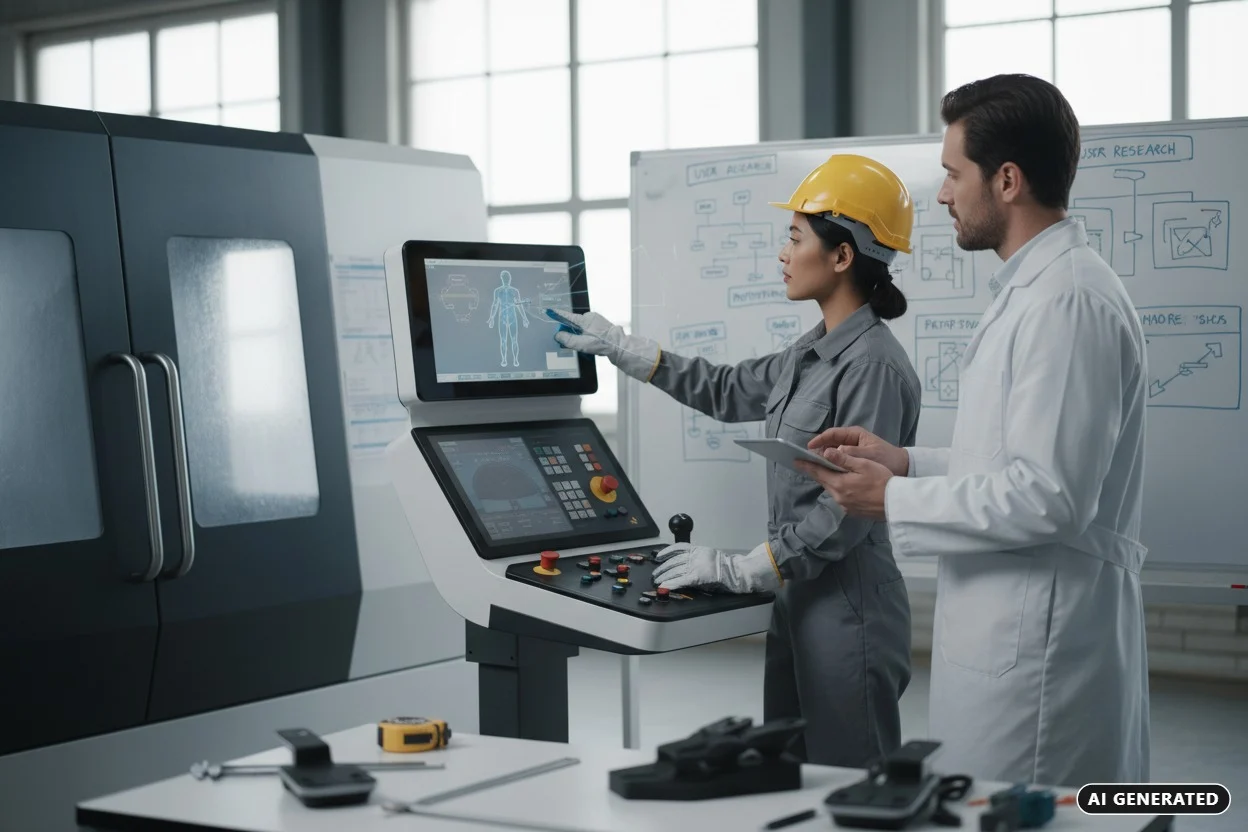
Ergonomics considers how a product fits the abilities, limitations and tasks of its users. In engineering design, it affects dimensions, controls, access and the effort required to perform an operation. A product can be mechanically functional yet difficult to use consistently if these human interactions are ignored.
Describe the Real Task
Identify who will use the product, what they must do and under which conditions. Protective clothing, restricted access or repeated operation can change the requirement. Avoid assuming that a comfortable posture for one designer represents the entire user population. Relevant variation should guide the review.
Geometry and Interaction
Grip shape, reach and control location influence usability. Interfaces should allow the intended action without requiring unnecessary force or awkward movement. Clear feedback helps users understand whether an action has completed correctly. Styling should support, rather than obscure, the operating function.
Use Digital Models Carefully
CAD can help examine reach, clearance and component arrangement. Digital human models or simulations can support evaluation where suitable. Their conclusions depend on the represented users and assumptions. Physical mockups and representative user trials remain valuable for contact, visibility and practical handling.
Integrate Manufacturing and Service
Ergonomic improvements must coexist with structural, manufacturing and maintenance needs. A comfortable handle that cannot be cleaned or assembled reliably creates another problem. Service access should consider the tools and motions required, not just whether a hand can enter the space.
For a handheld inspection device, evaluate grip, display visibility and control operation during the intended task. Include representative users and realistic duration rather than a brief demonstration. Record difficulties and test revised alternatives. Good ergonomic design produces an understandable and practical interaction supported by evidence, while preserving the product’s engineering performance and production feasibility.
Additional Engineering Considerations
Usability trials should measure the task, not simply collect preferences about appearance. Observe reach, mistakes, completion and the effort needed under realistic conditions. A user may describe a product as comfortable after a brief handling session while difficulties emerge during repeated work. Include the intended frequency and any required clothing or accessories. Record why a design change is expected to help and test that specific effect. This provides evidence that an ergonomic revision improves practical interaction without unintentionally making another part of the task harder.
Practical Verification Priorities
The first verification priority is representative users and realistic operating conditions. Establish the relevant condition before comparing alternatives, and retain enough setup information for another engineer to repeat the check. A result obtained under a different condition may answer a different question, even when the reported values appear comparable.
The next priority is grip, reach, visibility and feedback during the task. Decide what evidence would show that this part of the method is working and what finding would require investigation. Use representative inputs rather than only selected favorable samples. Where a change is introduced, record the technical reason and assess its effect on connected requirements.
Finally, verify manufacturing, cleaning and service access after ergonomic changes. Define the acceptance basis and preserve the observations that support the decision. If an unexpected result appears, investigate both the physical process and the measurement method before applying a correction. This keeps development decisions traceable and helps the production team restore the accepted condition after normal adjustments or maintenance.
Report an image



 MEMBERS · ONE ENGINEERING COMMUNITY
 Engineering videos and tutorials
 Engineering marketplace and professional opportunities
 Courses, tutorials and learning paths
 Engineering files and CAD models
 Global engineering portfolios and professional network
Discussion
0 CommentsShare your thoughts and engineering insights with the community.
Comments are closed for this article.
No comments yet. Be the first to share your thoughts.