






Rubber in Engineering: Elastic Behavior, Compounds and Service Conditions
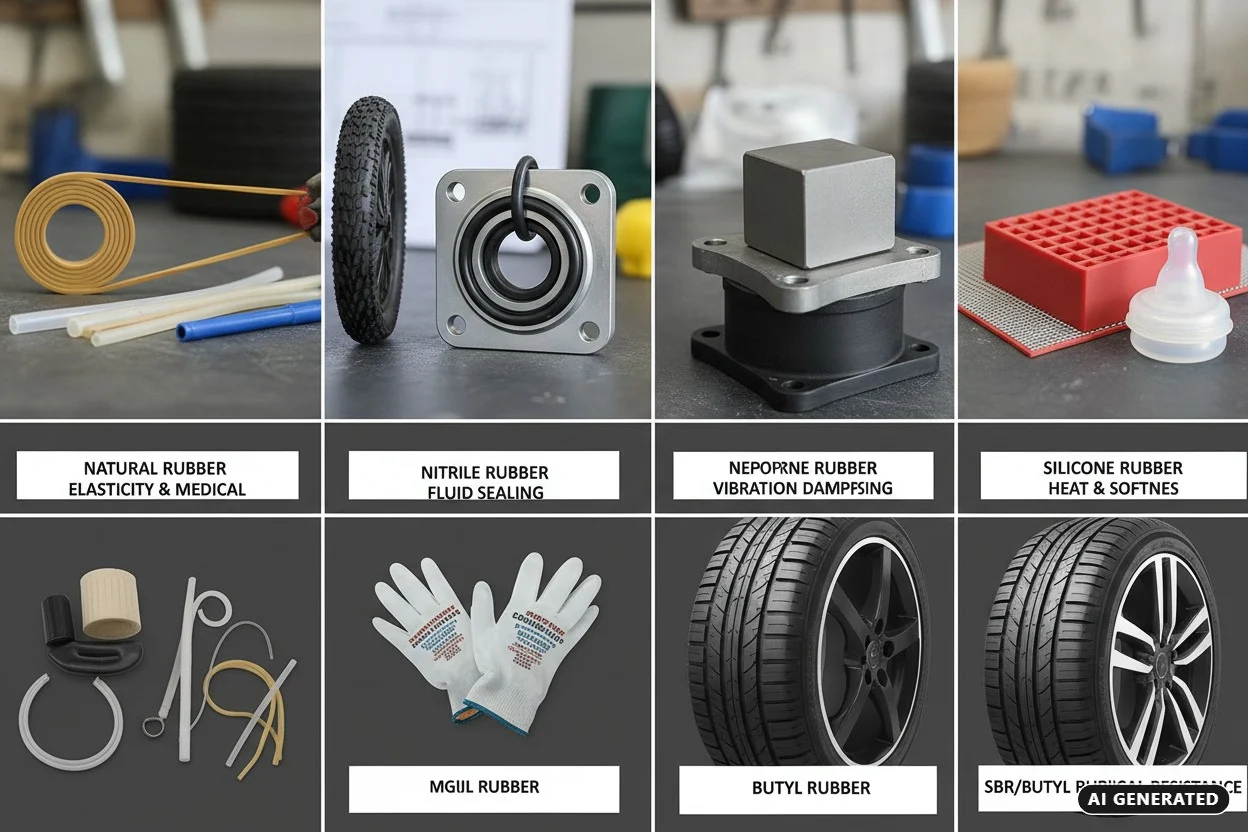
Rubber materials are used where recoverable deformation, sealing or vibration-related behavior is useful. Natural and synthetic rubbers provide different combinations of properties. An application should therefore specify a suitable compound and condition rather than rely on the broad term rubber as a complete material description.
Deformation and Recovery
Rubber can undergo substantial deformation, but its response depends on loading rate, temperature and time. Recovery may be incomplete after prolonged compression or demanding exposure. A short flexibility demonstration cannot predict every aspect of service behavior. The actual load cycle should guide evaluation.
Compound Selection
Polymer type, fillers and other ingredients influence performance. Hardness is a useful characteristic but does not independently describe strength, durability or chemical resistance. Two compounds with similar hardness can behave differently. Supplier data should relate to the selected compound and intended use.
Geometry and Interfaces
A seal or mount works as part of an assembly. Compression, contact surfaces and available movement influence function. Sharp edges or unsuitable gaps can damage the material. Assembly methods should avoid cutting or twisting a component into a condition that differs from the design assumption.
Exposure and Aging
Fluids, heat, ozone and other environmental factors can affect suitable compounds differently. Evaluate the actual combination and duration of exposures. A material that tolerates one fluid at room temperature may require reassessment under another condition. Replacement intervals should be based on relevant service evidence.
For a vibration-isolating mount, assess supported load, displacement and dynamic behavior together. Consider the condition after repeated cycles and environmental exposure, not merely the first installation. Useful rubber selection combines a documented compound with appropriate geometry and representative testing, preserving the function of the complete assembly over its intended service period.
Additional Engineering Considerations
The compression arrangement in an assembly can change as surrounding parts expand or deflect. A rubber component should be assessed with those interfaces under representative service conditions. If a mount or seal is replaced, the compound and geometry need to remain consistent with the approved application. Similar color and hardness do not establish equivalence. Preserve identification and relevant test evidence so purchasing or maintenance substitutions can be reviewed against function rather than appearance. This helps maintain performance over the product’s service history.
Practical Verification Priorities
The first verification priority is actual compound and time-dependent loading. Establish the relevant condition before comparing alternatives, and retain enough setup information for another engineer to repeat the check. A result obtained under a different condition may answer a different question, even when the reported values appear comparable.
The next priority is contact geometry and controlled assembly compression. Decide what evidence would show that this part of the method is working and what finding would require investigation. Use representative inputs rather than only selected favorable samples. Where a change is introduced, record the technical reason and assess its effect on connected requirements.
Finally, verify relevant environmental exposure and retained functional performance. Define the acceptance basis and preserve the observations that support the decision. If an unexpected result appears, investigate both the physical process and the measurement method before applying a correction. This keeps development decisions traceable and helps the production team restore the accepted condition after normal adjustments or maintenance.
Report an image

 MEMBERS · ONE ENGINEERING COMMUNITY
 Engineering videos and tutorials
 Engineering marketplace and professional opportunities
 Courses, tutorials and learning paths
 Engineering files and CAD models
 Professional engineering projects
Discussion
0 CommentsShare your thoughts and engineering insights with the community.
Comments are closed for this article.
No comments yet. Be the first to share your thoughts.