Exploring Thermal Management, Power Generation, Structural Design, and Multiphysics Engineering Beyond Earth
Introduction
The rapid expansion of artificial intelligence, cloud computing, and high-performance computing is creating an unprecedented demand for computational infrastructure. As terrestrial data centers consume increasing amounts of electricity, land, and cooling resources, engineers and technology companies are beginning to explore an alternative that was once considered science fiction: building data centers in space.
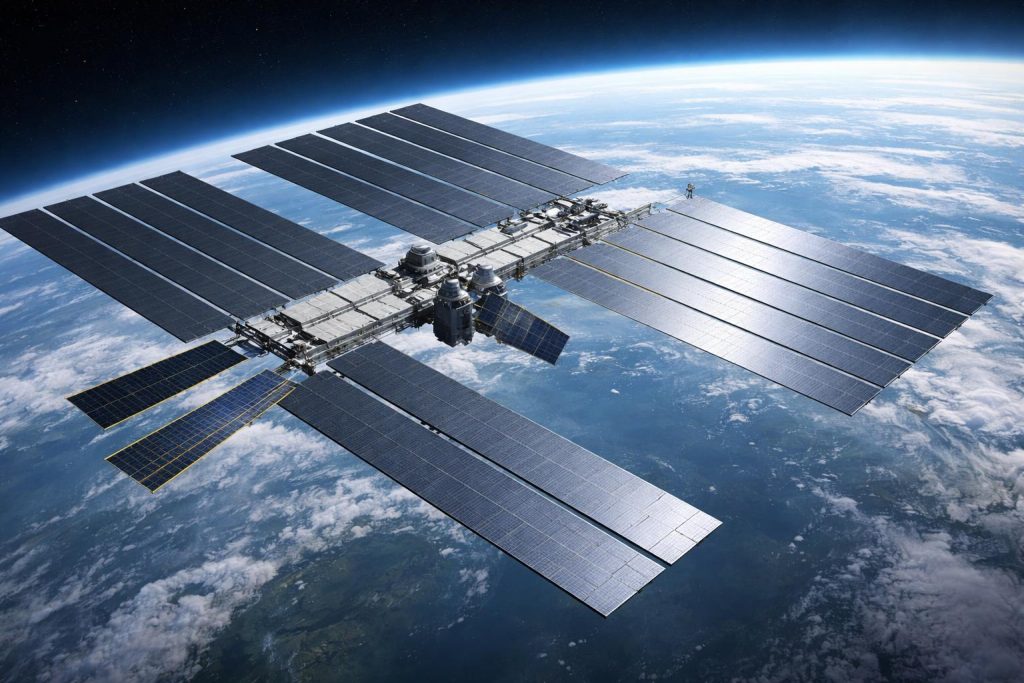
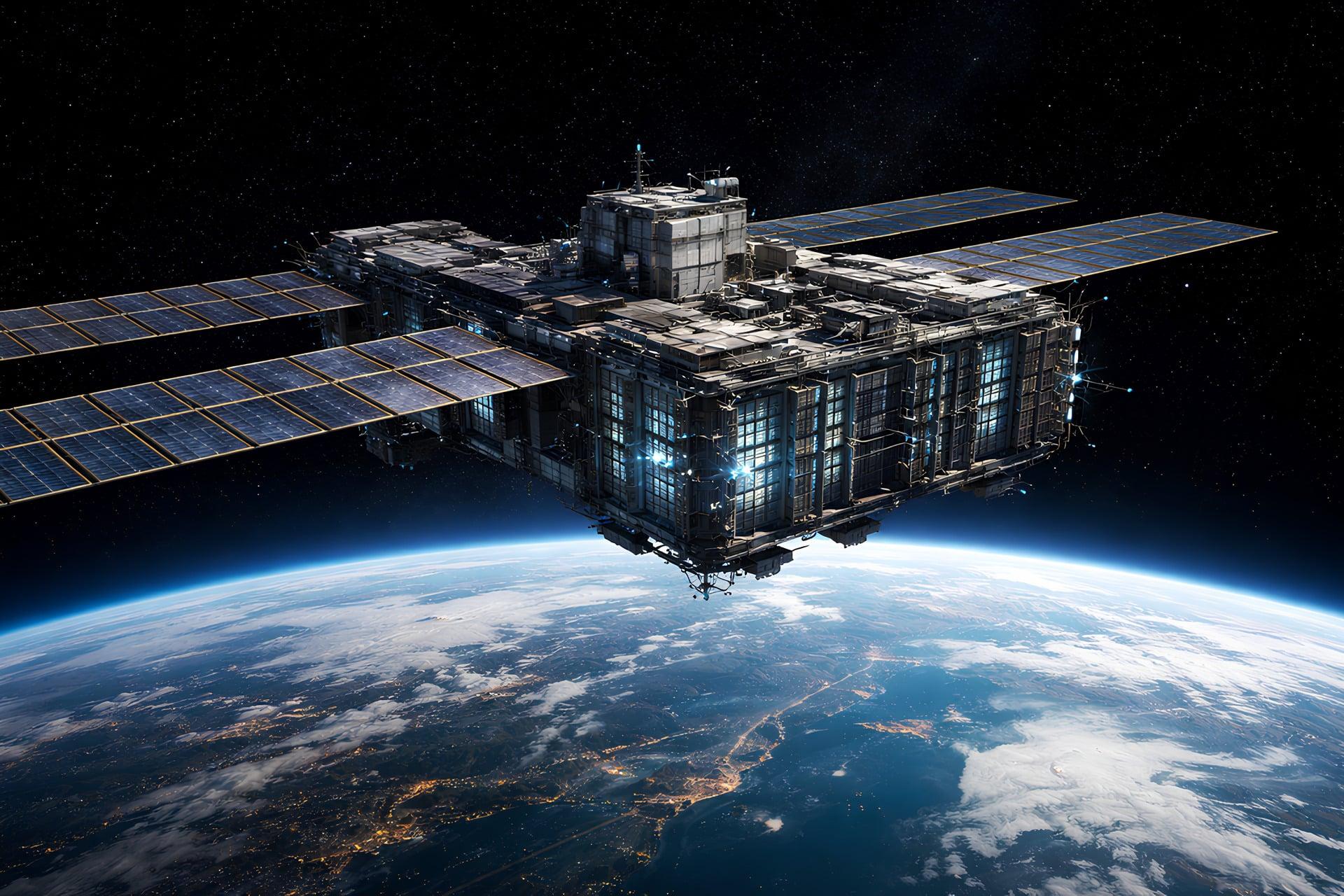
Orbital data centers represent a new approach to computing infrastructure, where servers, processing units, communication systems, and power-generation equipment are deployed aboard satellites or dedicated orbital platforms.
The concept offers several potential advantages. Solar energy is available in orbit, certain orbital configurations provide extended exposure to sunlight, and processing data directly in space could reduce the need to transmit large volumes of information back to Earth.
However, moving a data center beyond Earth’s atmosphere introduces a completely different set of engineering requirements.
Thermal management, radiation protection, structural integrity, power distribution, communication systems, and maintenance become interconnected design challenges. Unlike conventional data centers, orbital computing platforms must operate in an environment where physical access is extremely limited and every kilogram of additional equipment affects deployment costs.
The real question is no longer simply whether computers can operate in space. It is whether a complete, reliable, and economically viable computing infrastructure can be engineered for orbital operation.
1. Why Are Companies Looking Toward Orbital Data Centers?
Artificial intelligence is increasing demand for high-performance computing systems. Large-scale AI models require substantial processing capacity, high-density computing hardware, and reliable energy infrastructure.
On Earth, expanding data center capacity often requires new buildings, electrical grid connections, cooling systems, and access to suitable locations.
Orbital data centers offer a different infrastructure model.
Instead of relying entirely on terrestrial electricity networks and water-intensive cooling systems, these platforms could use solar arrays to generate electricity and process selected workloads directly in orbit.
Several potential applications are attracting attention:
- AI and machine learning workloads.
- Processing satellite imagery and Earth observation data.
- Scientific computing for space missions.
- Autonomous spacecraft operations.
- Distributed computing across satellite constellations.
One particularly interesting application is processing Earth observation data before transmitting it to the ground. Satellites generate enormous volumes of information, but not all collected data needs to be transmitted. Processing it in orbit could reduce communication requirements and accelerate decision-making.
Nevertheless, orbital computing is more likely to complement terrestrial data centers initially rather than replace conventional cloud infrastructure.
2. Thermal Management: The Biggest Engineering Challenge
Perhaps the most significant engineering challenge in orbital data centers is heat rejection.
Modern computing hardware converts a substantial portion of its electrical energy into heat. Terrestrial data centers typically use air conditioning, liquid cooling, pumps, heat exchangers, and cooling towers to remove this heat.
Space presents a fundamentally different situation.
There is virtually no surrounding air in orbit, meaning conventional convection-based cooling cannot operate as it does on Earth.
Heat must ultimately be transported away from electronic components and rejected through thermal radiation.
How Does Cooling Work in Space?
A typical orbital thermal management architecture would involve several interconnected components:
Heat Collection: Heat generated by processors, memory modules, and power electronics is transferred through thermal interface materials and conductive structures.
Heat Transport: Heat pipes, pumped fluid loops, or other thermal transport technologies move energy from the computing modules toward radiator assemblies.
Heat Rejection: Large radiator surfaces emit thermal energy into space through infrared radiation.
The efficiency of this process depends on radiator temperature, surface area, emissivity, orientation, and environmental conditions.
This creates a difficult engineering trade-off.
Increasing computing capacity generates more waste heat. Removing that additional heat requires larger or more effective radiators, which increase structural dimensions, mass, and deployment complexity.
Research published by engineering academics at Penn State highlights the scale of this challenge: rejecting 10 MW of waste heat could require radiator surfaces comparable in area to approximately two football fields.
For orbital data center designers, thermal management is therefore not simply a supporting subsystem. It is a major factor determining the entire spacecraft architecture.
3. Power Generation and Energy Distribution
A data center requires a continuous and reliable electricity supply. In orbit, solar energy is the most obvious primary power source.
Large photovoltaic arrays could convert sunlight into electrical energy for computing hardware, communication systems, thermal management equipment, and onboard control systems.
However, designing a solar power system for an orbital data center involves several challenges.
Solar Array Design
Unlike conventional satellites, large orbital computing platforms may require substantial electrical capacity.
This means solar arrays must provide enough power without introducing excessive mass, structural complexity, or deployment risk.
Engineers must consider:
- Solar cell conversion efficiency.
- Array surface area and mass.
- Deployment mechanisms.
- Structural flexibility.
- Electrical conversion losses.
- Radiation-induced degradation.
Energy Storage and Orbital Eclipse Periods
Not every orbit provides continuous sunlight.
Depending on orbital altitude and inclination, a spacecraft may periodically pass through Earth’s shadow.
During these periods, solar arrays cannot generate electricity, making energy storage systems essential for uninterrupted operation.
Battery capacity, discharge rates, thermal behavior, and long-term degradation must all be considered.
The challenge is to balance energy generation, storage capacity, and total spacecraft mass while maintaining reliable computing performance.
4. Radiation Protection and Electronic Reliability
Space is a harsh environment for electronic systems.
Unlike terrestrial data centers, orbital computing platforms are exposed to energetic particles, solar activity, and cosmic radiation.
These conditions can cause several problems:
- Single-event effects in semiconductor devices.
- Bit flips in memory systems.
- Degradation of electronic components.
- Reduced hardware lifetime.
- Unexpected system failures.
High-performance processors and memory modules must therefore be evaluated for their suitability in the intended orbital environment.
Engineers can address these risks through a combination of radiation-tolerant components, shielding, error-correcting memory, redundancy, and fault-tolerant system architectures.
However, additional shielding increases spacecraft mass, while radiation-hardened components may introduce performance and cost trade-offs.
The objective is not simply to protect individual processors but to maintain the reliability of the entire computing system throughout its operational lifetime.
5. Structural Design: Building a Data Center That Can Survive Launch and Orbit
An orbital data center is not just a collection of servers attached to a satellite.
It is a complex mechanical structure that must survive launch conditions and maintain operational stability in orbit.
During launch, spacecraft experience significant vibration, acoustic loading, acceleration, and mechanical shock.
These loads can affect:
- Electronic equipment mounting systems.
- Structural connections.
- Solar array deployment mechanisms.
- Thermal radiator assemblies.
- Communication antennas.
- Precision optical systems.
Once deployed, the spacecraft must maintain its structural integrity under changing thermal conditions and long-term environmental exposure.
Deployable Structures and Modular Architecture
Large solar arrays and radiator systems may be too large to launch in their operational configuration.
Consequently, future orbital data centers may depend on deployable structures and modular assembly techniques.
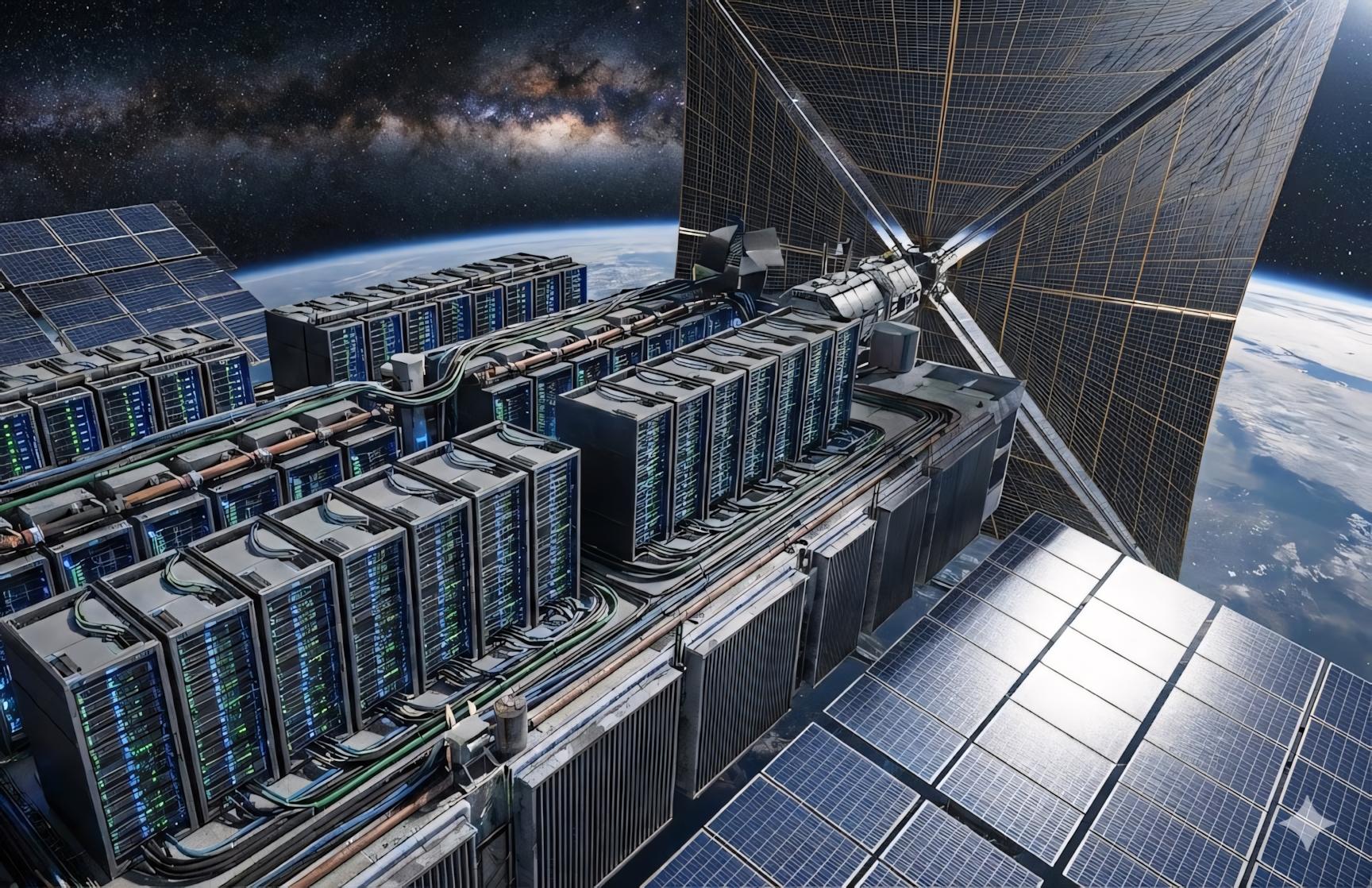
A modular architecture could allow computing modules, power-generation systems, and thermal management assemblies to be launched separately and integrated in orbit.
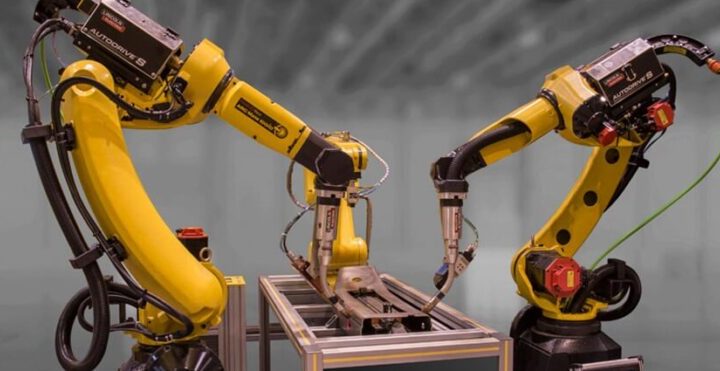
This introduces opportunities for scalable system design, but it also creates new requirements for robotic assembly, mechanical interfaces, alignment, and in-space servicing.
Structural optimization becomes particularly important because reducing mass can directly improve launch economics.
6. Communication Systems and Data Transmission
Computing infrastructure is only useful when it can exchange information with users, satellites, and terrestrial networks.
Orbital data centers therefore require high-capacity communication systems capable of transferring large volumes of information.
Radio-frequency communication and optical laser communication are two important technologies in this field.
Optical communication systems offer the potential for high data rates, but they require precise pointing, acquisition, and tracking mechanisms.
Communication architecture must also consider:
- Signal availability and coverage.
- Transmission capacity.
- Atmospheric interference for ground links.
- Network routing between satellites.
- Latency and operational reliability.
- Cybersecurity and data protection.
Latency is especially important.
Although low Earth orbit can provide relatively short communication paths compared with higher orbital altitudes, orbital data centers will not automatically outperform terrestrial infrastructure in every application.
For interactive cloud services and financial transactions, communication delays and network routing may make terrestrial computing more practical.
The strongest early applications are likely to involve workloads where processing data close to its source provides a clear operational advantage.
7. Multiphysics Simulation: The Engineering Backbone of Orbital Data Centers
The design of orbital computing platforms requires engineers to evaluate several physical systems simultaneously.
Thermal, structural, electrical, mechanical, and environmental factors interact with one another.
This makes multiphysics simulation particularly important during product development.
Thermal Analysis
Thermal simulations help engineers evaluate temperature distribution across processors, electronic enclosures, heat pipes, and radiator surfaces.
They can also support the optimization of radiator dimensions and operating temperatures.
Structural Analysis
Finite Element Analysis (FEA) can be used to investigate structural deformation, vibration modes, launch loads, and mechanical stress.
Engineers can evaluate alternative structural materials, support configurations, and lightweight designs before physical testing.
Computational Fluid Dynamics and Thermal Transport
Although external convection is not available in the vacuum of space, CFD and related thermal-fluid simulations remain valuable for analyzing internal coolant loops, heat exchangers, and fluid-based thermal transport systems.
Radiation and Environmental Analysis
Specialized radiation transport and spacecraft environmental models help evaluate shielding requirements, electronic exposure, and long-term component reliability.
System-Level Optimization
Perhaps the most important aspect is integrating these analyses into a common engineering workflow.
For example, increasing radiator surface area may improve heat rejection but also increase structural mass and deployment loads.
Similarly, increasing radiation shielding may improve electronic reliability while reducing available payload capacity.
Multiphysics simulation allows engineers to investigate these competing requirements before committing to a physical design.
This is where advanced CAE technologies become essential to the development of next-generation space infrastructure.
8. Maintenance, Hardware Upgrades, and Operational Lifetime
One of the biggest differences between terrestrial and orbital data centers is maintenance.
Earth-based facilities can replace servers, upgrade processors, expand storage capacity, and repair cooling equipment through established maintenance operations.
In orbit, these activities become significantly more complicated.
A failed processor or power module may require specialized robotic servicing or replacement of an entire satellite module.
Another challenge is the rapid development of computing hardware.
Processors that are considered advanced today may become outdated within a few years. An orbital data center must therefore be designed with hardware refresh cycles and long-term operational costs in mind.
Potential solutions include modular computing units, standardized mechanical and electrical interfaces, autonomous diagnostics, robotic servicing, and replaceable hardware modules.
However, large-scale in-space servicing and assembly capabilities are still developing.
9. Space Sustainability and Orbital Infrastructure
Building thousands of orbital data center satellites would also introduce environmental and operational considerations.
Earth’s orbital environment is already becoming increasingly crowded.
A large increase in satellite deployments could create additional collision risks, increase space debris, and complicate orbital traffic management.
Engineers must therefore consider collision avoidance, end-of-life disposal, deorbiting strategies, and the long-term sustainability of orbital infrastructure.
These requirements should be integrated into the design process rather than treated as secondary operational concerns.
10. What Does the Future Hold?
Orbital data centers are attracting attention from major technology companies, aerospace manufacturers, and research organizations.
Initiatives such as Google’s Project Suncatcher and the European ASCEND feasibility project illustrate the growing interest in evaluating space-based computing architectures.
However, the transition from experimental demonstrations to large-scale computing infrastructure will require significant progress in several areas.
More efficient thermal radiators, lightweight deployable structures, radiation-tolerant electronics, high-capacity optical communication, autonomous servicing, and economically viable launch systems will all play important roles.
The most realistic development path may begin with specialized orbital computing platforms that process satellite-generated information.
Over time, improvements in spacecraft manufacturing, launch economics, and in-space assembly could support more ambitious computing architectures.
Whether these systems eventually become competitive with terrestrial data centers will depend on their complete lifecycle economics, not simply the availability of solar energy in space.
Conclusion: Engineering the Next Generation of Digital Infrastructure
Orbital data centers represent an ambitious intersection of aerospace engineering, advanced computing, energy systems, and digital infrastructure.
Their development requires much more than placing servers inside a satellite. Engineers must design integrated systems capable of generating electricity, transporting and rejecting heat, protecting sensitive electronics, maintaining structural integrity, and communicating reliably across vast distances.
Among these challenges, thermal management, power-system scalability, radiation protection, and in-space maintenance are likely to determine how quickly the technology can mature.
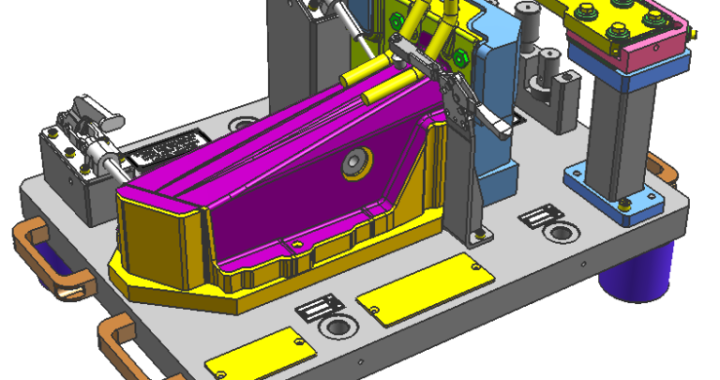
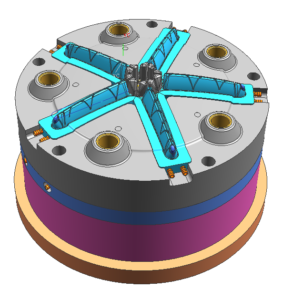
Advanced CAD, CAE, structural analysis, and multiphysics simulation will be fundamental to transforming these concepts into practical engineering systems.
The future of computing infrastructure may eventually extend beyond terrestrial facilities and into orbit. But making that transition possible will require a new generation of engineering solutions.
Building data centers in space is not simply a computing challenge. It is a complete systems engineering challenge, where every design decision must work in harmony with the physics of space.
References and Further Reading:
- Engineering.com – The Tricky Engineering of Orbital Data Centers (September 17, 2026).
- U.S. Government Accountability Office (GAO) – Science & Tech Spotlight: Data Centers in Space (April 28, 2026).
- Information Technology and Innovation Foundation (ITIF) – Policy Considerations for Orbital Data Centers (September 28, 2026).
- Penn State University – Building Data Centers in Space: Major Engineering Challenges (June 16, 2026).
- Nature Electronics – The Development of Carbon-Neutral Data Centres in Space (2025).
Editorial perspective: Orbital data centers remain an emerging technology. Their large-scale commercial feasibility has not yet been demonstrated, and the engineering concepts discussed in this article should be understood as current development directions rather than established industrial capabilities.