
Kaikaku Tests Catering Robots in a Working Restaurant
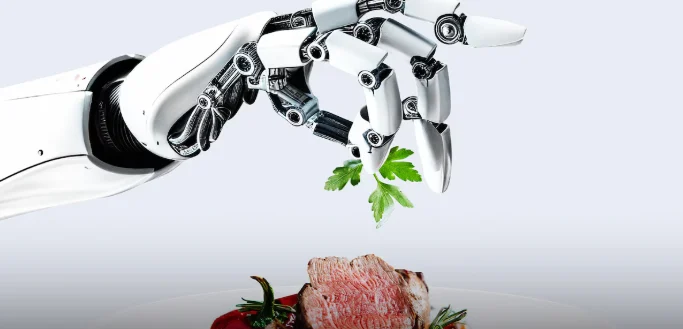
Kaikaku is developing catering automation inside a working restaurant, using day-to-day food service as a source of engineering feedback. Its Fusion system moves bowls through modular ingredient dispensers, leaving a human member of staff to check and finish the dish. The company established its own Common Room restaurant when it could not find an external operator willing to host an early prototype. For designers, that decision created an unusually direct connection between mechanical development, customer behaviour and real operational constraints.
A live environment exposes different failure modes
A laboratory demonstration can show that a dispenser moves the intended quantity once. Restaurant service asks whether it does so repeatedly while ingredients are replenished, orders change and staff perform other tasks. The value of Kaikaku’s approach is the opportunity to observe those interactions together. It brings the equipment into contact with the workflow it must eventually support rather than evaluating the mechanism in isolation.
The source describes a configurable arrangement with multiple ingredients per dispensing unit and different temperature conditions along the line. That creates a system-level planning problem: the bowl must arrive at each station correctly, the required ingredient must be available and the completed order must match the request. A reliable mechanism at one station cannot compensate for missing information or a bottleneck elsewhere.
Modularity supports rapid physical changes
Kaikaku uses extensive in-house FDM printing and a modular architecture to develop components quickly. The reported arrangement also separates removable food-handling parts from motors and controllers. That is significant because service access and cleaning can determine whether an automated kitchen remains usable. A component that is easy to install during development may still be difficult to remove at the end of a busy shift.
The engineering review should therefore include the people who refill, clean and recover the equipment. Interfaces need to be recognisable, and components should return to a known position after normal handling. Printed prototypes can answer packaging and interaction questions rapidly, but their suitability for each production duty still requires assessment. The manufacturing method alone does not establish durability, cleanliness or application approval.
CAD version control becomes production control
The team uses Onshape for its component and assembly development, with configurations supporting design variants. Frequent iteration makes version control particularly valuable: the model on screen must be connected to the parts actually installed in the restaurant. If several generations of a dispenser are present, the team needs to know which one generated an observed result.
The case also identifies bill-of-materials management as a growing challenge. That is a familiar transition for hardware start-ups. A single experimental system can survive with informal knowledge that becomes inadequate when several units must be reproduced. Part identification, approved substitutions and assembly instructions need to develop alongside the CAD model. Otherwise, rapid design iteration can create uncertainty about what constitutes a released machine.
Measure the complete service outcome
Kaikaku reports substantial meal throughput and a low bill of materials for its latest version. Those figures describe the company’s case and should not be treated as a complete installed cost or a guaranteed output for every menu. Ingredient preparation, cleaning, staffing and customer order patterns all belong in a full operational comparison.
The broader engineering interest is that Fusion acts as both production equipment and a source of process information. Measuring dispensing events can help identify waste or replenishment constraints, provided the data corresponds to the actual dish and service state. The case shows how a clearly bounded automation task, tested in its real workflow, can guide mechanical design more effectively than a sequence of isolated demonstrations.
Source — develop3d.com. Source publication date 2026-03-19. Engineering analysis: The CAD Verse.
Report an image
 MEMBERS · ONE ENGINEERING COMMUNITY
Discussion
0 CommentsShare your thoughts and engineering insights with the community.
Comments are closed for this article.
No comments yet. Be the first to share your thoughts.