As metal additive manufacturing moves from prototyping toward qualified production, manufacturers need more than final-part inspection. They also need reliable information about what happens during the build itself.
Phase3D has partnered with LRPS Ltd to expand access to its Fringe Inspection technology across Israel. The collaboration is intended to support manufacturers, research institutions and engineering organizations working with laser powder bed fusion (LPBF).
Monitoring the Build Layer by Layer
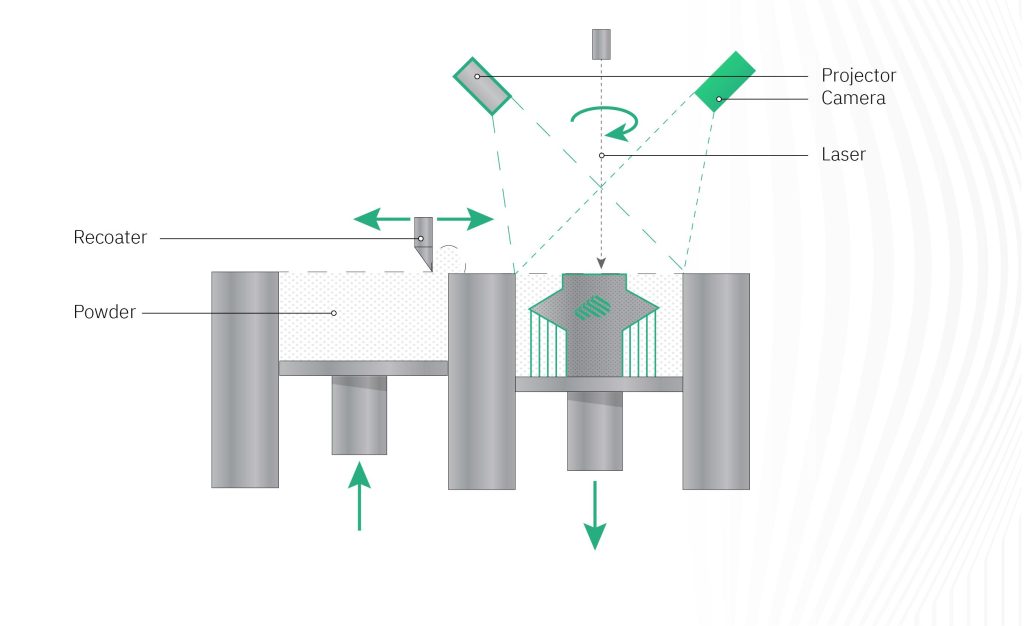
In LPBF, a laser selectively melts regions of a thin metal powder layer. The process repeats until the component is complete. Defects can originate from variations in powder distribution, recoating, melt behavior or local process conditions.
In-situ inspection systems aim to detect irregularities while the component is being manufactured rather than relying exclusively on post-build inspection.
Phase3D’s Fringe Inspection technology is positioned as a metrology-based approach for collecting layer-level process information. The partnership combines this technology with LRPS’s industrial additive manufacturing experience in the Israeli market.
Why Process Data Matters
Layer-by-layer inspection can provide engineers with a more detailed record of manufacturing conditions. This information may support process qualification, failure investigation and the development of more reliable production parameters.
It does not automatically guarantee defect-free components. Inspection data must be interpreted, correlated with material behavior and connected to appropriate acceptance criteria.
For aerospace, medical and other demanding applications, traceability and repeatability are central to qualification.
The partnership reflects a broader shift in additive manufacturing: quality assurance is moving closer to the production process itself, with measurement and data becoming integral parts of the manufacturing workflow.