How Intelligent Machining Technologies Are Improving CNC Productivity, Cutting Performance, and Tool Life
Beyond Traditional CNC Toolpath Generation
In modern manufacturing, generating a CNC toolpath is no longer just about defining the movement of a cutting tool along a programmed trajectory.
As manufacturers face increasing pressure to reduce production costs, improve component quality, and shorten machining cycles, traditional CAM programming approaches are evolving toward more intelligent and data-driven manufacturing processes.
A toolpath may be geometrically correct and collision-free, yet still be inefficient when it comes to actual cutting conditions. Variations in material engagement, cutting forces, spindle load, tool deflection, and machine capabilities can significantly influence machining performance.
This is where physics-based toolpath optimization becomes important.
By combining machining physics, process simulation, and automated optimization, manufacturers can move beyond manually adjusting cutting parameters and develop more predictable machining strategies.
The collaboration between Siemens NX CAM and ModuleWorks represents an important step in this direction, bringing advanced machining technologies directly into the NX CAM environment.
What Is Physics-Based Toolpath Optimization?
Traditional CAM systems generate toolpaths based primarily on part geometry, machining strategy, cutting tools, and programmed parameters.
The programmer defines the machining operation, selects the cutting tool, establishes spindle speed and feed rate, and generates the toolpath.
However, the actual cutting process is influenced by much more than geometry.
For example, a milling cutter does not always remove the same amount of material throughout a machining operation. Tool engagement changes depending on the geometry of the component, the remaining stock, and the direction of movement.
These variations can produce fluctuations in cutting forces and spindle load.
Physics-based toolpath optimization uses mathematical models of the machining process to evaluate these conditions and adjust the machining strategy accordingly.
Depending on the technology, the optimization process can consider:
- Cutting forces and tool engagement
- Material properties and chip formation
- Tool geometry and cutting conditions
- Spindle torque and available power
- Machine characteristics and operating limits
- Material removal rates
- Feed rate and cutting depth
The objective is to maintain more consistent machining conditions while using the available machine and cutting-tool capabilities more effectively.
Instead of relying entirely on conservative parameters or repeated manual adjustments, manufacturers can use process-specific calculations to improve machining performance.
Siemens and ModuleWorks: Bringing Advanced Optimization into NX CAM
On July 23, 2026, Siemens and ModuleWorks announced an expanded collaboration focused on bringing advanced physics-based machining technologies directly into Siemens NX CAM.
The integration makes four ModuleWorks technologies available as plugins within the NX CAM environment:
- VoluMill
- VoluTurn
- FeedControl
- MDES Exporter
These solutions address different aspects of CNC production, from roughing and turning to feed-rate optimization and manufacturing data exchange.
The objective is to make advanced machining capabilities more accessible within an established CAM programming workflow.
Rather than requiring manufacturers to manage disconnected processes, the integration supports a more connected digital manufacturing environment.
1. VoluMill: Optimizing Material Removal
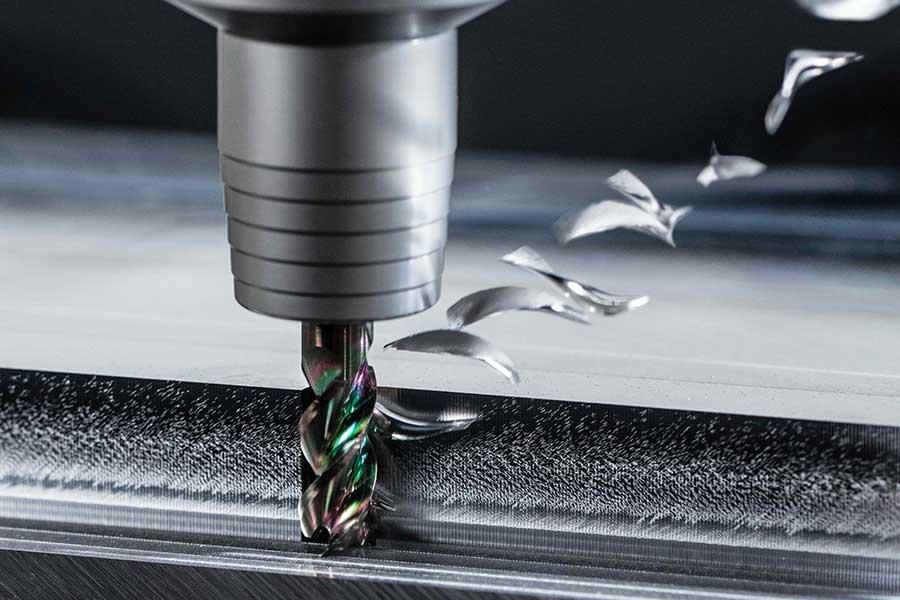
Roughing operations are among the most demanding stages of CNC machining.
During roughing, large amounts of material must be removed while maintaining acceptable cutting forces, tool stability, and machine performance.
Traditional roughing strategies can create significant variations in tool engagement, particularly when machining complex pockets, cavities, and irregular geometries.
VoluMill addresses this challenge through its science-based roughing technology.
Its approach uses controlled, continuous tool movement to avoid sudden changes in cutting engagement and maintain more consistent material removal conditions.
The technology is designed to help manufacturers:
- Reduce machining cycle times
- Increase material removal rates
- Improve cutting-tool life
- Maintain more consistent cutting conditions
- Reduce unnecessary tool loading
By controlling the amount of material encountered by the cutting tool, VoluMill aims to make roughing operations more predictable and efficient.
This can be particularly valuable in aerospace, automotive, mold and die, and general industrial manufacturing, where complex components and demanding materials often require carefully controlled roughing strategies.
2. VoluTurn: More Intelligent CNC Turning
Turning operations introduce different challenges compared with milling.
Tool engagement, insert wear, material characteristics, and cutting direction all influence machining performance.
VoluTurn is designed to automate aspects of rough-turning toolpath creation while maintaining smooth cutting movements.
One of its important objectives is to reduce excessive tool engagement and avoid unnecessary dwelling during turning operations.
Its capabilities include:
- Automated turning toolpath generation
- Smooth entry and exit movements
- Reduced insert wear
- Improved distribution of cutting loads
- Reduced manual programming effort
- Collision avoidance support
By generating smoother and more controlled cutting movements, VoluTurn can help manufacturers improve process consistency and reduce the time required to prepare complex turning operations.
This is particularly relevant when machining difficult-to-cut materials and components that require predictable insert performance.
3. FeedControl: Physics-Based Feed Rate Optimization
Feed rate optimization is one of the most important factors influencing CNC machining efficiency.
Using a constant feed rate throughout an entire toolpath may appear straightforward, but it does not necessarily represent the most efficient machining approach.
When a cutting tool enters a corner, engages more material, or encounters changing stock conditions, the cutting load can increase significantly.
If the programmed feed rate is too high, the result may be excessive cutting forces, tool deflection, vibration, poor surface quality, or premature tool failure.
If the feed rate is too conservative, machine capacity may remain underutilized and machining time may increase unnecessarily.
ModuleWorks FeedControl addresses this challenge by using a physics-based optimization engine to adjust feed rates according to machining conditions.
Its calculations consider factors such as:
- Cutting-tool properties
- Workpiece material
- Spindle torque and power
- Cutting forces
- Chip thickness
- Material removal rate
- Machine and tooling limitations
The objective is to maintain more consistent cutting conditions while maximizing productive machining time.
Rather than applying one fixed feed rate across the entire toolpath, FeedControl can optimize the programmed feed according to the changing demands of the machining process.
This approach can help manufacturers reduce unnecessary machine load, improve tool life, and achieve more predictable machining performance.
Importantly, FeedControl works with existing toolpaths and machine parameters. It enhances the machining process rather than replacing the entire CAM programming workflow.
4. MDES Exporter: Connecting CAM Data with Manufacturing Systems
Toolpath optimization is only one part of the digital manufacturing process.
Production also depends on accurate information about machine tools, cutting tools, fixtures, and workpiece setups.
When this information is transferred manually between different engineering and manufacturing systems, errors and inconsistencies can occur.
The MDES Exporter plugin addresses this issue by generating standardized manufacturing data from Siemens NX.
MDES stands for Manufacturing Data Exchange Specification.
The technology supports the transfer of standardized tooling, fixture, and part information into downstream manufacturing workflows.
This can support integration with:
- CNC simulation environments
- Collision avoidance systems
- Machine setup preparation
- Digital manufacturing applications
- Connected production systems
The broader objective is to reduce manual data preparation and improve interoperability between CAM programming and downstream manufacturing technologies.
Why Physics-Based Optimization Matters in CNC Machining
The value of physics-based optimization becomes clearer when we consider the relationship between cutting conditions and production performance.
More Consistent Cutting Forces
Fluctuating cutting forces can create tool deflection, vibration, and dimensional inaccuracies.
Maintaining more consistent engagement can help reduce these variations and improve process stability.
Longer Cutting-Tool Life
Excessive loads and unstable cutting conditions can accelerate tool wear and increase the risk of tool failure.
Optimized feed rates and controlled engagement can help manufacturers use cutting tools more effectively.
Reduced Machining Time
Conservative cutting parameters often increase cycle times.
Physics-based optimization can identify opportunities to increase feed rates where the machine and tool can safely handle additional load.
Improved Surface Quality
Vibration, tool deflection, and unstable cutting conditions can negatively affect surface finish.
A more predictable machining process can help improve surface quality and reduce the need for additional finishing operations.
Better Machine Utilization
Modern CNC machines often have capabilities that are not fully utilized because programmers must account for uncertainty in machining conditions.
Process-aware optimization can help manufacturers make better use of available spindle power, torque, and machine capacity.
These benefits depend on the accuracy of the machine, tool, material, and process information used by the optimization system. They should not be interpreted as guaranteed improvements for every component or machining application.
ModuleWorks 2026.08: Further Developments in Intelligent Machining
The evolution of physics-based optimization does not stop with the NX CAM integration.
In its August 11, 2026 software release, ModuleWorks introduced additional developments in toolpath generation, cutting-physics-based automation, GPU-accelerated simulation, and manufacturing data exchange.
Some notable developments include:
SmartRoughing with VoluMill
The integration brings VoluMill roughing patterns into SmartRoughing, allowing automatic optimization of cutting depth, cutting width, spindle speed, and nominal feed rate.
SmartRoughing Physics Report
This feature provides a structured view of generated machining slices and selected process parameters, making automated roughing decisions more transparent to users.
Expanded FeedControl Tool Support
Support for additional tool geometries, including tapered end mills and convex-tip end mills, extends the technology’s application in mold and die machining.
Process Constraint Review
Users can review and adjust calculated process limits, including chip load, cutting forces, and power, before final feed-rate optimization.
GPU-Accelerated Engagement Tracking
GPU acceleration helps speed up engagement analysis for complex milling toolpaths, supporting more computationally demanding machining workflows.
These developments illustrate how CAM software is evolving from a toolpath-generation environment into a more comprehensive process optimization platform.
The Relationship Between CAM, Simulation, and Real Manufacturing
One of the most important developments in digital manufacturing is the increasing connection between programming and process validation.
Historically, CAM programming, CNC simulation, and production monitoring were often treated as separate stages.
A programmer generated the toolpath, simulation software checked the machine movements, and the actual machining process was evaluated on the shop floor.
Modern manufacturing technologies are gradually connecting these stages.
Physics-based optimization adds another layer by evaluating the expected machining behavior before the component reaches the machine.
However, it is important to distinguish different types of digital validation.
Geometric simulation can identify potential collisions and verify material removal. Physics-based process analysis can evaluate cutting forces, engagement, and other machining conditions. Neither automatically guarantees that every real-world production variable has been captured.
Machine calibration, fixture rigidity, tool condition, coolant delivery, workpiece variation, and operator practices can still influence the final result.
For this reason, optimized toolpaths should remain part of a broader validation process that includes machine simulation, postprocessor verification, and controlled production trials where appropriate.
What Does This Mean for the Future of CNC Manufacturing?
The integration of advanced optimization technologies into NX CAM reflects a wider transformation in manufacturing software.
CAM systems are moving beyond manually defined machining parameters toward more automated, process-aware programming environments.
This development has particular importance for industries where machining complexity, material costs, and quality requirements are high.
In aerospace manufacturing, for example, machining titanium and nickel-based alloys requires careful control of cutting forces and tool engagement.
In automotive production, reducing cycle times and improving repeatability can have a direct impact on production efficiency.
In mold and die manufacturing, complex geometries and demanding surface-finish requirements make toolpath quality particularly important.
Physics-based optimization can help address these challenges by bringing more machining knowledge into the programming process.
The long-term opportunity is not simply to generate toolpaths faster. It is to make manufacturing decisions more informed, predictable, and connected to actual production conditions.
Conclusion: From Toolpath Generation to Intelligent Machining
The collaboration between Siemens NX CAM and ModuleWorks demonstrates how advanced machining technologies are becoming an increasingly integrated part of digital manufacturing.
VoluMill focuses on efficient material removal, VoluTurn addresses turning operations, FeedControl optimizes feed rates through physics-based calculations, and MDES Exporter improves manufacturing data exchange.
Together, these technologies support a more connected approach to CNC programming and production preparation.
The evolution of CAM software is moving beyond defining where a cutting tool should move. It is increasingly concerned with understanding how that tool interacts with the material, how the machine responds to cutting conditions, and how the entire manufacturing process can be improved.
The next generation of CNC machining will not be defined by toolpath geometry alone, but by the intelligence behind every cutting movement.
Editorial Perspective
Physics-based toolpath optimization represents an important step toward more intelligent CNC manufacturing. Its real value lies in connecting machining theory, machine capabilities, cutting-tool data, and CAM programming. While automated optimization can reduce manual adjustments and improve process consistency, successful implementation still depends on accurate manufacturing data, machine-specific validation, and engineering expertise.