Engineering the Next Generation of Autonomous Warehouse Unloading
Warehouse automation is evolving beyond fixed industrial robots and highly structured production cells. Logistics facilities increasingly require mobile systems that can operate in changing environments, handle different package types, and work alongside existing infrastructure.
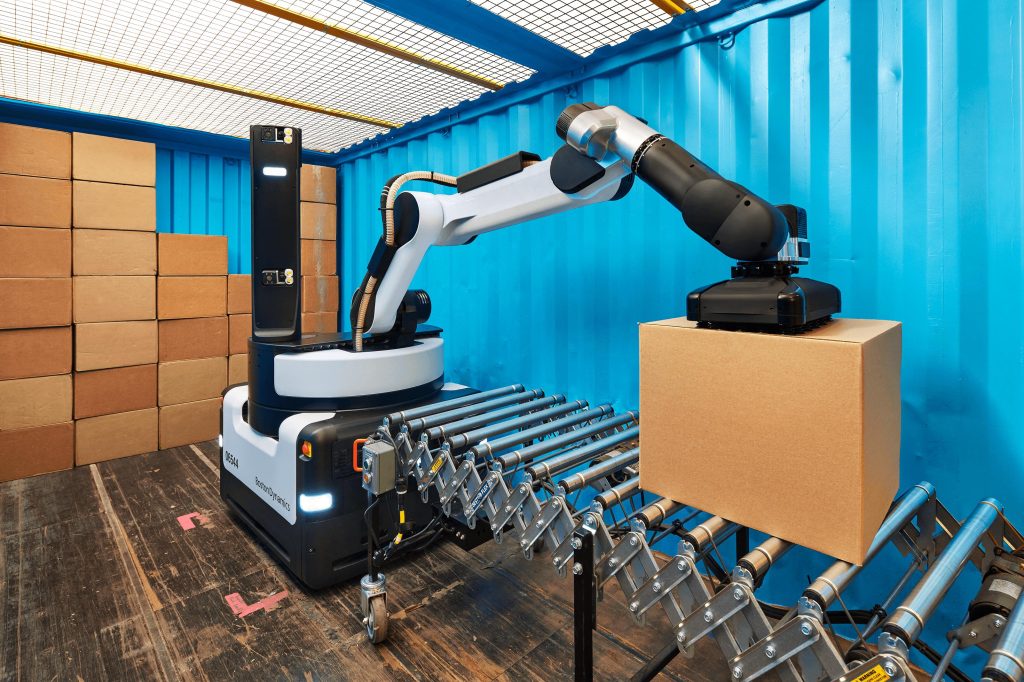
Boston Dynamics has introduced Stretch Gen 2, the next generation of its autonomous mobile robot designed for trailer and container unloading.
Announced on November 3, 2026, the new generation incorporates hardware, structural, maintenance, and computing improvements based on operational experience with the first-generation Stretch platform.
Boston Dynamics reports that the first-generation fleet has accumulated more than 100,000 operating hours and unloaded tens of millions of boxes. The company says this operational data informed the redesign of the new system.
Why Trailer Unloading Is Difficult to Automate
Unloading a trailer is a demanding robotic task.
Packages can arrive in different dimensions, weights, materials, and orientations. Stacks may be irregular, surfaces can be unstable, and available working space is often limited.
Unlike a conventional production line, a trailer does not always provide a predictable arrangement of objects.
A robotic system must therefore combine several capabilities:
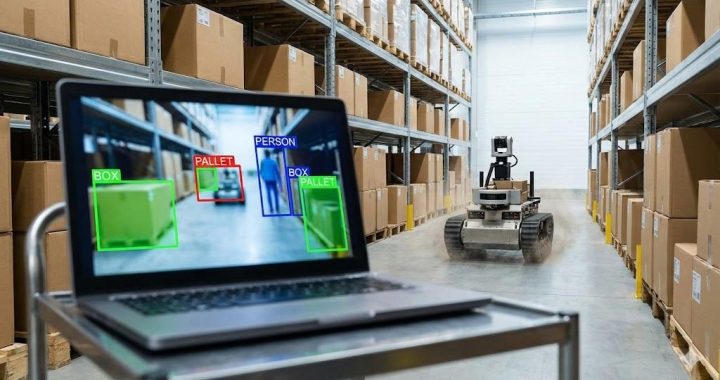
- Machine vision for detecting packages.
- Motion planning for selecting safe movement paths.
- Robotic manipulation for picking and handling boxes.
- Mobile navigation for positioning the robot.
- Real-time decision-making when package arrangements change.
These requirements make autonomous unloading a combination of mechanical engineering, robotics, artificial intelligence, and industrial software.
What Has Changed in Stretch Gen 2?
Boston Dynamics says the new generation was redesigned to improve durability, uptime, and serviceability.
One of the key changes is a more modular hardware architecture. The company describes a design that allows certain components to be replaced more easily.
For example, Boston Dynamics states that a complete swerve-drive replacement can now take approximately one hour, compared with a full day on the earlier design.
The system also removes dynamic cables and complex harnesses, while standardized high-strength fasteners reduce the number of different tools required during maintenance.
These changes may appear less dramatic than a new robotic arm or a more advanced AI model, but they address a major industrial requirement: keeping equipment available for production.
Performance and Operating Capabilities
Boston Dynamics reports that Stretch Gen 2 can unload up to 1,000 cases per hour.
Actual throughput depends on operating conditions, including package weight, stacking quality, and the arrangement of boxes inside the trailer. The company also identifies a multipick feature as a way to reach higher peak performance.
The robot is designed to operate for two shifts on a battery charge. A fast-charging system can reportedly bring the battery to 90 percent in approximately 75 minutes.
Onboard lighting supports work in dark trailers, while an updated vision system is designed to recognise a wide range of packages without requiring extensive initial programming.
These specifications should be understood as manufacturer-reported capabilities rather than guaranteed production rates for every warehouse.
The Importance of Mechanical Design
Stretch Gen 2 demonstrates how mechanical design decisions can directly influence the economics of automation.
A robot used in logistics must withstand repeated movement, contact with packages, vibration, and long operating hours.
The design must balance structural strength, weight, manoeuvrability, access for maintenance, and protection of electrical and mechanical components.
Modularity is particularly important. A system that can be repaired quickly can reduce operational disruption even if its headline performance remains unchanged.
This is a useful reminder that industrial robot development is not only about improving movement accuracy or adding more advanced artificial intelligence. Reliability and serviceability are equally important engineering requirements.
AI and Software Improvements
The redesigned onboard computing platform supports continuing software improvements.
Boston Dynamics says updates can improve case detection, motion planning, pick strategies, and world modelling across a fleet without requiring hardware changes.
This approach allows deployed robots to benefit from software development over time.
However, software updates must be evaluated carefully in industrial environments. Changes to perception and motion planning need to preserve safe operation and predictable behaviour under real working conditions.
The Role of CAD, CAE, and Digital Engineering
CAD is central to the development of the robot’s structural components, drivetrain packaging, enclosures, and end-effector interfaces.
CAE can support structural analysis, vibration assessment, thermal management, and durability evaluation. These tools help engineers understand how components behave under repeated operating loads.
Digital engineering also supports the relationship between the physical robot and its software-defined behaviour. Sensor placement, mechanical packaging, motion envelopes, and service access must be considered together.
The result is a multidisciplinary design process in which mechanical, electrical, and software engineering cannot be treated as separate activities.
What This Means for Warehouse Automation
Stretch Gen 2 reflects a broader change in industrial robotics.
The first challenge was proving that a mobile robot could perform a difficult logistics task. The next challenge is delivering a system that can operate reliably, be maintained efficiently, and scale across multiple facilities.
For warehouse operators, uptime and service costs can be just as important as maximum unloading speed.
For robotics engineers, the new platform highlights the value of designing for the entire operating lifecycle rather than focusing only on initial performance.
Source: Boston Dynamics – Launches Next Generation Stretch Robot
Related technology: Mobile robotics, robotic manipulation, machine vision, warehouse automation, industrial AI.