Bringing Large Titanium Additive Manufacturing Closer to Aircraft Production
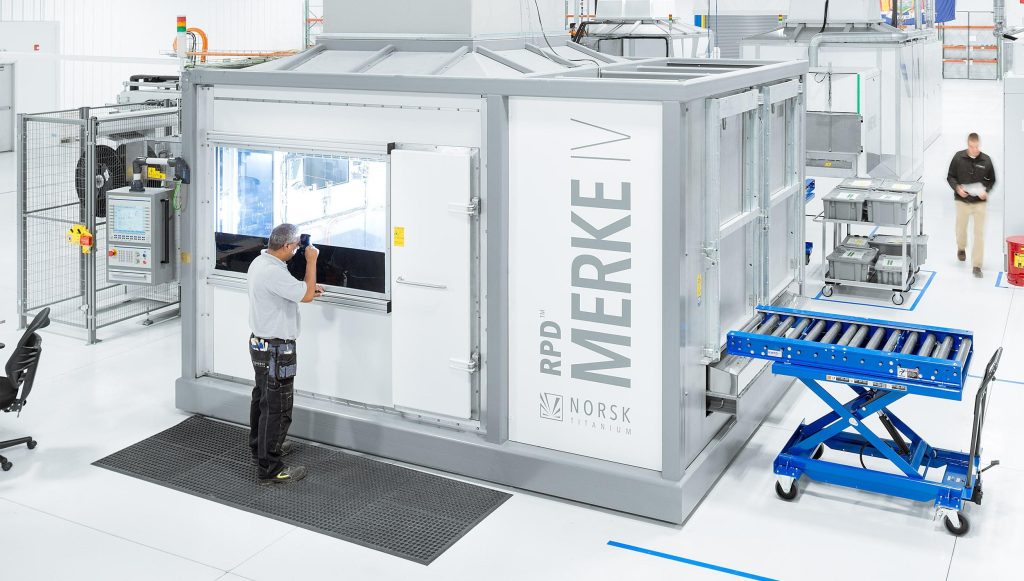
The aerospace industry continues to explore additive manufacturing as a way to reduce material waste, simplify complex structures, and improve manufacturing flexibility. A recent development involving Airbus and Norsk Titanium highlights an important step in this direction: the installation of a Rapid Plasma Deposition (RPD) system at Airbus’s facility in Varel, Germany.
According to Norsk Titanium’s third-quarter 2026 operational update, its first Merke IV RPD machine has been installed at the Airbus site, and Site Acceptance Testing was completed in September. The installation forms part of a cooperation and research agreement focused on industrial process validation and the qualification of RPD technology for structural titanium components.
The development is significant because it moves the technology closer to an aircraft manufacturer’s own production environment. However, installation and acceptance testing should not be confused with blanket approval for every aircraft component. The qualification of specific materials, geometries, processes, and applications remains an essential engineering task.
What Is Rapid Plasma Deposition?
Rapid Plasma Deposition is Norsk Titanium’s proprietary wire-based metal additive manufacturing process. It belongs to the broader family of Directed Energy Deposition technologies.
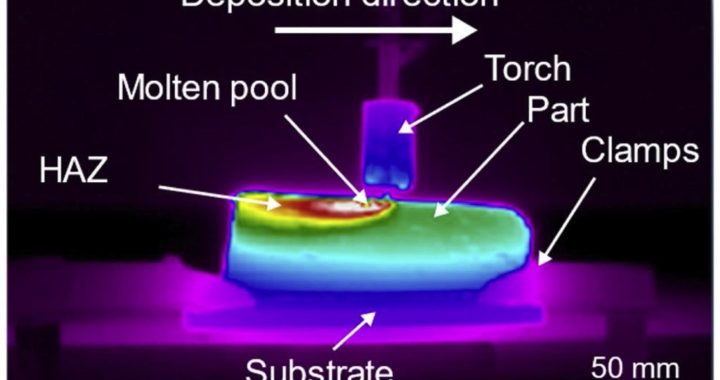
Instead of starting with a solid billet and removing material through machining, the process builds a component by depositing titanium wire layer by layer. A plasma-based heat source melts the feedstock as the deposition head follows a programmed path.
This approach can produce near-net-shape metal structures. The component may still require machining and other finishing operations, but the amount of material removed during final manufacturing can be reduced compared with conventional machining from a large billet.
For aerospace applications, this is particularly relevant because titanium alloys are expensive and can be difficult to machine. Large amounts of material may otherwise be removed to produce relatively lightweight structural components.
Why Is the Airbus Installation Important?
The installation at Varel is more than a machine-placement announcement. It creates an opportunity to evaluate the process within an aircraft manufacturer’s industrial environment.
The collaboration focuses on documenting and validating manufacturing procedures, process controls, and qualification data. This is important because aerospace production requires more than achieving the correct external geometry.
Engineers must understand how process conditions influence material properties, internal integrity, dimensional accuracy, and repeatability. A manufacturing process must demonstrate that it can consistently produce components that meet demanding requirements.
Norsk Titanium has also described a shift from part-specific qualification toward broader process-level qualification. The long-term objective is to reduce the engineering effort required when introducing additional parts that use an already validated process.
Engineering Challenges: Beyond Building the Geometry
Metal additive manufacturing introduces several interconnected engineering challenges.
Thermal history and microstructure: Repeated local heating and cooling influence the material’s microstructure. Process parameters must be controlled to achieve the required mechanical properties.
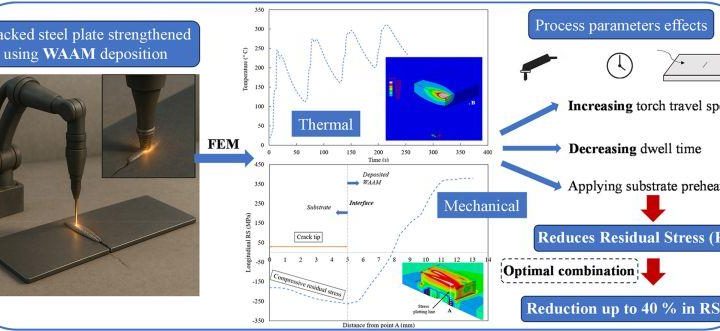
Residual stress and distortion: Uneven thermal contraction can create residual stresses and dimensional deviations. These effects must be understood through process development, measurement, and, where appropriate, simulation.
Deposition path planning: The sequence and direction of material deposition influence geometry, heat accumulation, and build stability. Toolpath planning is therefore a manufacturing engineering activity, not simply a geometric programming task.
Inspection and traceability: Aerospace manufacturing requires reliable inspection and documented process histories. Qualification must address how the deposited material and finished component are verified.
The Role of CAD, CAM, and CAE
CAD defines the target component geometry and provides the digital reference for manufacturing. Engineers must also consider machining allowances, accessible surfaces, interfaces, and the transition between deposited and machined regions.
CAM is responsible for translating the manufacturing strategy into deposition and finishing paths. The digital process plan must account for machine capabilities, deposition constraints, and subsequent machining operations.
CAE can support the evaluation of thermal behaviour, residual stress, distortion, and structural performance. Simulation does not replace physical qualification, but it can help engineers identify sensitive process conditions and reduce the number of costly experimental iterations.
A connected digital workflow is particularly valuable when the manufacturing process itself becomes part of the product’s qualification evidence.
What Comes Next?
The Airbus installation establishes an industrial environment for continued process validation. The next important milestones will be the qualification of specific structural titanium applications and the demonstration of repeatable production performance.
The wider significance extends beyond one machine or one aircraft manufacturer. If process-level qualification becomes more practical, it could make it easier to introduce additional additive-manufactured components into established aerospace production systems.
For the industry, the central question is no longer only whether a complex titanium component can be printed. It is whether the same component can be manufactured repeatedly, inspected reliably, and qualified within the strict requirements of aircraft production.
Source: Norsk Titanium – Third Quarter 2026 Operational Update
Related technology: Directed Energy Deposition, titanium additive manufacturing, aerospace structural components, digital manufacturing.