Aerospace aluminium alloys are widely used because of their favourable strength-to-weight ratio. However, machining these materials requires careful control of heat generation, surface integrity and dimensional accuracy.
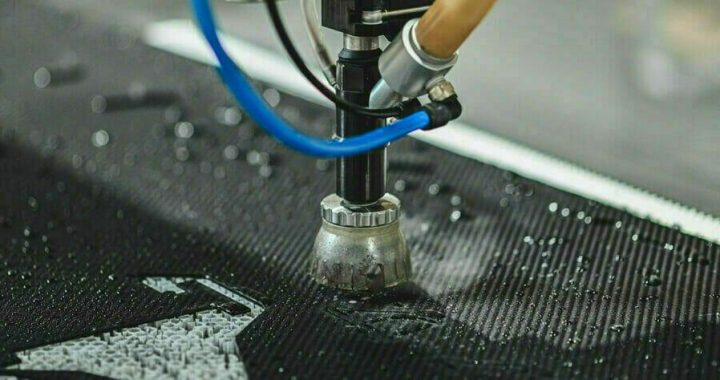
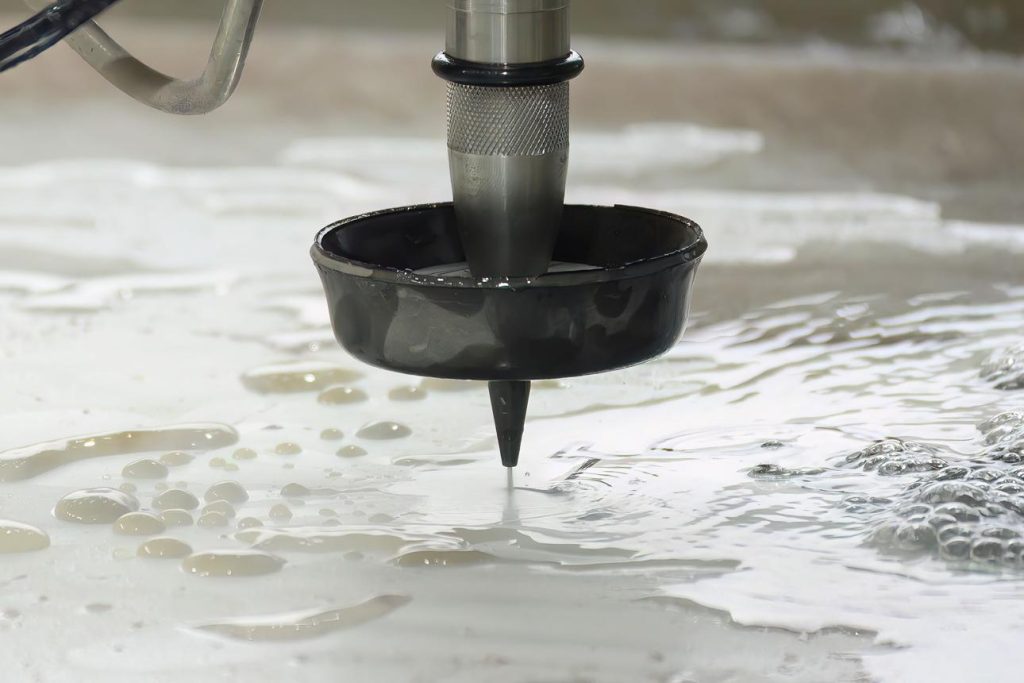
Abrasive waterjet machining offers an alternative to conventional thermal cutting and drilling processes. By using a high-pressure water stream mixed with abrasive particles, the process can remove material without relying on a conventional cutting edge or generating the same heat-affected zone associated with thermal machining.
A study published in Scientific Reports investigates the drilling of Al 7075-T6 using abrasive waterjet machining and intelligent parameter optimisation.
The researchers examined three major process variables: water pressure, abrasive mass flow rate and nozzle stand-off distance.
The study evaluated penetration efficiency, hole divergence and material removal rate. Response Surface Methodology was used to build predictive models, while Particle Swarm Optimisation and Grey Wolf Optimisation were compared as optimisation techniques.
The reported models achieved R² values above 0.98. Water pressure was identified as the most influential factor across the evaluated responses.
The Grey Wolf Optimisation approach produced a representative solution at 350 MPa water pressure, a 1.723 mm stand-off distance and an abrasive flow rate of 300 g/min. The predicted material removal rate was approximately 2.20 mm³/s, with a near-zero hole divergence index.
The researchers also conducted confirmation trials and reported good agreement between predicted and experimental results.
Engineering relevance
The study demonstrates how experimental design, statistical modelling and optimisation algorithms can be combined to improve machining quality.
For aerospace manufacturing, the challenge is not simply to remove material quickly. Hole geometry, repeatability and surface condition must also satisfy demanding component requirements.
The research offers a useful example of data-driven process optimisation for non-conventional machining.