Additive manufacturing technologies often require engineers to balance three competing requirements: production speed, geometric resolution and material functionality.
Light-based printing processes can produce detailed geometries quickly, but their material compatibility may be limited. Extrusion-based methods support a wider range of functional materials, although they can be slower and less effective at producing fine features.
Researchers at Northwestern University have introduced a process called Direct Ink Additive Lithography, or DIAL, to address this manufacturing challenge.
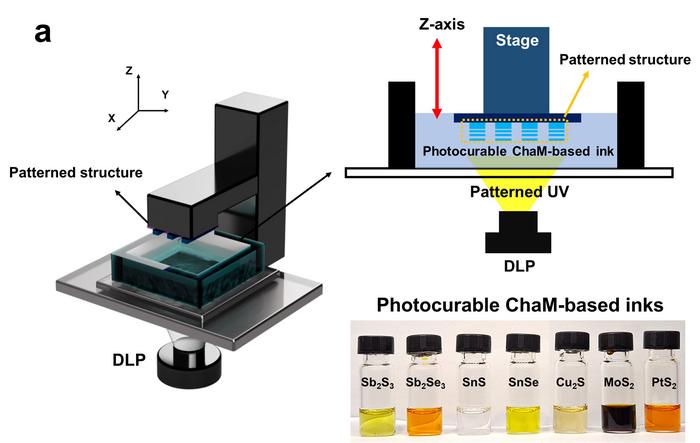
Instead of depositing material through a conventional extrusion nozzle, DIAL spreads thick, paste-like inks into thin layers. Patterned light selectively hardens the required regions, and the process is repeated to construct a three-dimensional component.
An important feature is the ability to work with particle-filled inks, including materials that scatter light and can be difficult to process using conventional light-based printing systems.
The researchers report that DIAL produced a complex structure more than four times faster than conventional extrusion printing in one test. The process can also create unsupported features without separately printed scaffolding in the demonstrated configurations.
Why this matters for manufacturing
The ability to combine complex geometry with functional material compositions could expand the role of additive manufacturing beyond conventional polymer prototypes.
Potential engineering applications include components for robotics, aerospace structures and medical devices. Material functionality could become part of the design itself rather than an additional manufacturing step.
For design engineers, the development highlights an important change in additive manufacturing: process selection is increasingly connected to material behaviour, optical properties, rheology and structural requirements.
DIAL is still a research-stage process. Its industrial potential will depend on repeatability, material qualification, dimensional accuracy and production-scale validation.
However, it offers a promising direction for manufacturing components whose geometry and material properties must be designed together.