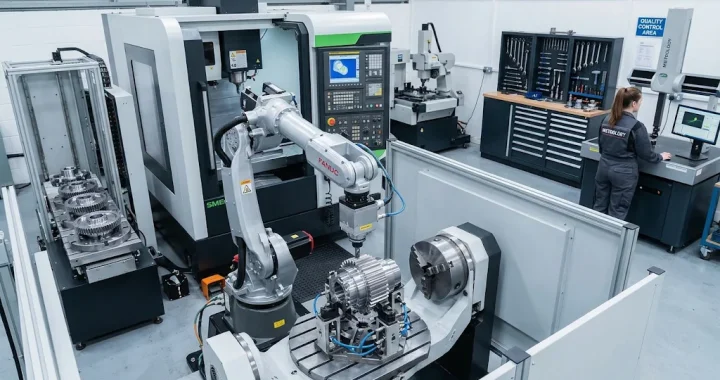
PTG Precision Engineers has installed a SMEC NS2000 series turning centre with an LNS bar feeder, supplied by Dugard. The investment is described as the company’s first move into automated machining. PTG serves nuclear, aerospace and energy customers, and the source links the purchase to rising demand and difficulty recruiting skilled machinists. The aim is to expand useful output without requiring continuous attendance at the new machine.
The account identifies the selected configuration as an NS2000A with a 6 inch chuck, maximum turning diameter of 310 millimetres and swing over bed of 565 millimetres. These machine envelope figures should not be confused with the diameter of material that can pass through a particular bar feeder arrangement. The complete installed system and its selected stock define the actual automated production route.
Larger batches change scheduling
The clearest reported result is a change in batch size for expanding mandrills. PTG previously made batches of 25 on conventional equipment and now runs batches of 350, a fourteenfold increase. That is a change in the quantity scheduled together, not evidence that each component is machined fourteen times faster. The distinction matters when interpreting how automation improves capacity and stock availability.
A larger batch can reduce the frequency of setup and make finished stock available for a longer period. It can also tie up a machine for longer, so the best batch size depends on demand and the mix of other work. PTG says the new arrangement has changed its production scheduling. The source does not publish inventory levels, complete cycle times or a cost per part comparison.
Production manager Jim Adkins describes roughly an hour of morning preparation for setting the feeder, loading bars and checking programmes. Operators then return to other machines, revisiting the new lathe to remove parts from the catcher at approximately half hourly intervals. This is a concrete example of reduced continuous attendance rather than a claim that the process needs no operator involvement.
Automation reallocates skilled work
The important capacity effect is the relationship between machine time and operator time. If one stable process can run while a machinist attends another task, the workshop may gain output without duplicating staffing. That benefit depends on reliable cutting and a manageable inspection routine. A process that demands frequent correction can consume the time the bar feeder was intended to release.
For a first automated installation, the surrounding procedures are especially important. Stock preparation, tool replacement, part collection and restart instructions need to be clear enough that the process remains predictable. These are general implementation considerations. The source describes a successful operational change but does not detail the full training or acceptance programme used at PTG.
Component design can also affect the opportunity. Features compatible with a consistent turning sequence and predictable stock support are easier to repeat over a long run. If a part requires frequent manual intervention or awkward secondary handling, adding a bar feeder may automate only one portion of the route. Reviewing the complete component process helps identify where the remaining labour will be concentrated.
PTG’s case illustrates a practical entry into automation through a familiar manufacturing operation. The reported change is not an abstract promise of lights out production; it is a larger repeat batch with operators able to spend much of the cycle elsewhere. For other workshops, the relevant assessment is how much reliable operator time is released and how the resulting stock and scheduling pattern serve customer demand. Machine capacity, bar handling and process control must all support that outcome together.
Source — mtimagazine.com. Source publication date 2026-01-23. Engineering analysis: The CAD Verse.