How Digital Machine Simulation, G-Code Verification, and AI-Assisted Workflows Are Improving Manufacturing Reliability
Introduction
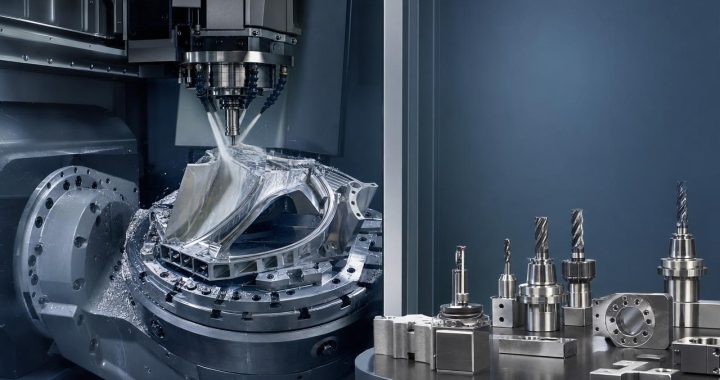
In modern manufacturing, producing a complex component is not simply a matter of generating a toolpath in CAM software and sending it to a CNC machine. Even a small programming error, an incorrect machine movement, or an unexpected collision can damage expensive tools, scrap a valuable workpiece, or cause costly machine downtime.
As machining operations become more complex—particularly in five-axis milling, mill-turn applications, and aerospace manufacturing—verifying the actual NC program before production becomes increasingly important.
This is where VERICUT, developed by CGTech, plays a significant role. Its CNC simulation and verification environment allows manufacturers to simulate machining operations using post-processed NC data, inspect material removal, identify potential errors, and evaluate machine movements before running a program on the shop floor.
With the release of VERICUT 9.7 in June 2026, CGTech has introduced performance improvements, expanded AI-powered assistance, workflow enhancements, and improved tooling management.
1. Why CNC Simulation Matters
CAM software is responsible for generating machining strategies and toolpaths based on the geometry of a component, cutting tools, machining parameters, and manufacturing requirements.
However, a toolpath that looks correct inside a CAM environment does not automatically guarantee that the final NC program will behave exactly as expected on a real CNC machine.
Several factors can introduce differences between the programmed toolpath and actual machine behavior:
- Post-processor configuration and output errors.
- Incorrect tool or holder definitions.
- Machine kinematics and axis limitations.
- Workpiece and fixture positioning.
- Coordinate systems and work offsets.
- G-code and machine-control-specific commands.
- Unexpected machine movements or collision risks.
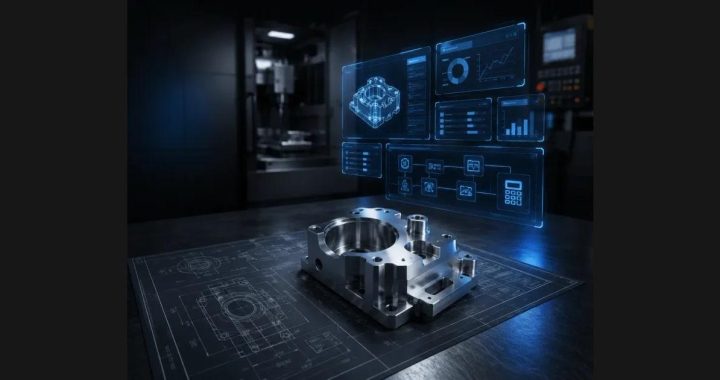
A conventional CAM simulation primarily evaluates the programmed machining strategy. Independent NC verification adds another layer of validation by examining the post-processed program that is intended for the CNC controller.
This distinction becomes particularly important when working with expensive materials, complex machine configurations, and high-value components.
2. What Is VERICUT?
VERICUT is a CNC simulation, verification, and optimization platform developed by CGTech.
Its core purpose is to simulate the material-removal process using NC program data and evaluate whether the machining process can be executed as intended.
Unlike a simulation that only displays the toolpath generated inside a CAM system, VERICUT can process post-processed NC data, including G-code and M-code instructions, and simulate the machining operation.
The software uses information such as:
- NC programs and subroutines.
- Raw stock geometry.
- Cutting tools and tool assemblies.
- CNC machine models and configurations.
- Fixtures and workholding components.
- Machine control definitions and kinematics.
The result is a simulated machined component that can be inspected and compared with the original design model. Detected discrepancies can be reviewed before the program reaches the production machine.
3. CAM Simulation vs. Independent NC Program Verification
Understanding the difference between CAM simulation and independent NC verification is essential.
CAM software generates machining strategies and toolpaths. Its simulation environment helps programmers evaluate the intended machining process during programming.
VERICUT adds a separate verification stage by processing the resulting NC program.
This distinction matters because post-processing converts CAM toolpath information into machine-specific instructions. The final output may include controller commands, axis movements, tool changes, offsets, and other machine-dependent operations.
A verification workflow can therefore identify problems that may not be visible in the original CAM toolpath simulation.
| CAM Simulation | VERICUT NC Verification |
|---|---|
| Evaluates the programmed toolpath | Evaluates post-processed NC data |
| Focuses on the CAM machining strategy | Focuses on the resulting NC program |
| Uses CAM-defined machine and tool information | Can use detailed CNC machine and control definitions |
| Helps validate programming operations | Helps validate machine-level execution and material removal |
| Supports programming decisions | Adds an independent production verification stage |
The two approaches are complementary rather than competing technologies. Using both can provide a more complete manufacturing validation workflow.
4. Machine Simulation and Digital Twin Technology
One of the most important capabilities of VERICUT is its ability to represent CNC machine tools in a virtual environment.
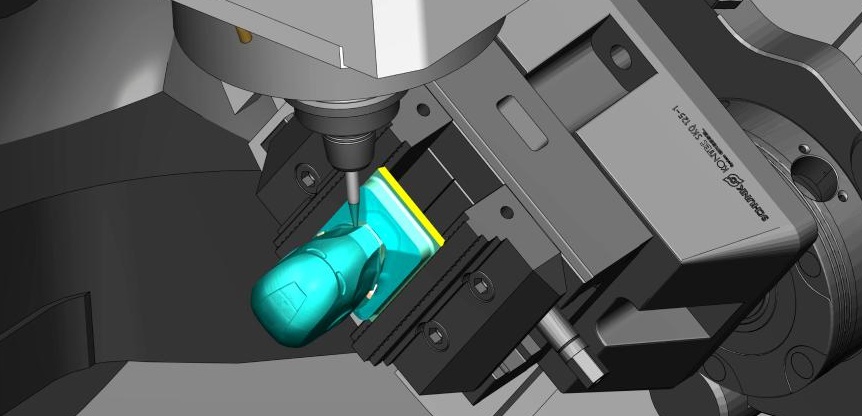
A machine simulation can include the machine structure, linear and rotary axes, spindle, tool assemblies, fixtures, workpiece, and other relevant components.
When the machine model and configuration are correctly defined, the software can simulate machine movements and evaluate potential interference during machining.
This is particularly valuable for:
- Five-axis simultaneous machining.
- Multi-axis milling and drilling.
- Mill-turn machines.
- Complex aerospace components.
- Large structural parts.
- Machines with multiple spindles or rotary axes.
The virtual machine environment can help engineers examine machine travel, tool orientation, fixture clearance, and potential collisions.
However, simulation accuracy depends on the quality of the machine model, kinematic definitions, control configuration, tooling data, and setup information. A digital representation should not be considered automatically identical to the physical machine without proper validation.
5. Material Removal Simulation and Collision Detection
VERICUT simulates how cutting tools remove material from the initial stock.
As the NC program is processed, the software builds a representation of the machined component and can identify discrepancies between the simulated result and the intended geometry.
This provides several important benefits:
Material removal verification
Engineers can inspect the simulated workpiece and identify remaining stock, excessive material removal, and geometric differences.
Collision detection
Potential interference involving cutting tools, holders, fixtures, workpieces, and machine components can be identified during simulation, depending on the configured machine and collision definitions.
Machine movement analysis
The simulation helps evaluate machine-axis movements and the relationship between the tool, workpiece, and machine structure.
NC program error identification
Detected problems can be investigated in relation to the corresponding NC program records, helping programmers locate and correct the source of an issue.
These capabilities are particularly important when machining high-value materials such as titanium and nickel-based alloys, where a single production error can have significant financial consequences.
6. What Is New in VERICUT 9.7?
CGTech announced VERICUT 9.7 on June 24, 2026. The release focuses on faster simulation and processing, expanded AI assistance, improved user workflows, and enhanced tooling management.
Faster Simulation and Processing
VERICUT 9.7 introduces performance improvements across simulation, verification, and review operations.
The improvements are intended to help manufacturers working with large NC programs, complex machine configurations, and demanding machining operations.
At the 2026 VERICUT Users’ Exchange event in the UK, performance improvements of approximately 10–40% were discussed. This figure was reported in event coverage and should be understood as a reported improvement range, not a guaranteed performance increase for every project or machine configuration.
Expanded VERICUT Assistant
One of the notable developments in version 9.7 is the expanded VERICUT Assistant.
The AI-powered guidance tool provides users with access to product knowledge and contextual assistance directly within the software environment.
It is designed to help programmers and engineers:
- Find answers to software-related questions.
- Navigate advanced workflows.
- Access product guidance more quickly.
- Reduce time spent searching documentation.
- Understand available software functions.
The assistant should be understood as a productivity and knowledge-support feature. It does not replace engineering validation, NC programming expertise, or machine-specific verification.
Improved Tool Manager
Tool management is another area receiving attention in VERICUT 9.7.
The updated Tool Manager provides improved organization and visibility of tooling information across projects. This is relevant for manufacturing environments where complex tool assemblies, holders, cutting parameters, and tool libraries must be managed consistently.
Better access to tooling data can also support more efficient project preparation and simulation workflows.
Improved User Experience
The release also introduces a refreshed Welcome Panel, streamlined navigation, and quicker access to VERICUT Assistant through the F2 key.
These changes aim to reduce unnecessary interaction and make common workflows easier to access.
7. Icam Post V27: Improving Post-Processor Development
Alongside VERICUT 9.7, CGTech introduced Icam Post V27, which focuses on post-processor development, debugging, and validation.
A post-processor is a critical link between CAM programming and the CNC machine. It translates machining information into machine-specific NC instructions.
An incorrectly configured or modified post-processor can introduce errors into the final NC output.
Icam Post V27 introduces several improvements:
AI Assistant
The Icam Post AI Assistant provides access to product knowledge and guidance within the QUEST and GENER environments. It can help users find documentation and check macro syntax.
Regression Testing Utility
One of the most relevant additions is the Regression Testing Utility.
It allows post developers to compare NC output before and after post-processor changes. This helps identify differences that could affect machine behavior and supports validation before updated post-processors are deployed.
Debugging Improvements
Additional enhancements include improvements to the Breakpoint Manager and Macro Manager, along with better runtime visibility and documentation access.
These developments are important because post-processor reliability directly affects the quality of the NC programs delivered to manufacturing.
It is worth noting that Icam Post V27 is a related post-processing development release, not simply another name for the VERICUT 9.7 simulation update.
8. Optimization: Beyond Verification
VERICUT is not limited to detecting programming errors. Its product ecosystem also includes machining optimization capabilities.
Two important technologies are OptiPath and Force.
OptiPath
OptiPath focuses on optimizing feed rates based on machining conditions and material-removal requirements. Its purpose is to improve machining efficiency while maintaining controlled cutting conditions.
Force
VERICUT Force uses machining physics and cutting-process information to evaluate and optimize cutting conditions. Depending on the supported configuration and available data, it can help improve tool loading, feed rates, and machining performance.
These optimization capabilities should be distinguished from basic NC verification. Their availability and functionality depend on the relevant modules, licensing, machine setup, and supported machining conditions.
9. Where Does VERICUT Add the Most Value?
VERICUT is particularly relevant in manufacturing environments where machining errors can lead to significant costs, quality issues, or production delays.
Aerospace
Aerospace components often involve complex geometries, expensive materials, and demanding machining requirements. Independent NC verification can help reduce production risks.
Automotive
Automotive manufacturers and suppliers use complex CNC machining operations for powertrain, structural, tooling, and precision components. Simulation can support process validation and production planning.
Medical Manufacturing
Medical components can require demanding geometric and surface-quality requirements. Reliable machining verification is important when working with expensive materials and complex part geometries.
Mold and Die
Complex mold surfaces and multi-axis machining strategies make collision detection, stock verification, and toolpath analysis valuable during process development.
General Precision Manufacturing
For manufacturers operating advanced CNC equipment, simulation can help reduce manual prove-out time and improve confidence before production.
10. Limitations and Implementation Considerations
Although CNC simulation provides important benefits, its reliability depends on the quality of the information supplied to the software.
A simulation cannot automatically compensate for an incorrect machine model, incomplete fixture geometry, inaccurate tool data, or incorrect setup parameters.
Before relying on a virtual verification result, manufacturers should consider:
- Whether the machine model reflects the actual machine configuration.
- Whether kinematics and rotary-axis definitions are correct.
- Whether the correct post-processor and CNC control definitions are being used.
- Whether tooling, holders, fixtures, and work offsets match the production setup.
- Whether the simulation configuration covers the intended machining operations.
- Whether the final machine setup and production procedures have been independently checked.
Software licensing and available modules should also be considered when planning an implementation.
VERICUT is designed to reduce production risk, but simulation should remain part of a controlled manufacturing validation process rather than being treated as an unconditional guarantee against every possible machining error.
11. The Future of CNC Manufacturing: From Toolpath Simulation to Digital Process Validation
The evolution of CNC manufacturing is moving beyond the generation of toolpaths.
Modern manufacturing increasingly connects CAD geometry, CAM programming, post-processing, machine simulation, NC verification, production planning, and shop-floor data.
In this environment, the ability to validate the actual NC program before machining becomes an important part of digital manufacturing.
The developments in VERICUT 9.7 and Icam Post V27 reflect this direction. Faster simulation, AI-assisted software guidance, improved tooling workflows, and regression testing for post-processors all contribute to a more connected manufacturing process.
As CNC machines become more advanced and machining strategies more complex, digital verification will continue to play an important role in improving production reliability.
Conclusion
VERICUT 9.7 demonstrates how CNC simulation is evolving from a toolpath visualization process into a broader manufacturing verification and optimization environment.
Its focus on post-processed NC program verification, machine simulation, material removal analysis, collision detection, and machining optimization makes it relevant to manufacturers working with complex CNC operations.
The latest release also highlights the growing role of AI-assisted guidance and improved software workflows. Meanwhile, Icam Post V27 addresses an equally important part of the manufacturing chain: the development and validation of reliable post-processors.
For modern manufacturing, the objective is not simply to generate a toolpath that looks correct on screen. It is to establish confidence that the complete machining process—from NC code to machine movement and final geometry—has been properly evaluated before production begins.
The future of CNC manufacturing will depend not only on smarter programming, but also on more reliable digital verification.
References