Solar photovoltaic manufacturing is expanding rapidly, but the materials required to build new panels are creating a growing sustainability challenge.
A review published in Nature Reviews Clean Technology on November 2, 2026, examines the use of recycled materials in silicon-based photovoltaic modules and identifies opportunities and barriers for increasing recycled content in future production.
The Gap Between Recycling and Reuse
The study notes that global solar photovoltaic capacity increased more than 50-fold between 2010 and 2025. As installations grow, the industry must address the future recovery and reuse of materials from end-of-life modules.
Recycling a material does not automatically mean that it can be returned to a new photovoltaic product at the same quality level.
The review finds that recycled content in commercial modules remains relatively limited. Estimated market-average recycled content varies by material, with aluminium frames offering a more established opportunity than some high-purity materials used in cells.
Material Quality and Manufacturing Requirements
Photovoltaic manufacturing requires strict control of purity, reliability and long-term performance.
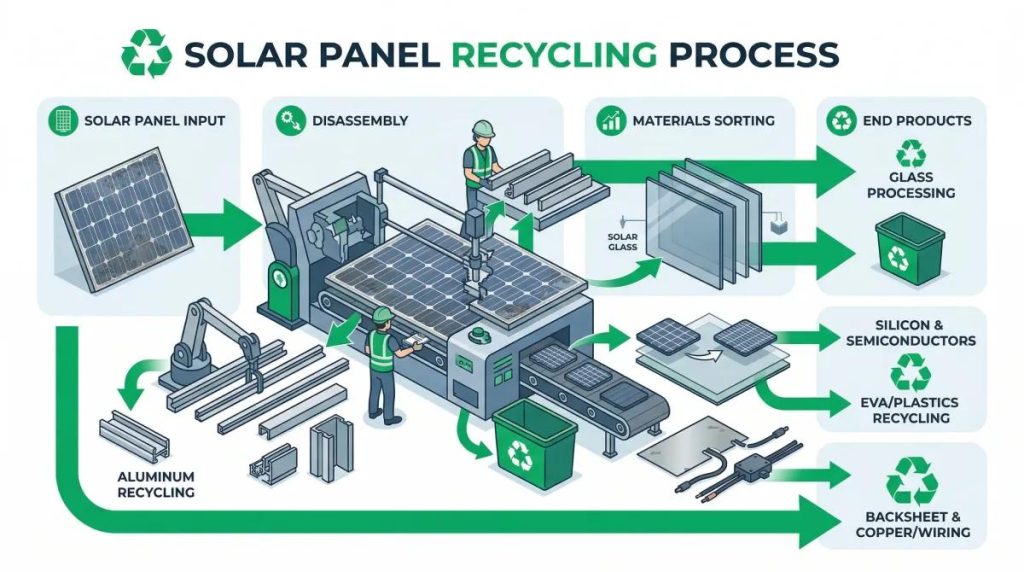
Recovered silicon, silver, glass and polymer materials may require additional separation, purification and processing before they can be used in new modules.
The research also highlights that higher recycled content does not automatically guarantee lower life-cycle environmental impacts. The benefits depend on feedstock quality, processing energy, transport and the manufacturing route.
Engineering Implications
For manufacturers, the challenge is to develop material recovery processes that meet the technical requirements of new photovoltaic products.
Clearer recycled-content reporting, material-specific purity standards and reliable verification methods could help create a stronger market for secondary materials.
The study points to a broader engineering issue: sustainable manufacturing must consider not only how products are made, but also how their materials can be recovered and reintegrated into future production cycles.
Rapid growth in solar photovoltaic manufacturing has increased the demand for sustainable material recovery from end-of-life panels. Although recycling is expanding, integrating recovered materials into new commercial modules remains limited due to strict purity and performance standards required for high-efficiency components like silicon and silver.
Achieving environmental benefits through recycling depends heavily on processing energy, transport, and feedstock quality. Developing material-specific purity standards, clearer reporting, and reliable verification methods will be essential for successfully reintegrating recovered secondary materials into future solar module manufacturing cycles.