The growth of patient-specific medical implants is creating demand for metal powders that meet strict quality and material consistency requirements. Tekna, a supplier of advanced materials and plasma systems, has announced new titanium powder orders worth approximately CAD 1.2 million from an American contract manufacturer serving the medical implant sector.
The announcement was published on November 3, 2026.
Titanium Powder for Laser Powder Bed Fusion
The orders relate to titanium metal powder used in laser powder bed fusion (LPBF), an additive manufacturing process that selectively melts thin layers of metal powder to produce complex components.
Titanium alloys are widely used in medical applications because of their combination of strength, corrosion resistance and biocompatibility. Additive manufacturing can support the production of geometrically complex and customized implant designs.
However, medical-grade production requires careful control of powder characteristics, process parameters, material traceability and final-part validation.
Why Powder Quality Matters
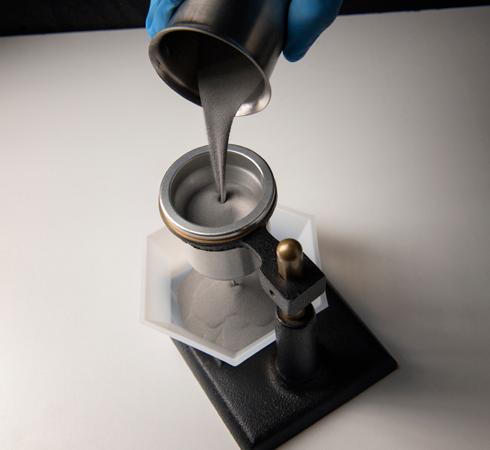
In LPBF, powder properties can influence flowability, packing behavior, layer uniformity and process stability. These factors can affect porosity, surface quality and mechanical performance.
For medical applications, manufacturers must also demonstrate that the material and production process meet the applicable regulatory and quality requirements.
Tekna’s announcement reflects continued demand for specialized titanium powder in medical additive manufacturing. It should be viewed as a commercial order announcement rather than proof of a particular implant performance improvement.
The Medical AM Supply Chain
As digital implant workflows expand, the supply chain increasingly includes powder producers, machine manufacturers, design software providers, contract manufacturers and medical-device companies.
Reliable material supply is therefore becoming an important part of scaling additive manufacturing in healthcare.