






Rapid Precision Engineering Adds Fourth-Axis Capacity with DEM 4000
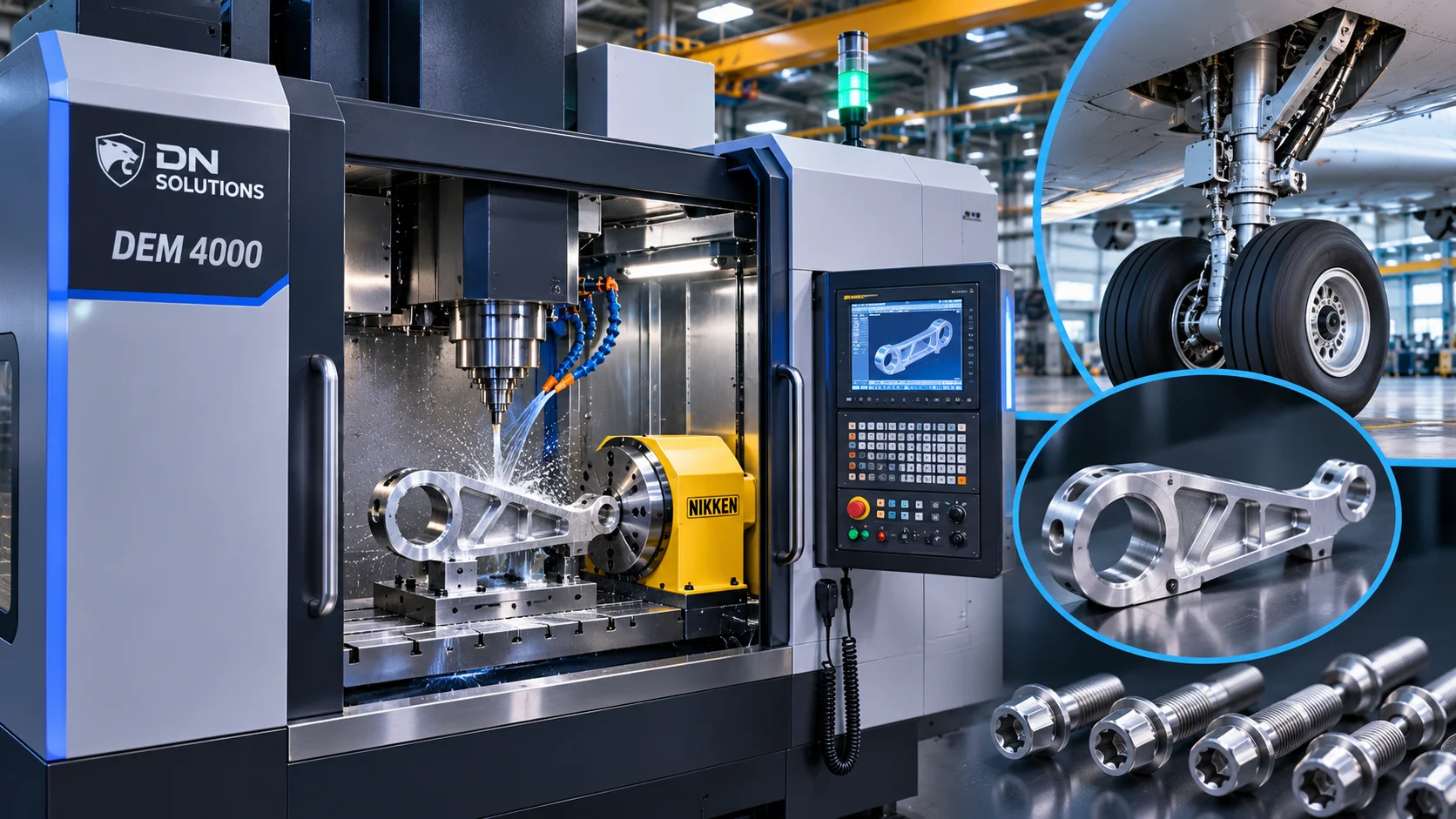
Rapid Precision Engineering has added a DN Solutions DEM 4000 vertical machining centre with a Nikken fourth-axis table to increase output of aerospace landing-gear components. The case describes a substantial increase in demand for certain fasteners and a move away from a manual milling route for that work. The selected machine builds on equipment already familiar to the business. This is an example of adding targeted capability to a known process rather than pursuing the largest available machine.
Demand growth exposes the old process boundary
A manual operation may be appropriate at one volume and become the governing constraint when demand rises. The important comparison is not simply manual versus CNC machining, but the complete route required to produce the increased quantity. Setup, loading, inspection and downstream treatment must all be able to support the new rate. Otherwise, the investment can move the queue rather than remove it.
The reported fastener work includes several operations before subsequent treatments and testing. That sequence should remain visible when measuring improvement. A faster milling stage has value when the rest of the route can accept the increased output and maintain traceability. Production planning should identify how batches will move between those stages and how the applicable process revision is retained.
A fourth axis can simplify presentation
Rotating a workpiece inside a controlled setup can reduce the need to remove and relocate it for different features. For small fasteners, a custom fixture may present several components and allow the programme to address the required orientations. The fixture’s locating method becomes central because the same reference must remain useful through the operations performed after rotation.
A fixture review should include the available grip length, tool access and the risk of movement under cutting load. Small components can be awkward to load consistently, so error prevention deserves attention. The intended arrangement should make incorrect seating easy to detect rather than relying on the operator to remember a subtle visual distinction during a repeated production task.
Familiar equipment supports a controlled transfer
Rapid Precision selected a machine type it had used before and expected to transfer existing methods. Familiarity can reduce learning effort, but it should not eliminate verification of the new installation. Differences in rotary configuration, fixture arrangement or tool assemblies can affect the programme. A transferred method should be checked against the actual machine state before production approval.
The digital record should identify the machine-specific configuration and the relevant fixture revision. This helps distinguish a common process from the details that depend on one installation. If a later change is made, the team can then determine which programmes and components need review. Reuse is strongest when the boundary between standard practice and local setup remains explicit.
Aerospace output includes acceptance evidence
The case’s aerospace context makes the connection between manufacture, treatment and inspection particularly relevant. Increasing volume should not weaken the association between a component batch and its records. The shop needs a practical method for retaining identity as parts move through multiple stages, including any external work. Automated cutting does not independently solve that information problem.
The DEM 4000 investment is notable for addressing a defined demand increase with a focused combination of CNC machining and rotary workholding. For other small manufacturers, the lesson is to identify what the next production volume requires from the entire route. The most useful machine is the one that supports that route dependably, with the fixtures, verification and scheduling needed to turn additional spindle capacity into accepted deliveries.
Source — mtimagazine.com. Source publication date 2026-10-23. Engineering analysis: The CAD Verse.
Report an image
 MEMBERS · ONE ENGINEERING COMMUNITY
 Engineering videos and tutorials
 Engineering marketplace and professional opportunities
 Courses, tutorials and learning paths
 Engineering files and CAD models
 Professional engineering projects
Discussion
0 CommentsShare your thoughts and engineering insights with the community.
Comments are closed for this article.
No comments yet. Be the first to share your thoughts.