How an In-House Foundry Could Connect Casting, Precision Machining, and Industrial Manufacturing
Introduction
Modern machine tools are built from complex mechanical systems that require high structural rigidity, dimensional stability, and long-term operational reliability.
One of the most important elements in many machine tools is the cast structure. Machine beds, columns, bases, and other structural components must provide the stiffness and damping characteristics required for precision machining.
Although machine tool manufacturers focus heavily on machining technology, the quality of the underlying cast components is equally important.
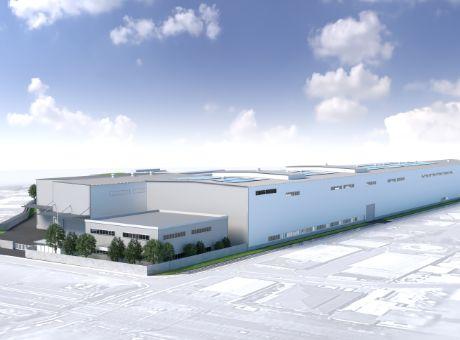
On October 29, 2026, DMG MORI announced plans to establish a new in-house foundry in Pleszew, Poland, under the name DMG MORI CASTECH Poland.
The planned facility is intended to supply high-precision castings to the company’s European production sites, strengthening its manufacturing network and increasing control over a critical part of the machine tool supply chain.
1. Why Are Cast Components Important in Machine Tools?
Machine tools are designed to remove material accurately while controlling vibration, deformation, and thermal effects.
Their structural components must therefore provide a stable foundation for machining operations.
Cast iron is widely used in machine tool structures because of its useful combination of properties, including:
- Structural rigidity.
- Vibration damping.
- Compressive strength.
- Dimensional stability.
- Good machinability.
- Suitability for complex geometries.
Machine beds and columns are not simply supporting structures. Their mechanical characteristics influence machine accuracy, surface finish, dynamic behavior, and long-term performance.
The quality of the casting process can therefore affect the final performance of the machine tool.
2. What Is DMG MORI CASTECH Poland?
DMG MORI plans to establish its new foundry in Pleszew, Poland, close to its existing production site.
The company announced that the facility will supply high-precision castings for its European machine tool manufacturing operations.
The main project figures are:
| Project parameter | Announced plan |
|---|---|
| Location | Pleszew, Poland |
| Facility name | DMG MORI CASTECH Poland |
| Total floor area | More than 27,000 m² |
| Planned annual capacity | Up to 20,000 metric tons |
| Construction start | Planned for 2026 |
| Production start | Scheduled for 2030 |
| Distance from existing production site | Approximately 2.5 km |
These figures represent the announced project plan and intended full-expansion capacity, not an already operating production facility.
The close proximity to DMG MORI’s existing manufacturing operations is intended to support direct coordination between casting and machine tool production.
3. Why Is DMG MORI Bringing Casting In-House?
Machine tool manufacturers depend on a network of suppliers for materials, components, and manufacturing processes.
Cast components are particularly important because their quality influences the mechanical characteristics of the finished machine.
By bringing more casting production under its own organizational control, DMG MORI aims to gain closer oversight of important manufacturing stages.
These include:
- Raw material composition.
- Casting process control.
- Casting tolerances.
- Structural quality.
- Preparation for machining.
- Integration with final machine production.
This approach is commonly described as vertical integration.
Instead of relying exclusively on external suppliers for an important component category, the company intends to connect casting production more directly with its own research, development, and manufacturing operations.
This can improve coordination between component design and production requirements.
However, the actual benefits will depend on production ramp-up, process capability, quality management, and operational performance once the facility becomes active.
4. Connecting Casting and Precision Machining
The relationship between casting and CNC machining is especially important in machine tool manufacturing.
A cast component typically requires additional operations before it becomes a finished machine structure.
These may include:
- Pattern and mould preparation.
- Metal melting and casting.
- Cooling and solidification.
- Cleaning and initial inspection.
- Stress-relief or other specified heat treatment.
- CNC machining of functional surfaces.
- Dimensional inspection and final assembly.
Each stage influences the quality of the finished component.
For example, variations in casting geometry or material properties can affect machining allowances and the stability of subsequent machining operations.
Large machine structures may also require carefully planned machining sequences to control deformation and maintain dimensional accuracy.
By connecting casting operations more closely with its machining and machine assembly activities, DMG MORI aims to improve coordination across the manufacturing chain.
5. Why Does This Matter for CNC and Manufacturing Technology?
The announcement is relevant beyond the foundry industry.
Machine tool manufacturing depends on the interaction of several engineering disciplines:
- Material engineering.
- Casting and foundry technology.
- Structural design.
- CNC machining.
- Metrology and quality control.
- Manufacturing process planning.
- Supply chain management.
The design of a machine bed, for example, must consider both structural performance and manufacturability.
Its geometry must provide the required stiffness while also allowing casting, machining, inspection, and assembly.
CAD and CAE tools can support this process by helping engineers develop structural concepts, evaluate mechanical behavior, and optimize component geometry.
CAM and CNC technologies are then used to machine the functional surfaces and interfaces of the cast components.
This makes the foundry project relevant to the wider digital manufacturing ecosystem.
6. A More Resilient European Supply Chain
One of the stated objectives of CASTECH Poland is to strengthen DMG MORI’s European manufacturing network.
The company describes the project as part of its broader effort to increase strategic independence and supply chain flexibility.
A local production facility can help reduce dependence on long-distance component sourcing and improve coordination between manufacturing locations.
DMG MORI also expects the shorter supply chain to reduce emissions associated with intercontinental transport and external procurement.
These are company-stated objectives. The actual environmental impact will depend on factors such as energy consumption, raw material sourcing, production efficiency, and transportation patterns.
The project also builds on DMG MORI’s existing CASTECH Japan foundry operations, using experience from that facility as a reference for the planned Polish investment.
7. Resource Efficiency and the Green Transformation
Foundry operations are energy-intensive and require careful management of raw materials.
DMG MORI states that CASTECH Poland is being developed with resource efficiency in mind.
The project is expected to incorporate raw material reclamation and recovery processes.
This is important because metal casting can generate material streams that may be recovered and reused when appropriate quality and process requirements are met.
Improving material utilization can reduce waste and support more efficient manufacturing.
However, the environmental performance of the facility will ultimately need to be evaluated using actual production and energy data after operations begin.
8. What Does This Mean for the Future of Machine Tool Manufacturing?
The machine tool industry is increasingly focused on manufacturing resilience, precision, productivity, and resource efficiency.
These objectives cannot be achieved through machine design alone.
They depend on the entire production chain, from raw materials and casting to CNC machining, assembly, and quality assurance.
DMG MORI’s planned investment in CASTECH Poland illustrates how machine tool manufacturers are reconsidering the organization of their industrial supply chains.
For engineering teams, the project also highlights the continued importance of foundational manufacturing technologies.
While AI, automation, and digital twins are transforming industrial workflows, the mechanical quality of the machine itself remains essential.
Conclusion
DMG MORI CASTECH Poland represents a planned expansion of the company’s European manufacturing capabilities.
With a projected annual capacity of up to 20,000 metric tons at full expansion and a production start scheduled for 2030, the facility is intended to supply high-precision castings to the company’s European machine tool operations.
The project reflects a broader manufacturing strategy based on vertical integration, supply chain resilience, and closer coordination between casting and precision machining.
Its significance extends beyond a new foundry investment. It demonstrates how machine tool manufacturers are working to gain greater control over critical components and production processes.
The future of precision machine tools begins long before the first cutting operation. It starts with the quality of the materials, structures, and manufacturing processes behind the machine itself.
References