How PanX Integration Supports More Predictable Metal 3D Printing
Metal additive manufacturing enables engineers to produce complex components that can be difficult or inefficient to manufacture using conventional machining processes.
However, producing a successful metal 3D-printed component requires more than preparing a geometrically correct CAD model. Thermal history, residual stresses, deformation and process parameters can significantly influence the final result.
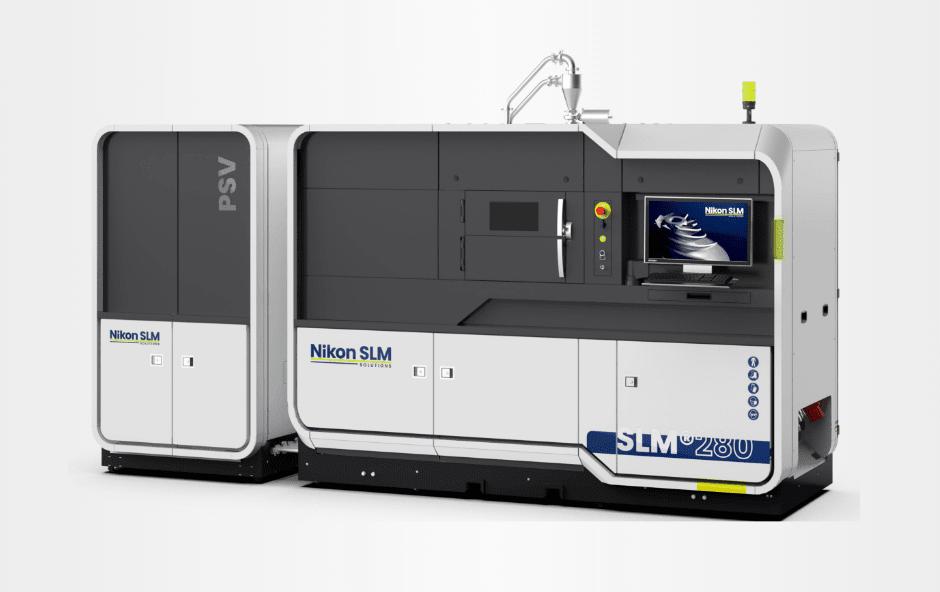
Nikon SLM Solutions and PanOptimization have announced an integration designed to improve simulation-based build preparation through PanX software.
The Engineering Challenges of Metal Powder Bed Fusion
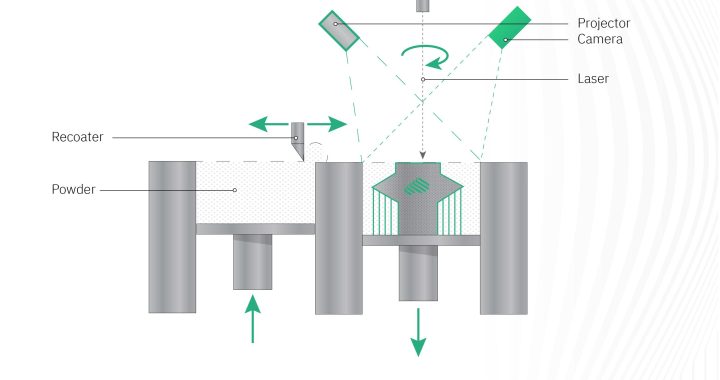
Laser powder bed fusion (PBF-LB) builds components by selectively melting metal powder layer by layer.
During the process, concentrated heat is introduced into a relatively small region of the component. Rapid heating and cooling cycles create complex thermal gradients.
These conditions can lead to:
- Residual stresses
- Part distortion
- Local thermal accumulation
- Dimensional deviations
- Build failures
- Increased post-processing requirements
The challenges become more significant when producing large components or operating high-productivity multi-laser systems.
Simulation can help engineers evaluate these effects before committing machine time and material to a production build.
PanX Integration for Nikon SLM Systems
The collaboration introduces a dedicated Nikon SLM Solutions integration within PanX, PanOptimization’s simulation software.
The integration provides machine- and process-specific templates intended to simplify simulation setup for relevant Nikon SLM systems, materials and process parameters.
Instead of manually rebuilding simulation settings for every project, engineers can work with templates aligned with the selected machine and material configuration.
This approach is intended to make simulation-based build preparation more consistent and accessible.
Why Thermal and Mechanical Simulation Matter
Thermal simulation helps engineers understand how heat moves through the component and surrounding material during the printing process.
Mechanical simulation can then help evaluate how thermal expansion and contraction influence stress development and component deformation.
These analyses are particularly relevant when designing build strategies for components with:
- Large cross-sections
- Thin walls
- Complex internal geometries
- Long unsupported features
- Significant changes in section thickness
Simulation results can support decisions about build orientation, support structures and process strategy.
However, simulation accuracy depends on the quality of material data, boundary conditions, process parameters and modelling assumptions.
From Build Preparation to Production Quality
The value of simulation-driven build preparation is not limited to preventing failed prints.
A more predictable process can also help manufacturers reduce material waste, improve machine utilisation and plan post-processing operations more effectively.
For production environments, connecting simulation workflows with machine-specific process data is an important step toward repeatable manufacturing.
The Nikon SLM and PanOptimization collaboration demonstrates how machine manufacturers and simulation software developers can work together to reduce the gap between virtual process planning and physical production.
The Future of Simulation-Driven Additive Manufacturing
As metal additive manufacturing moves into more demanding industrial applications, process simulation is becoming an increasingly important part of the engineering workflow.
The integration of machine-specific templates into simulation software can make advanced process analysis easier to adopt.
It does not eliminate the need for experimental validation or inspection, but it can help engineers identify potential problems earlier and make more informed build-preparation decisions.
Source: DailyCADCAM, Nikon SLM Solutions and PanOptimization collaboration announcement, October 2026.