WordPress Category: CAE → Structural Analysis
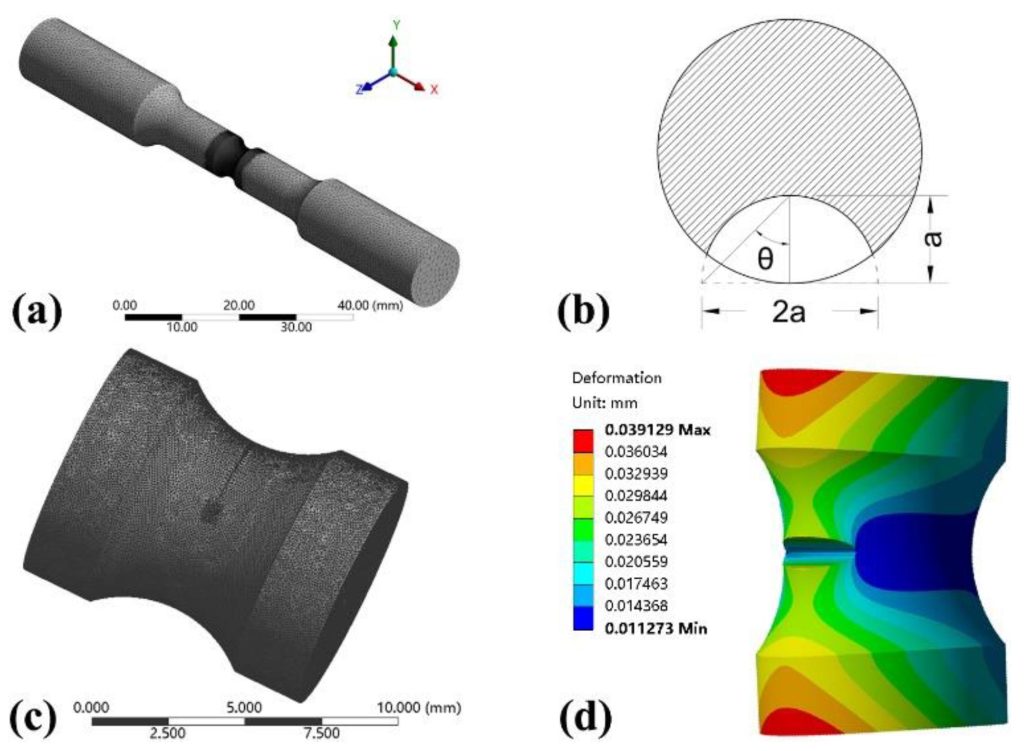
Fatigue failure remains one of the most difficult challenges in mechanical engineering. Components such as vehicle axles, aircraft structures and rotating machinery are exposed to repeated loading throughout their service life. Small geometric details—including holes, grooves and sharp transitions—can create local stress concentrations where fatigue damage begins.
Researchers at Concordia University have developed a three-dimensional modelling framework designed to predict the material behaviour around these critical regions more efficiently.
The work, led by Professor Ayhan Ince, focuses on understanding how deformation develops beneath the surface of metal components. This is important because fatigue damage is not determined only by the maximum surface stress. The surrounding material volume, local plastic deformation and stress redistribution also influence crack initiation.
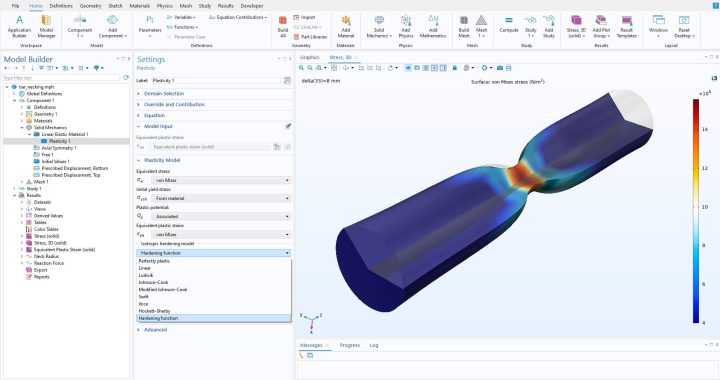
In a computational comparison involving a notched steel bar, the new framework completed its calculations in approximately 4.5 minutes. A more detailed nonlinear simulation required around 28 minutes to perform the corresponding analysis. This represents an approximately sixfold reduction in calculation time for that test case.
The difference is significant because nonlinear simulations become increasingly demanding when engineers analyse large components, complex geometries and multiple loading conditions.
Why it matters for engineering
Faster fatigue modelling could allow design teams to evaluate more geometric alternatives during early product development. Engineers may be able to investigate how fillet radii, hole positions, local thickness changes and material behaviour affect durability without waiting for every detailed simulation to finish.
The approach is not a replacement for physical fatigue testing or comprehensive nonlinear analysis. Its value lies in providing a potentially faster route to understanding local material behaviour and supporting more efficient durability assessments.
For automotive and aerospace engineering, where fatigue performance directly affects safety, weight and product life, this type of computational improvement could become an important addition to simulation workflows.