The performance of advanced materials depends not only on their chemical composition, but also on how their internal structures are organised.
Nanoparticles offer opportunities to create materials with tailored optical, electrical and chemical properties. However, controlling how individual particles connect to one another remains a major challenge in the development of nanoparticle-based structures.
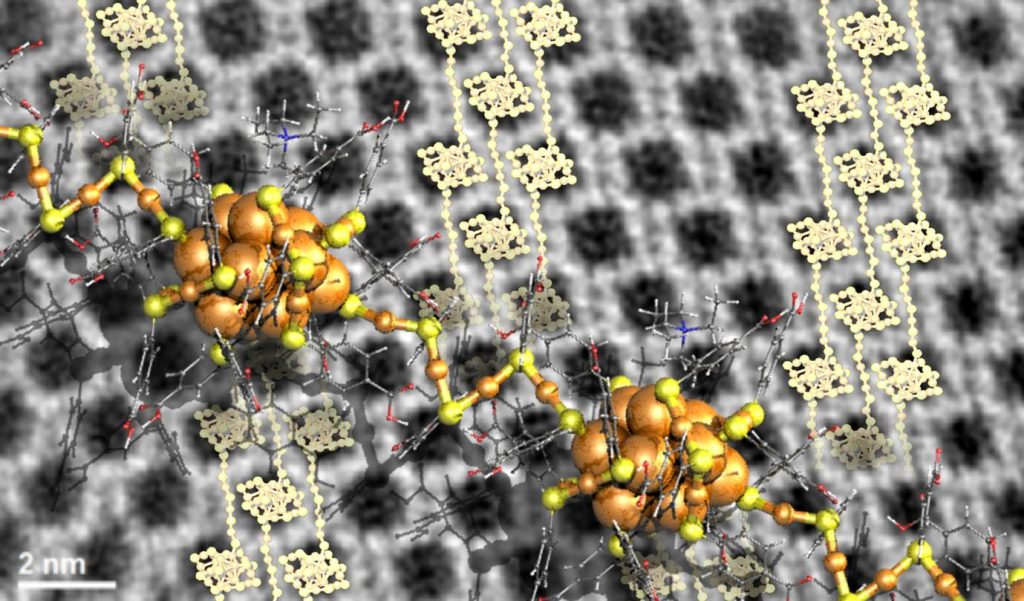
Researchers at MIT have investigated a different approach: using flexible molecular connectors to control the arrangement of nanoparticles.
Conventional strategies often rely on rigid connector molecules or carefully shaped particles. These approaches can restrict the number of possible structures and make it difficult to control the resulting material architecture.
The new method uses flexible connector molecules that adapt to their local environment. By adjusting connector flexibility, particle size and ligand-chain length, researchers can influence how nanoparticles connect and pack together.
The work was reported in Nature Materials on November 2, 2026.
Why internal architecture matters
At the nanoscale, small changes in particle spacing and connectivity can influence the collective properties of a material.
This is particularly important for photonics, chemical catalysis, electronics and other technologies where interactions between neighbouring particles determine performance.
For materials engineers, the research highlights an approach in which molecular connections become a design variable rather than simply a means of holding particles together.
The method could support the development of engineered materials with structures that are difficult to obtain through conventional assembly techniques.
Further research will be needed to establish manufacturing scalability, stability and performance under real operating conditions. Nevertheless, the ability to tune nanoparticle networks through flexible molecular connections represents an interesting development in materials engineering.